Braided vs PVC Cables: Durability Data and Perceived Value
The jacket is the part of a cable a customer grips every day, and it is the part that decides both how long the cable lives and how expensive it feels. Braided and PVC jackets take different paths to failure and to value, and the right choice depends on channel and price point.
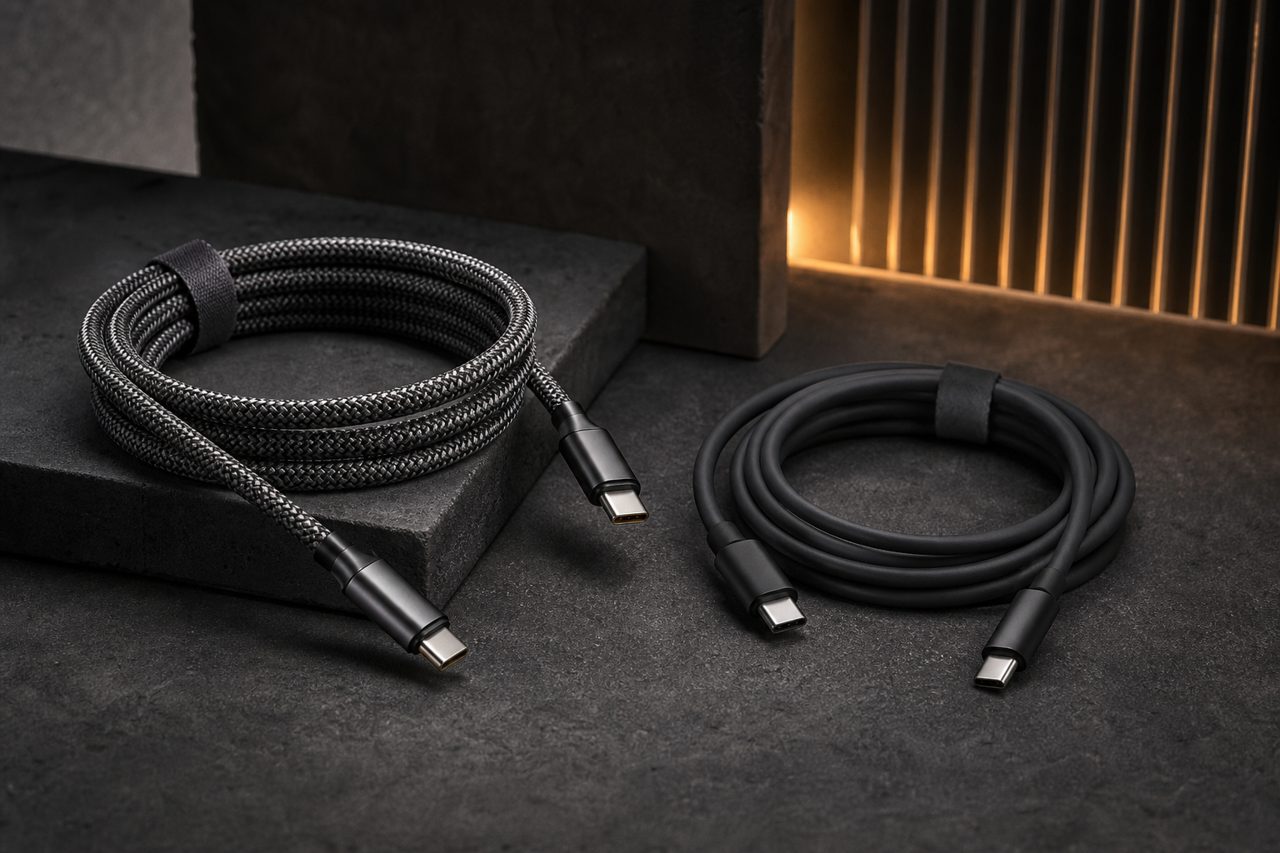
Cables sit inside a mobile accessories market worth USD 105.5 billion in 2025 (Grand View Research, 2025), and within that market the jacket has quietly become the price ladder. Two visually similar USB-C cables can differ by a multiple in retail price, and most of the visible difference is the braid. For a buyer, then, the jacket decision is really two decisions wearing one coat: an engineering decision about how the product fails, and a positioning decision about what the product signals. This comparison takes both seriously.
How the two jackets are made
A PVC cable is a conductor bundle wrapped in extruded polyvinyl chloride, a smooth thermoplastic jacket applied in one pass. It is the industry default: cheap, fast to produce, easy to color, and slim. Most TPE and TPU jackets behave similarly in this comparison, sitting closer to PVC than to braid in both cost and feel.
A braided cable adds a woven nylon sleeve over the inner insulation, woven at high density around the cable body and secured under the connector shells. The braid changes three things at once: surface texture, abrasion behavior, and bending stiffness. It does not change the conductors, the shielding or the electrical rating, which is worth stating plainly because jacket marketing often blurs the line between the armor and the skeleton.
How each one ages
The two jackets fail differently, and knowing the modes tells you which one your channel will punish:
- PVC stiffens and cracks. In cold weather and at high-flex points, PVC hardens over time and develops cracks near the strain relief, the point where the cable exits the connector housing. A stiff jacket concentrates bending stress exactly there.
- Braided frays at the ends. The woven sleeve protects the mid-cable body from abrasion and distributes bending, but where the braid terminates at the connector, loose threads appear first. Cosmetic failure arrives before functional failure.
- Both die at the strain relief. The single biggest determinant of cable lifespan is the geometry of the strain relief and the quality of the crimp inside the connector. A well-engineered relief on a PVC cable outlives a poorly-engineered one on a braid.
This is the honest summary that most jacket marketing skips: the braid improves one input, the jacket, while the failure usually lives in another, the relief design. Buyers who understand this ask about both, and their reviews show it.
The durability data to actually request
"Durability" without data is decoration. Cable factories run standard mechanical tests, and the reports are reasonable things to ask for before a bulk order:
- Bend-cycle or swing test. The cable flexes at a fixed angle and radius for a defined number of cycles; the report states whether conductors survived. This is the test closest to real failure.
- Rolling bend test. The cable is driven back and forth over a cylinder, simulating bag wear and coiling. It exposes weak splices and brittle insulation.
- Insertion cycles. The plug is cycled into a port; retention force over life is the number that predicts loose connections months later.
- Pull force at the connector. How much force the jacket and relief survive before the cable pulls out or the crimp slips.
- Low-temperature bend. Flex testing at refrigerated temperatures, relevant for cold-climate markets where PVC cracking starts.
Request the supplier's internal reports on these tests, compare suppliers on methods and pass criteria rather than on adjectives, and keep signed retention samples from the delivered run so any later dispute has a reference. Third-party lab verification is worth the cost for hero SKUs, where a single durability claim fronts a whole product line.
The side-by-side comparison
| Dimension | Braided nylon | PVC / TPE |
|---|---|---|
| Bend behavior | Distributes stress along the body; protected mid-cable | Concentrates stress at the strain relief; stiffens with age and cold |
| Failure appearance | Fraying threads at connector ends, cosmetic first | Cracks at the relief, functional first |
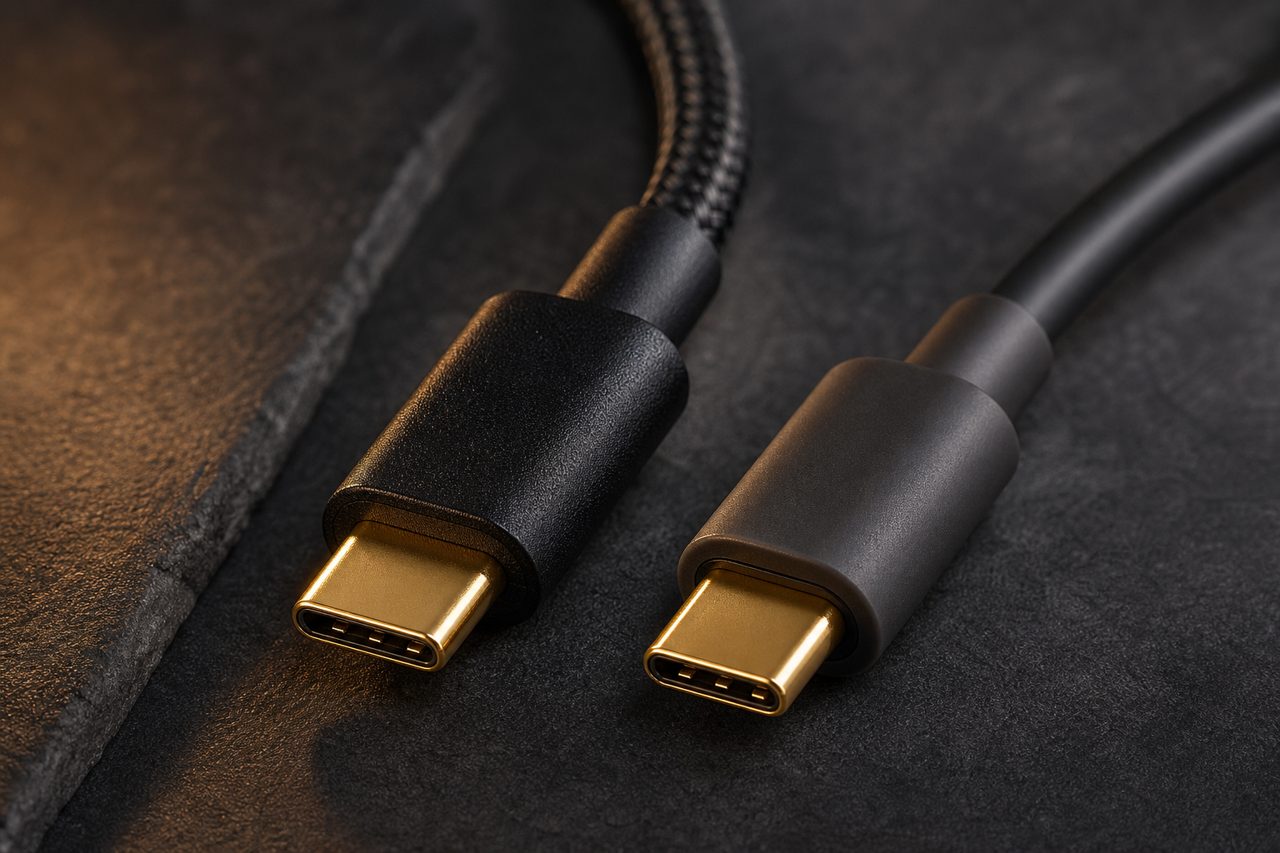
| Perceived value | Premium texture, matte finish, photographic weight | Clean and familiar, reads as standard or value tier |
| Unit cost logic | Added weaving process and material; higher cost | Extruded in one pass; lowest cost |
| Feel and handling | Grip-friendly, slightly thicker, tangle-resistant | Slimmer and lighter; smooth but can feel sticky over time |
| Color and print flexibility | Limited to filament colors; patterns cost more | Near-unlimited colors and translucent options at low cost |
| Best-fit SKU | 100W profit tier, braided hero lines, right-angle cables | 60W volume base, bundled cables, promotional tiers |
Read the table as a channel decision as much as a product one. Marketplace photography rewards the braid's texture; a value-tier listing rewards PVC's price; and a bundle that ships a cable inside every box usually wants PVC economics.
Portfolio advice
The cleanest structure uses both jackets deliberately. The volume base, typically 60W cables sold on price, runs PVC or TPE, where cost control is the entire game. The profit tier, 100W braided lines aimed at laptop desks, wears the braid because texture justifies the price band; the electrical specs underneath should be verified per the power ratings guide and the e-marker guide. Niche SKUs can lean either way: the right-angle format is covered in the right-angle cable article, and jacket choice follows its own channel logic there.
Returns discipline ties the tiers together. Cable returns are dominated by compatibility and expectation failures rather than by jackets alone, as the returns comparison between adapters and cables explains; honest listings about length, rating and feel do more for the return rate than any jacket upgrade.
Sourcing and customization
Jacket choice is also one of the easiest customizations to execute. On stock models, braided and PVC versions of the same electrical spec usually coexist in a source supplier's lineup, and stock ships from a single piece for dropshipping validation. On customized lines, jacket colorways and logo printing start at 500 pieces per SKU, and full OEM with custom connector plating, relief geometry or packaging starts at 1,000 pieces per SKU, with structural changes from 3,000; sampling runs 5-7 days for light customization and 7-12 days for full OEM. Present the packaging side of the decision alongside: the cable packaging guide covers how the jacket story translates to the box. The current lineup sits on the cables and hubs category page, and the customization path is on the OEM/ODM page.
FAQ
Do braided cables actually last longer than PVC cables?
They resist a different failure mode rather than failing less overall. A braid protects the mid-cable bend zone where PVC stiffens and cracks, but both die at the strain relief when it is badly designed. Request bend-cycle and insertion test reports and compare suppliers on those numbers.
Are braided cables worth the higher cost for a premium line?
Usually yes: texture is the most reliable perceived-value upgrade in cables. A matte braid photographs well and justifies a higher band, provided the electrical spec underneath is verified. The premium collapses fast if the rating or the e-marker turns out to be fiction.
What durability data should buyers request from a cable factory?
Bend-cycle or swing test results, plug insertion cycle counts, pull-force at the connector, and low-temperature bending behavior for cold markets. Ask for internal reports, keep signed retention samples from the run, and compare suppliers on methods rather than adjectives.