Adapters vs Cables: Which Category Has Fewer Returns
In low-ticket accessories, the return, not the sale, decides the real margin: one returned unit can erase the profit on several shipped ones. Adapters and cables sit next to each other on every connectivity shelf, yet they fail in the buyer's hands for different reasons, and the difference is an assortment decision. This comparison maps how each category comes back, and what the answer means for what you stock.
The question matters because of channel structure. Online channels captured 35.5 percent of U.S. mobile accessories sales in 2023 and keep rising (Grand View Research, 2023), and an online return is structurally easier than a store return: a label, a box, no conversation. For a low-ticket product, the arithmetic is unforgiving. The margin on a connectivity accessory is measured in a few dollars or cents, while a return consumes shipping both ways, processing time and, on marketplaces, sometimes the listing's standing. Whichever category returns less often is therefore worth more than its sticker price suggests, and the comparison between the two is not about which product is better but about which failure modes a seller can actually manage.
How cables come back
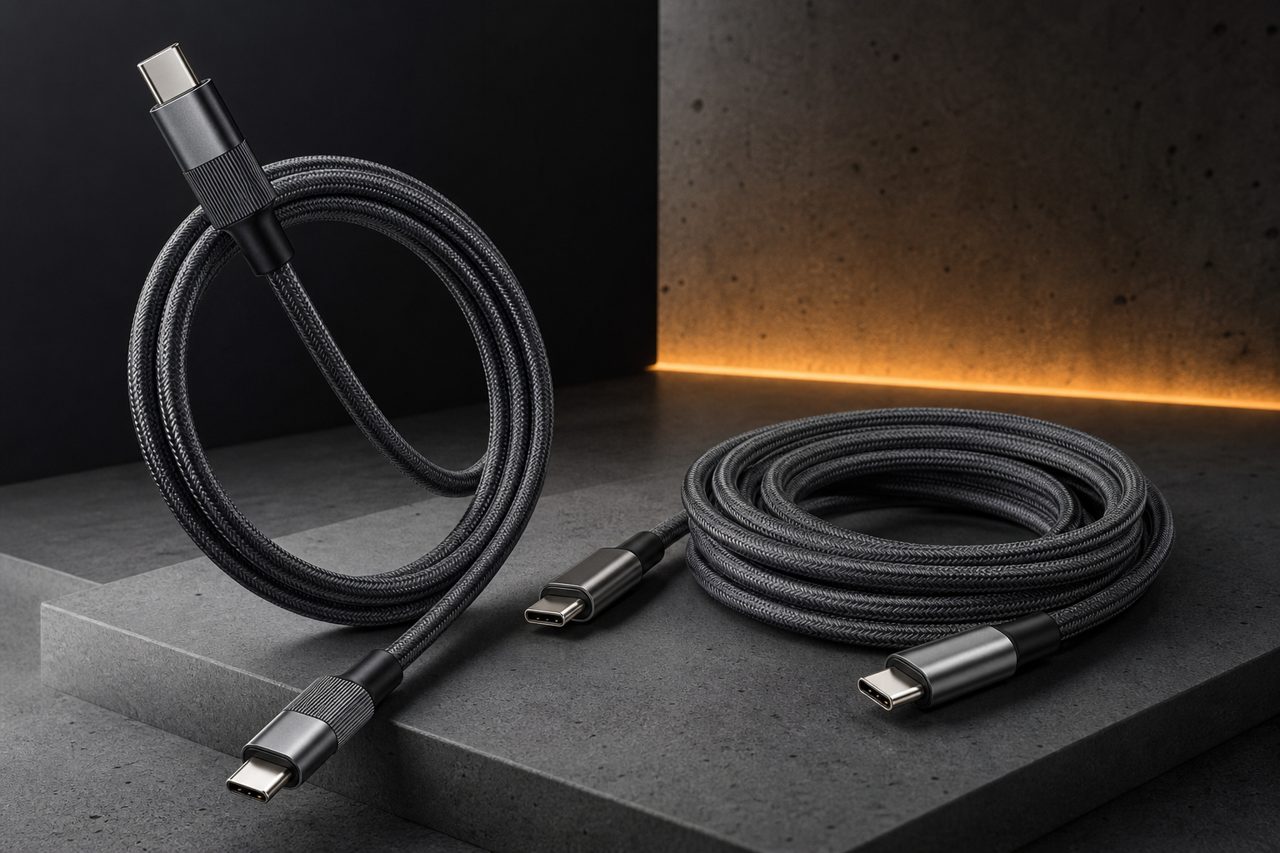
Cable returns cluster around physical, describable causes, and that is their virtue. The recurring list is short. Connectors wear out or break at the strain point after months of use, which is a durability outcome. A thin conductor reveals itself as "slow charging," which is a specification outcome: the cable was undersized for the claim, or the claim was missing, and the buyer's fast charger negotiated down. Length disappoints, shorter or longer than the buyer pictured. A data-class claim fails on the buyer's machine, usually a 10 Gbps expectation on a 480 Mbps part. And some units arrive damaged, a logistics outcome rather than a product one.
Every one of those causes shares a property: the listing could have addressed it in advance. A published gauge, an honest wattage, a stated data class, an orientation or length photo, and sturdy packaging each eliminate one recurring return at the source. Cables rarely come back because the buyer misunderstood what a cable is for.
How adapters come back
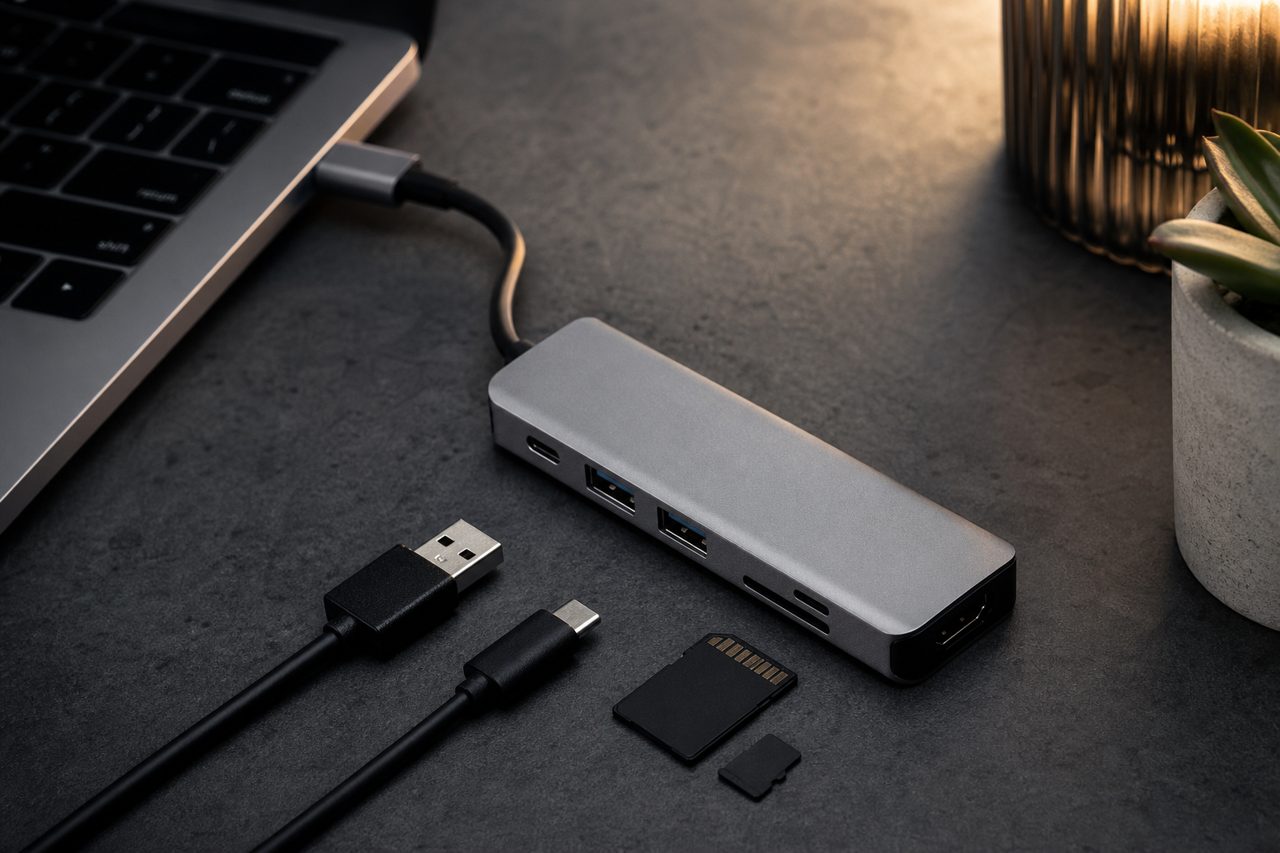
Adapter returns cluster around expectations, and that is their burden. An adapter exists to make a specific connection work, and the buyer often does not know which variable decides success. A video adapter fails when the host port never carried video at all; the adapter works, and the return is born in the buyer's laptop, not in the product. A protocol adapter disappoints when two devices negotiate differently than the buyer assumed. A travel adapter returns when the plug standard matched the wrong country, a purchase made on a packing list rather than a specification. And the broad family of "it did not do what I pictured" returns, an adapter that charges but the buyer expected data, an adapter that mirrors when the buyer expected extension, are expectation failures with no defect at all.
The structural difference is control. A cable's promises are countable and physical: gauge, wattage, class, length. An adapter's promise sits at the intersection of two other devices' behavior, which the listing can describe but never guarantee. Describing it well, plain compatibility notes, worked examples, photos of the exact scenario, narrows the gap; it cannot close it, because part of the buyer's decision was made before the listing.
The comparison, dimension by dimension
The table condenses the two categories' return anatomy. The judgment in each row reflects operational experience with connectivity assortments rather than a published statistic, and sellers should weigh it against their own review data.
| Dimension | Cables | Adapters |
|---|---|---|
| Dominant return trigger | Physical: wear, undersized conductors, length, transit damage | Expectation: compatibility gaps the buyer did not know to check |
| Listing controllability | High; gauge, wattage, class and length are publishable facts | Partial; the decisive variable lives in the buyer's other devices |
| Spec sensitivity of the buyer | Learns fast; reviews teach the category | Learns slowly; each listing must re-educate from zero |
| Damage in transit | Moderate; flexible body survives packing abuse | Higher for multi-port and folding designs with moving parts |
| Margin after one return | Usually negative for the order, recoverable across the family | More negative; adapters carry higher unit prices against the same return cost |
| Assortment lesson | Wide, honest, spec-published shelf works | Narrow, scenario-labeled shelf works |
The verdict, stated plainly
Operational experience across connectivity categories points one direction: a cable shelf, specified honestly and published completely, generates fewer expectation-driven returns than an adapter shelf of equal breadth, because the cable's promise is physical and the adapter's promise is situational. That is an inference from how the products fail, not a published figure, and the honest caveat is that execution dominates: a cable line with unpublished wattage claims will return more than an adapter line with excellent compatibility notes. The structural advice survives the caveat. Make cables the volume base of the connectivity category, and treat adapters as a curated shelf where every model earns its slot with a one-sentence compatibility story.
Cutting returns in both categories
Whatever the shelf, the levers are the same four, applied with category-specific emphasis:
- Publish the decisive spec. For cables, gauge, wattage and data class. For adapters, the exact host requirement and the two or three scenarios the adapter does and does not solve.
- Show the scenario, not the part. Photos of the cable clearing a case, or the adapter bridging two named devices, answer the question that generates the return.
- Bench-test before bulk. The voltage-drop, negotiation and compatibility checks from the earlier guides in this series cost minutes per SKU and remove the defect-driven share of returns outright.
- Make the logistics outcome painless. Transit damage cannot be fully prevented, so it must be cheap to resolve; a photo-verified damage reshipment within 30 days of delivery turns a potential negative review into a service story.
One habit makes those levers self-correcting: mine the return reasons, not just the count. Ten returns recorded as "defective" hide the pattern; the same ten recorded as "no video on my laptop," "slower than expected" and "wrong plug for my trip" write the listing fixes themselves. A one-line reason field at the point of return costs nothing and turns the returns log into an assortment roadmap, telling you which SKU's copy failed rather than which product failed.
The assortment sequence follows directly. Validate both categories cheaply through one-piece dropshipping, let review language reveal which return causes actually appear in your channel, and only then weight the buy. Browse the cables and hubs lineup to see both shelves side by side, and remember that in connectivity, the cheapest return is the one a listing prevented.
FAQ
Why do adapters generate more expectation-driven returns than cables?
An adapter is bought to make a specific connection work, and buyers often do not know which variable decides success: whether the host port carries video, whether both ends negotiate the same protocol, whether the plug matches the country. When the unspoken assumption fails, the product works as designed and still comes back. A cable's promise is physical and visible, so fewer assumptions are left to break.
Which return causes does a listing actually control?
Most of them. Compatibility notes, orientation labels, honest wattage and data-rate claims, and scenario photos pre-empt the largest return drivers in both categories. What a listing cannot prevent, transit damage and long-term wear, is handled by packaging, QA and a damage reshipment policy rather than by copy.
How should a new seller split assortment between adapters and cables?
Treat cables as the volume base and curate adapters narrowly. Three to five well-specified cable SKUs cover most demand and return little; every adapter on the shelf should have a one-sentence compatibility story with plain notes on what it does and does not solve. Validate both through one-piece dropshipping before bulk.