USB4 vs Thunderbolt: A Procurement Comparison
On a spec card, USB4 and Thunderbolt look like the same 40Gb/s port. For a buyer stocking docks and cables, the differences that matter are certification, licensing, chip cost and what can safely be printed on the box. This comparison settles those questions from the procurement side.
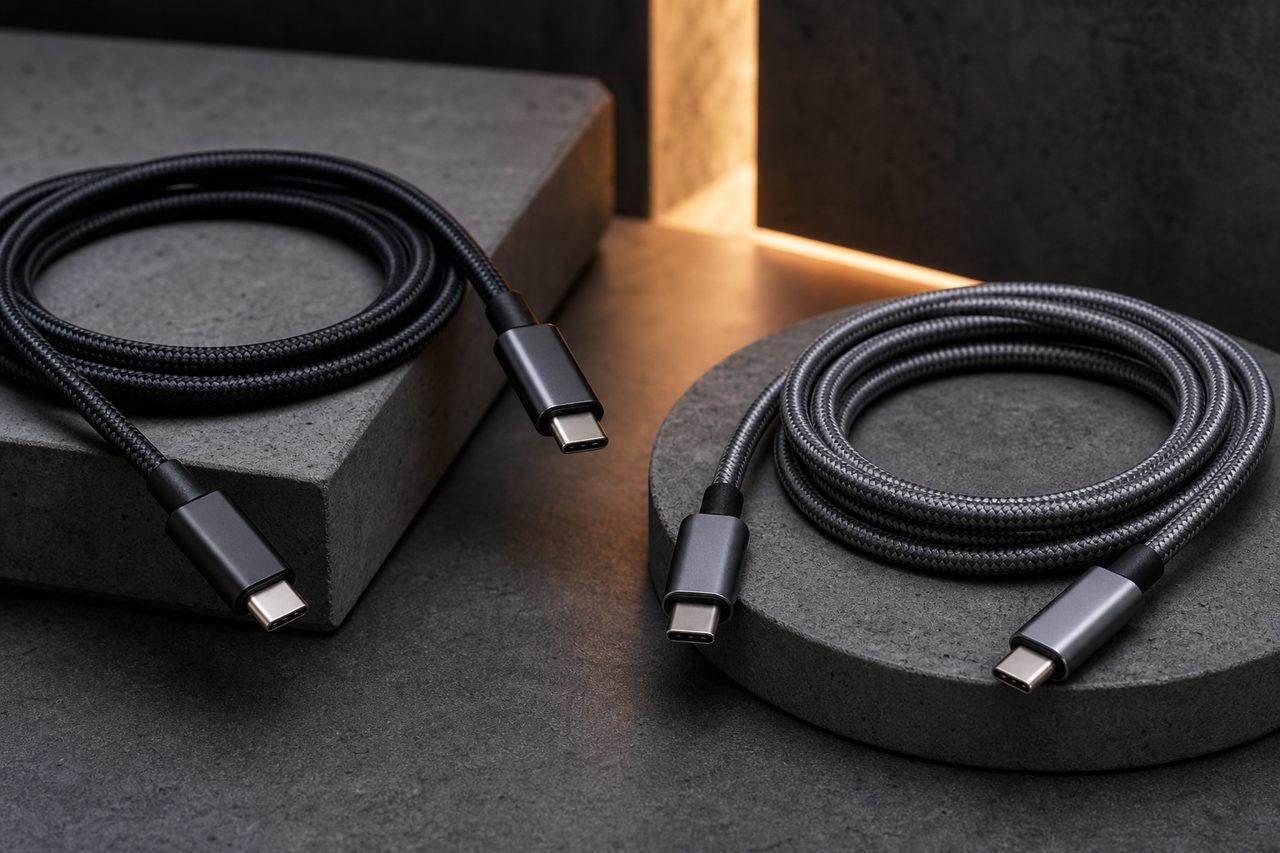
The naming soup around high-speed USB-C is a listing risk before it is a technical one. Customers ask for one thing and type another; marketplaces index titles literally; and a dock that says the wrong word either loses the click or invites a compatibility return. The EU's common charger rules unified the connector, requiring USB-C charging on phones, tablets, earbuds and more since December 28, 2024 (European Commission), but a shared connector does not mean a shared protocol tier. Beneath one plug sit several tiers of capability, and two of them carry names that sound interchangeable while being legally and technically distinct.
What each name actually is
Thunderbolt is a protocol family developed by Intel, and the name is Intel's trademark. Over USB-C, Thunderbolt 3 and 4 deliver 40Gb/s alongside DisplayPort video and PCIe data tunneling; a newer generation raises the ceiling further. Thunderbolt 4 matters commercially because it tightened the platform requirements: sustained 40Gb/s on two-meter cables, at least 32Gb/s of PCIe bandwidth to storage, dual 4K display support and 15W of port charging become mandatory rather than optional.
USB4 is the open standard published by USB-IF, built on the protocol contribution made when Thunderbolt integration was opened to the standards body. It defines two performance tiers, USB4 at 20Gb/s and USB4 at 40Gb/s, with DisplayPort and PCIe tunneling in the 40Gb/s tier, and a later revision raises signaling to 80Gb/s. The critical difference from a buyer's perspective: USB4 makes several capabilities optional, so two USB4 40Gb/s devices can support different feature sets while wearing the same badge.
The lineage explains the overlap, and the overlap explains the confusion. But lineage is not equivalence, and the differences that remain are exactly the ones procurement has to manage.
The optional-versus-mandatory distinction sounds academic until it shows up as a return. A customer with a dual-monitor expectation buys a dock wearing the USB4 badge, discovers the second display does not light on their host, and concludes the product is defective. Nothing is defective; the feature was optional and the listing did not say. The fix is disclosure: USB4 SKUs need their feature sets spelled out more explicitly than Thunderbolt SKUs, precisely because the standard guarantees less.
Certification and licensing: the real dividing line
Thunderbolt branding is gated. Putting the Thunderbolt name or logo on a product requires going through Intel's certification and licensing program, with certified controllers inside. USB4 products certify through the USB-IF's program instead. This is why the accessory market looks the way it does: most docks and cables made in the Shenzhen supply belt ship as USB4 or as USB-C with DisplayPort Alt-mode products, because that path is open, and Thunderbolt-certified accessories concentrate in brands that joined the licensed program.
For a reseller, this translates into a simple rule of claims. Uncertified products must not use Thunderbolt as a product name or badge, however well they happen to interoperate. Factual compatibility statements, tested on real hardware, are the honest middle ground: a dock that drives displays and data on Thunderbolt host ports can say so in plain language, provided the words describe observed behavior rather than borrowed branding.
Marketplace enforcement follows the same logic. Category listings increasingly ask for the certification behind protocol claims, and buyer disputes are resolved by what the listing promised rather than by what the silicon could do. A precise claim is therefore not just compliance hygiene; it is the refund shield for a category where the customer cannot see the difference from the outside.
The side-by-side comparison
| Dimension | USB4 | Thunderbolt 4 |
|---|---|---|
| Governing body | USB-IF open standard | Intel protocol and trademark |
| Peak data rate | 20Gb/s or 40Gb/s tiers; newer revision up to 80Gb/s | 40Gb/s; newer generation raises the ceiling further |
| Feature requirements | Several capabilities optional; feature sets vary by device | Mandatory minimums: dual 4K displays, 32Gb/s PCIe, 2m cable at 40Gb/s, 15W charging |
| Certification path | USB-IF certification program | Intel certification and licensing required for branding |
| Component cost and supply | Open ecosystem; broad controller and chip availability | Licensed controllers; narrower supply, higher cost structure |
| Safe listing language | USB4 40Gb/s, DisplayPort Alt-mode, wattage class | Thunderbolt branding only when certified; otherwise factual compatibility wording |
| Typical catalog fit | Mainstream docks, cables, hubs at accessory prices | Professional niche SKUs at premium prices |
Read the table as a purchasing filter: USB4 wins on openness, cost and claim safety; Thunderbolt wins on guaranteed minimums for professional workflows. A catalog rarely needs to choose once; it needs to know which customer each SKU answers.
What buyers need per SKU type
- Cables. The 40Gb/s class rides on the same physical requirements as high-wattage charging: a 5A e-marker and proper shielding. The cable-side specs are covered in the power ratings guide and the e-marker guide; verify both before bulk.
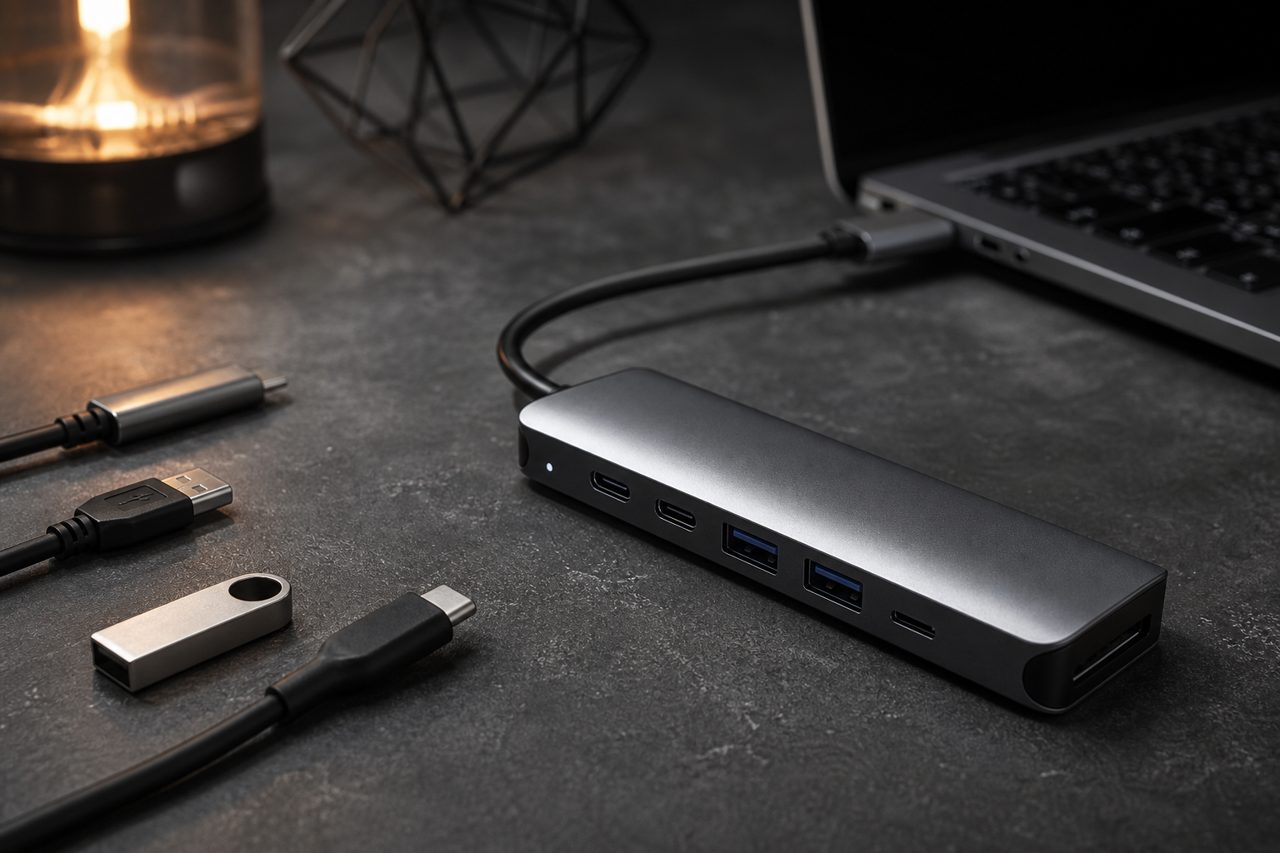
- Docks. For mainstream customers, a USB4 40Gb/s or DisplayPort Alt-mode dock answers the one-cable desk; the bandwidth math for high-resolution output is in the 8K dock requirements article. Reserve Thunderbolt positioning for certified products and professional customers.
- Hubs. Most hub buyers need 10Gb/s and charging, not 40Gb/s; stocking plain USB-C hubs at honest speeds avoids the premium-tier return risk entirely.
Claim language that survives scrutiny
The wording layer is where procurement either protects or exposes the listing:
- Name the standard tier precisely: "USB4 40Gb/s" beats "ultra fast".
- State what was tested: host types, display configurations, wattage delivered.
- Keep trademarked names out of titles and images for uncertified products; describe interoperability factually in the description instead.
- Match the claimed tier to the e-marker and certification file in hand, since platforms increasingly ask for the paperwork behind speed claims.
None of this requires legal counsel on day one; it requires the discipline to claim only what a bench test reproduced.
The procurement bottom line
For almost every catalog, the answer is to lead with USB4: it covers the mainstream 40Gb/s audience without licensing friction, pairs with the 100W cable class buyers already need, and prices within accessory bands. Thunderbolt-certified SKUs are a later-stage, professional-niche move. Stock models of docks, hubs and cables ship from a single piece for validation through dropshipping; logo and packaging customization starts at 500 pieces per SKU, and full OEM starts at 1,000 pieces per SKU, with sampling in 5-7 days for light customization. The current lineup sits on the cables and hubs category page, and the customization path is described on the OEM/ODM page.
FAQ
Is USB4 the same as Thunderbolt?
No. USB4 is USB-IF's open standard, built on the protocol contribution that opened Thunderbolt integration, over the same USB-C connector. Thunderbolt is Intel's protocol and trademark with its own generations and certification. They interoperate heavily, but certification, feature requirements and licensing differ.
Can a reseller list an accessory as Thunderbolt-compatible?
Only within strict limits: the name and logo as branding require Intel certification and licensing. Factual, tested compatibility statements are the safer pattern for uncertified products, and the default positioning should be USB4 or USB-C DisplayPort Alt-mode wording.
Which should a catalog stock first, USB4 or Thunderbolt?
USB4, for almost every catalog: it covers the mainstream 40Gb/s audience without licensing friction and pairs with the 100W cable class. Thunderbolt-certified SKUs serve a professional niche that pays a premium and expects certified devices; that is a later-stage move.