The Desk Charging Station: Bundles That Sell
A desk charging station is not a product, it is a small architecture: one power hub, a few purposeful cables, and a home for every device on the desk. Sold as a bundle, that architecture carries higher order values and longer customer relationships than any single charger.
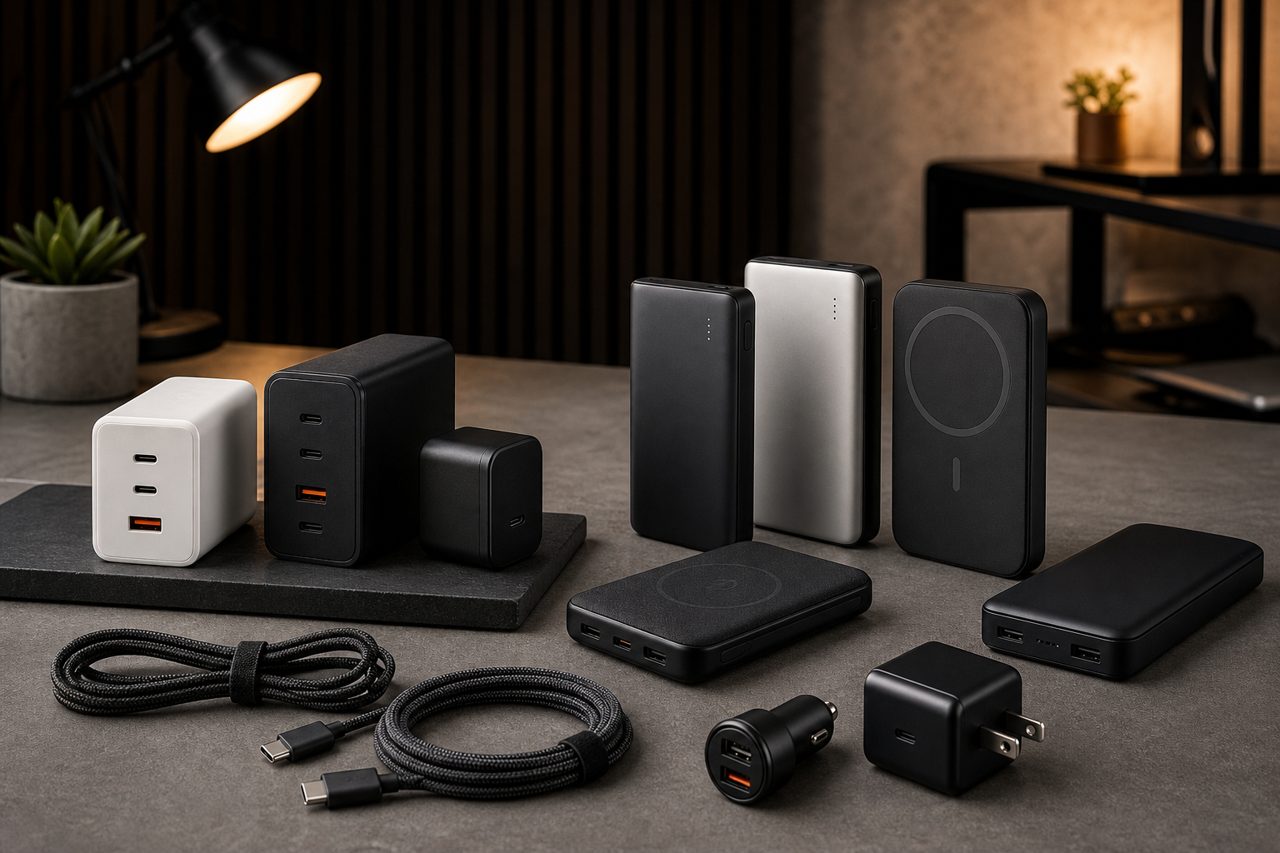
The modern desk runs on batteries that all run out at once. A laptop, a phone, earbuds and whatever wearable came home on a wrist converge on the same workspace every evening and compete for the same two outlets. Sellers who answer that scene with a single charger answer only part of the problem; sellers who answer it with a charging station - the hub, the cables, the stand, the cable discipline - sell the outcome customers actually want: a desk that charges everything overnight and looks intentional doing it.
The scene is also unusually durable. Desks do not go out of fashion, remote work has installed a second desk in millions of homes, and every device added to a household deepens the charging queue. A station sold today faces a customer who will keep adding devices to it - which makes the buyer's real question not "how many ports do I use today" but "how many devices will this desk hold by next year". The tiers below are built around that question.
Who buys desk charging stations
Three buyer groups carry this scenario. Remote and hybrid workers outfit their home offices, and charging is a visible, daily-use purchase they research properly. Corporate procurement buys desks in programs - onboarding kits, office refreshes, conference gifts - where identical sets ship in quantity and a logo turns hardware into a branded touchpoint. E-commerce bundle sellers, meanwhile, need assortments with higher average order value than single accessories provide, and a desk station is the most natural step up in the charging category. The audiences overlap usefully: the same bundle that converts a consumer can be quoted, with a logo and a box, to a procurement officer.
Starter tier: the one-box upgrade
The starter bundle answers the smallest possible brief - replace the pile of wall warts behind the desk with one hub:
- 65W dual-port GaN charger. Laptop on one port, phone on the other. The compact body hides behind a monitor, which matters more on a desk than anywhere else. See our GaN guide for what to verify.
- Two USB-C cables, 1.5-2m, 100W-rated. Long enough to route around a monitor arm, rated to carry the laptop's full draw.
- Four cable clips. The least expensive item in the box and the one that makes the result look designed rather than improvised.
This tier wins on price accessibility: it converts buyers who want order but hesitate at a larger set, and it introduces the logic of the category - one hub, routed cables, a place for everything.
Pro tier: the full station
The pro bundle serves the desk where several devices settle in for the night and nobody wants to think about it again:
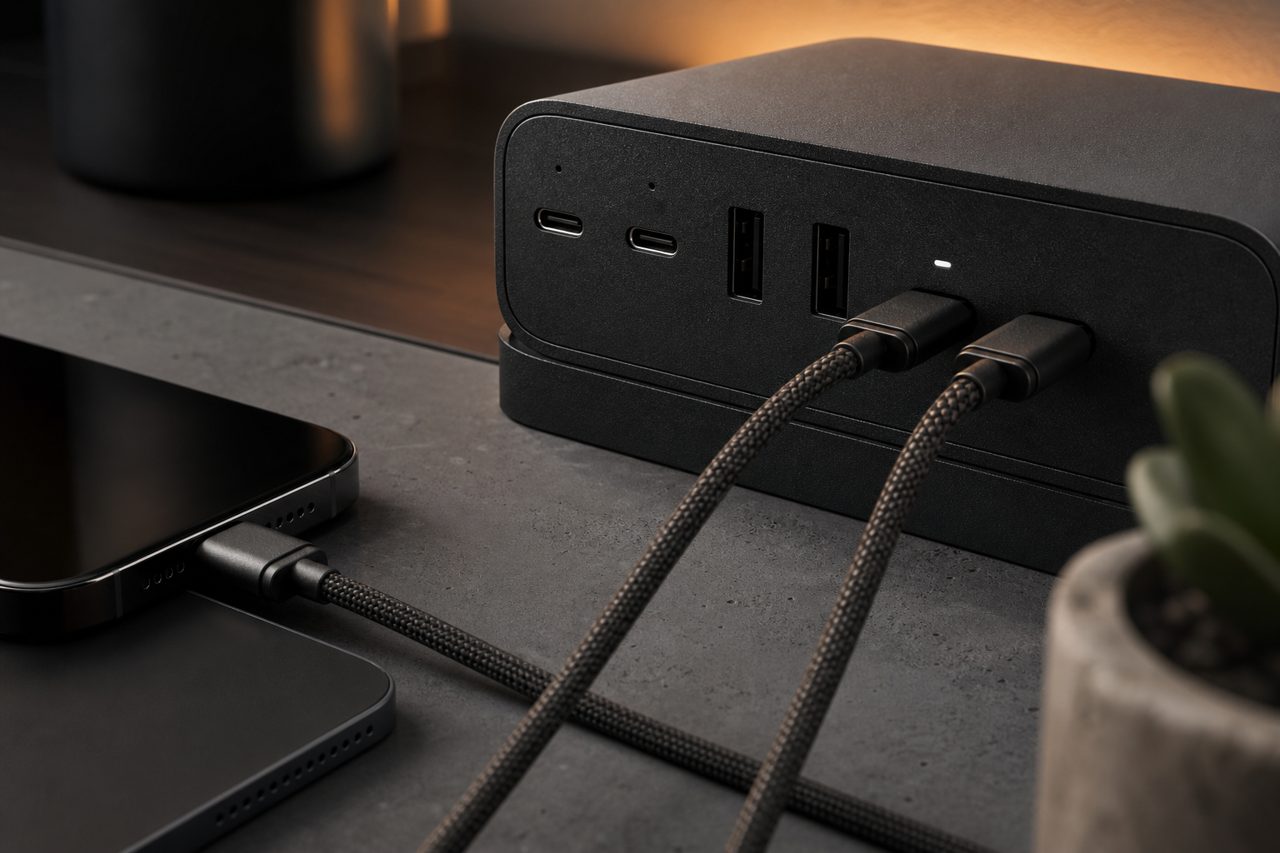
- 100W four-port desktop charger. Laptop on a full-output USB-C port; phone, earbuds and a spare port negotiating their shares. The four-port hub is the heart of the station and where the per-port split behavior must be documented, as covered in our wattage comparison.
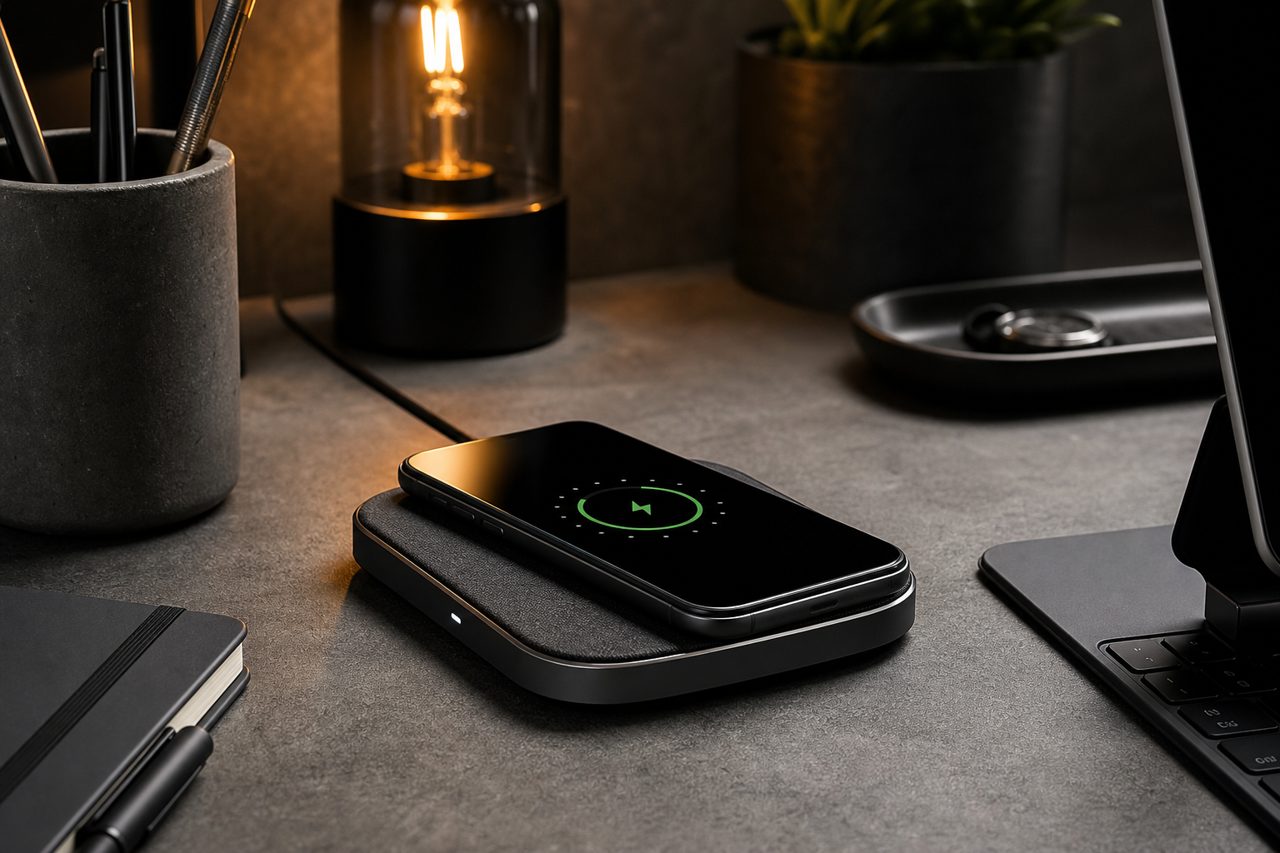
- Magnetic wireless stand. The phone's destination on the desk - snap on at an angle, usable while charging, aligned every time. Our Qi2 guide covers verification.
- Two short 0.5m cables. Short runs from hub to stand keep the desk surface clean; length is a design flaw when the stand sits beside the hub.
- A desk stand or dock for the hub. Mounting the charger vertically turns the power hub into a furniture-grade object and hides the cable ends entirely.
- Cable channels or a raceway. The finishing line between a desk with charging and a charging station.
Why bundles beat single SKUs on the desk
Three mechanisms make the bundle outperform its parts. Attach rate: every component in a station is a product the customer would eventually have bought separately, and the bundle captures them in one decision. Order value: a station prices in a different band than any of its components, escaping the race-to-the-bottom that single chargers compete in. And placement: a desk station lives in view, used every day, which turns the product into a permanent advertisement - and, for branded sets, the logo into a daily touchpoint. That visibility is precisely why corporate buyers pay for the same hardware consumers buy: the desk is where a brand gets seen on purpose.
Bundles also consolidate the service story. One supplier, one warranty contact, one replacement path for the whole station - a simplicity that consumers feel as convenience and procurement teams read as vendor consolidation. When a single cable fails inside a set, the difference between "contact the seller of that cable" and "one message, new cable, no questions" is the difference between a transaction and a relationship.
Setup mistakes to design against
Every desk station inherits the same failure gallery, and a bundle that designs against them earns reviews instead of returns:
- The snake nest. Six cables and no routing - solved by clips, channels and short runs in the box, not by an instruction to "be tidier".
- The wrong-length cable. Meter-long cables stretched taut across a desk, or two-meter coils behind a stand - that is why the tiers specify lengths per position.
- The mystery slowdown. A second device plugged in quietly halves the laptop's speed - prevented by publishing the split table and keeping at least one port at full output.
- The slide-off phone. A pad without magnets, angled for looks, drops the phone - the magnetic stand exists precisely to close this review.
- The wall wart that never left. A station that still requires one charger in the wall outlet has failed its own pitch - check the hub genuinely replaces it.
Listing advice for desk bundles
- Sell the after photo. The before-and-after of a cable pile versus a routed station is the strongest image pair in this scenario.
- Name the devices, not the ports. "Laptop, phone and earbuds charged from one spot" describes the outcome; port tables belong in the specs.
- Publish the split table. State per-port power under multi-device load on the listing and the box - the transparency prevents the returns that plague multi-port products.
- Offer both tiers side by side. The starter set anchors the price; the pro set sells the complete outcome; most buyers sort themselves without help.
- Bundle a spare cable. It costs little, pre-empts the most common replacement purchase, and reads as generosity.
Sourcing and branding the line
Desk stations assemble from the same stock components that fill the charging category, which keeps the sourcing path short. Validate the tiers from single units via dropshipping, reading which components sell and which merely ship. Branding runs on the standard ladder: logo printing and custom retail packaging from 500 sets per SKU with 5-7 day sampling; a custom housing - the step that turns a hub into "your" station - from 1,000 pieces per SKU with 7-12 day sampling, structural changes from 3,000. Every set ships within 48 hours of order and carries the 30-day photo-evidence damage replacement, and corporate sets can be quoted per program volume. For buyers building toward a full branded line, the OEM/ODM process maps the custom path from housing to certification.
FAQ
How many charging ports does a desk station need?
Three to four covers most desks: laptop on one full-output USB-C port, phone and earbuds cycling through the others, one port spare. A 100W-class four-port hub fits the pattern without forcing charging priorities.
Does a multi-port desktop charger slow devices down?
Only when combined draw exceeds total output, in which case power splits by the manufacturer's rules. A well-designed unit keeps at least one port at full negotiated speed and states its split behavior on the box - verify it on samples.
What is the MOQ for a branded desk charging set?
Logo and custom packaging start at 500 sets per SKU (5-7 day sampling); a custom housing starts at 1,000 pieces (7-12 day sampling), with structural changes from 3,000. Stock components ship from one piece for validation.