Qi2 and Magnetic Wireless Charging: A Sourcing Guide
Magnetic alignment turned wireless charging from a fiddly compromise into a category customers actually ask for by name. This guide explains what Qi2 and the newer Qi2.2 revision changed, which product forms deserve shelf space, and what to verify with suppliers before ordering.
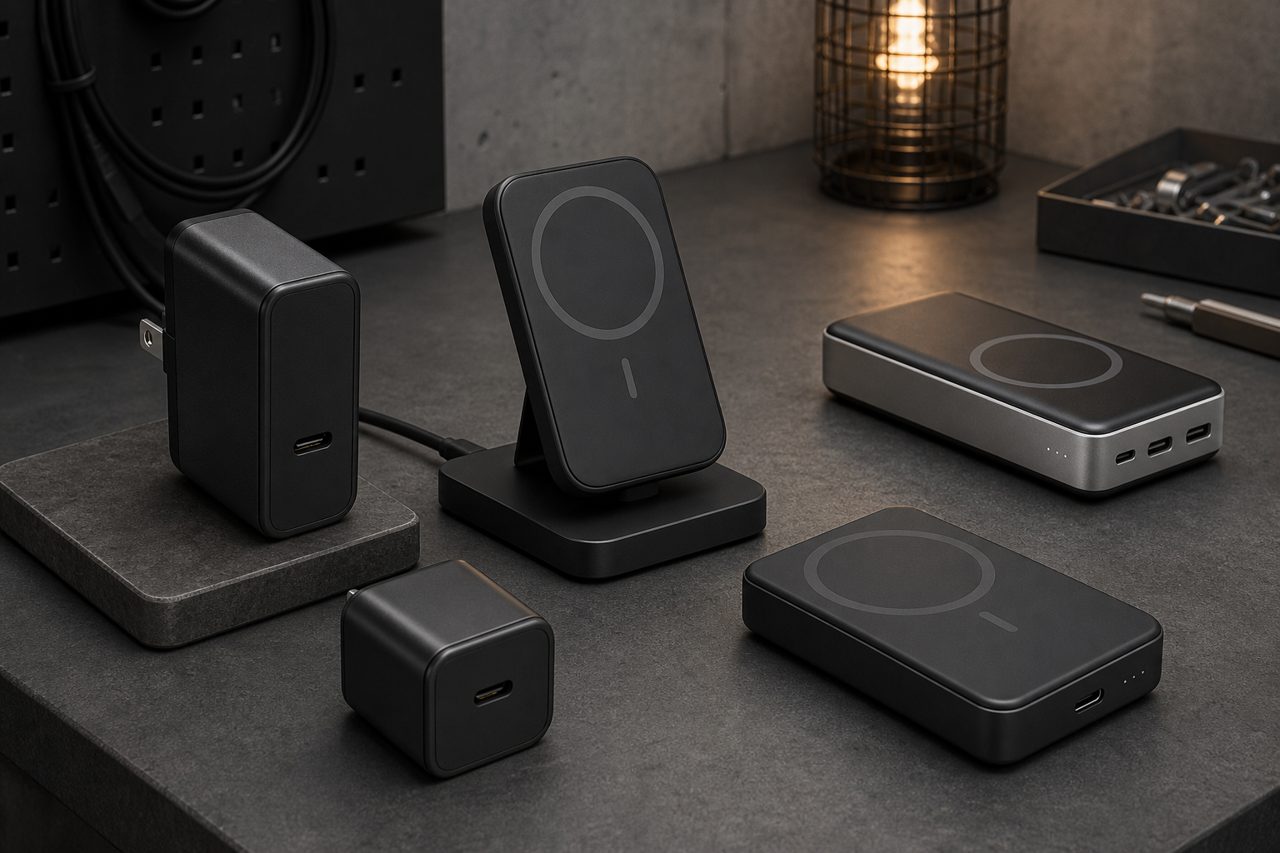
Wireless charging is one of the fastest-growing corners of the accessories market: the global wireless charger market is forecast to reach USD 19.0 billion by 2030, growing at a 22.9 percent CAGR (Grand View Research, 2025-2030). The technology behind that growth is changing at the same time. In 2025 the Wireless Power Consortium published Qi2.2, lifting the wireless charging power ceiling to 25W (Wireless Power Consortium, 2025) - a meaningful step for buyers, because power level, magnet behavior and certification all interact in ways that decide returns and reviews.
What Qi2 actually changed
Qi is the wireless charging standard maintained by the Wireless Power Consortium (WPC), and it has been the common language of wire-free charging across phone brands for years. The first generation of Qi chargers shared one weakness: coil alignment. A phone resting even a few millimeters off-center wastes energy as heat, charges slower, and can trigger the thermal throttling that generates "wireless charging is slow" reviews.
Qi2 addressed the root cause with its Magnetic Power Profile: a ring of magnets in the charger, matched by magnets in the device, snaps the phone into the correct position every time. Alignment stops being a user skill, energy transfer becomes more efficient, and heat drops. The magnetic approach first proved itself on flagship phones before Qi2 standardized it across the industry - which is precisely why the standard matters to buyers: it turns a proprietary convenience into a catalog-wide product category.
Standardization has a second-order benefit that shows up directly in assortment economics. A magnetic pad built to the Qi2 profile serves any compliant phone, regardless of brand, which means one SKU covers a far wider device base than connector-specific accessories ever could. Retailers carry fewer variants, and a single product listing keeps selling as the device installed base rotates year after year.
Qi2.2: the 25W step
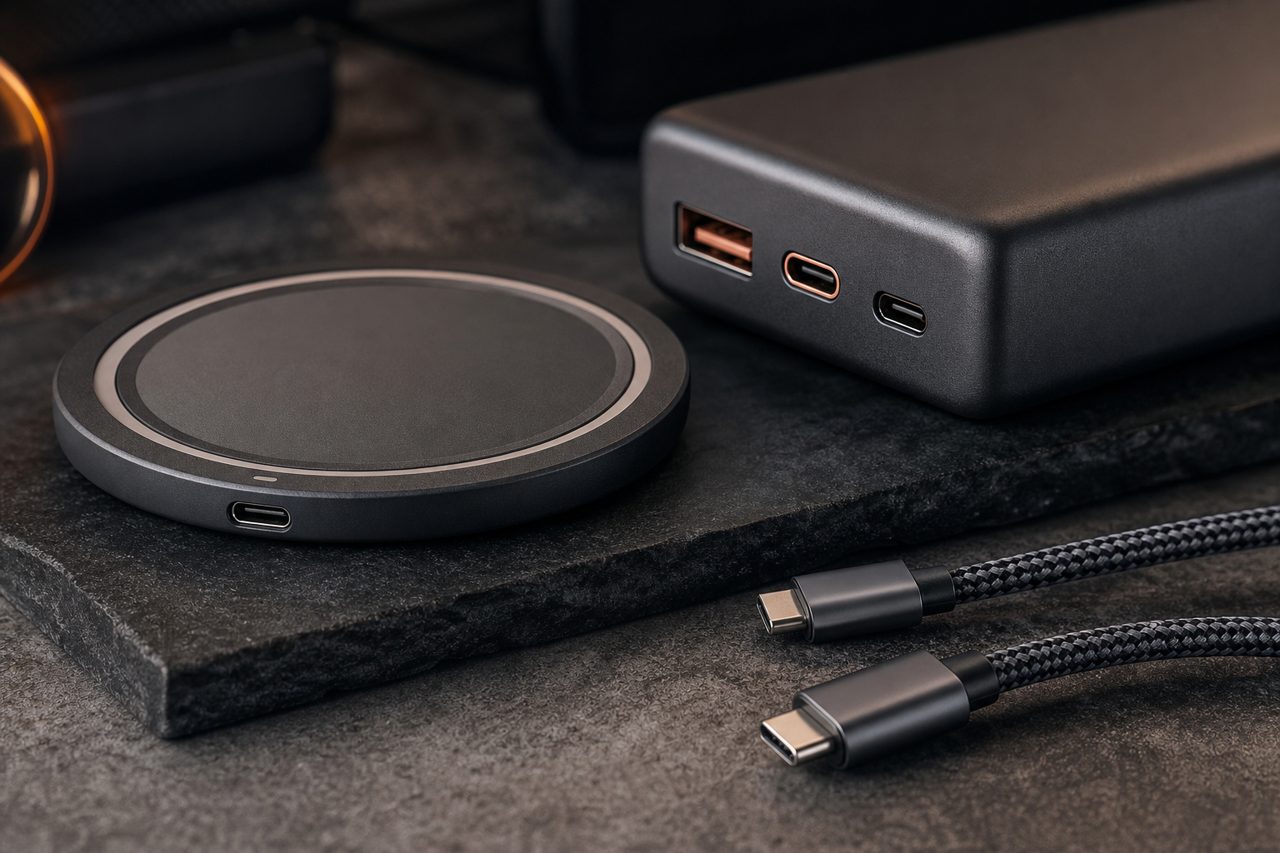
The Qi2.2 revision, published in 2025, raised the wireless power ceiling from 15W to 25W (Wireless Power Consortium, 2025). For buyers, three consequences follow. First, the performance gap between wired and wireless charging narrows, which widens the audience beyond convenience buyers to people who genuinely rely on wireless as their primary charging method. Second, chargers sold as Qi2.2 need thermal designs - coil, shielding, housing - engineered for the higher sustained load, and that is a real engineering difference a buyer can test. Third, the market splits into price tiers that a store can merchandise: standard Qi pads at entry prices, Qi2 magnetic chargers in the middle, and Qi2.2 25W products at the top.
Plan the transition deliberately. Stock labeled only for 15W will sit beside 25W products at similar-looking prices, and the shelf comparison starts without asking anyone. Deciding now which SKUs refresh to the new revision - and in what order - costs nothing; deciding after customers ask costs sales.
The standard at a glance
| Attribute | Qi (baseline) | Qi2 | Qi2.2 |
|---|---|---|---|
| Max power | About 5W baseline, up to 15W extended | 15W | 25W |
| Magnetic alignment | No | Yes | Yes |
| Typical efficiency at correct alignment | Alignment-dependent | Consistent - magnet locked | Consistent - magnet locked |
| Typical products | Basic pads and stands | Magnetic pads, power banks, car mounts | High-output magnetic chargers and banks |
| Positioning in a catalog | Entry price tier | Mainstream tier | Premium tier |
Compatibility: who charges at what speed
Compatibility questions dominate customer inquiries in this category, so the rules deserve precision. A Qi2 or Qi2.2 charger works with every Qi-capable device - backward compatibility is built into the standard. The device negotiates what it can accept, and the charger delivers accordingly.
- Devices with native Qi2 magnets receive the full aligned experience at the highest speed they support.
- Older Qi phones without magnets charge at standard Qi speeds; alignment falls back on the user placing the phone reasonably centered.
- Phones without magnets but with magnet-ring cases regain the aligned position, which is why magnet cases are the natural cross-sell next to every Qi2 charger.
- Devices that accept 25W reach Qi2.2 speeds only when charger, cable and power source all support the required input.
That last point trips up listings: a 25W pad powered by an inadequate USB-A source will not deliver 25W. Specify the included power adapter and cable for every Qi2 SKU, and state plainly what input the charger needs to hit its rated output.
Where possible, photograph the exact pairing that works - charger, cable, adapter - because visual confirmation preempts the compatibility questions that otherwise arrive as support tickets. The same photo doubles as a bundle image for a desk-charging offer, turning a specification detail into a merchandising asset.
Product forms worth stocking
Magnetic wireless charging spans several product forms, and they serve different buyers. Magnetic desk pads and stands serve the everyday segment and pair naturally with phone stands and cases. Magnetic power banks snap to the back of the phone and effectively convert the capacity discussion from our capacity guide into a wireless form - alignment plus capacity is a strong combined claim. Magnetic car mounts with integrated charging own the navigation use case, where one-hand docking is the entire product. Desk stands with adjustable angles serve the video-call segment that grew with remote work.
For a new assortment, the pragmatic entry is one magnetic pad, one magnetic power bank, and one car mount - three SKUs that cover desk, mobile and driving scenarios, each testable with a small order before deeper inventory commitments. Margins in this subcategory also tend to be steadier than on wall chargers, because competition focuses less on wattage-per-dollar and more on differentiators that are visible in product photos: magnet behavior, materials, finish, angle adjustments.
Verification checklist before ordering
- Certification status. Ask whether the specific model is Qi certified and whether the Qi mark may legally appear on your packaging; the logo is a WPC certification mark, not a free decoration.
- Foreign object detection. Confirm the charger detects coins, keys and cards between coils and cuts power - a safety behavior marketplaces increasingly expect.
- Thermal behavior. Run a thirty-minute charge test on the fastest supported device and record surface temperature; excessive heat predicts throttling and returns.
- Magnet strength and alignment tolerance. The snap should be confident at slight angles, and the phone should survive a desk bump without sliding off - weak magnets are a top one-star driver.
- Case-on performance. Test with a typical case thickness, since real customers charge through cases every day.
- Input requirements. Document the minimum power source needed for rated output and print it on the box.
From test order to branded line
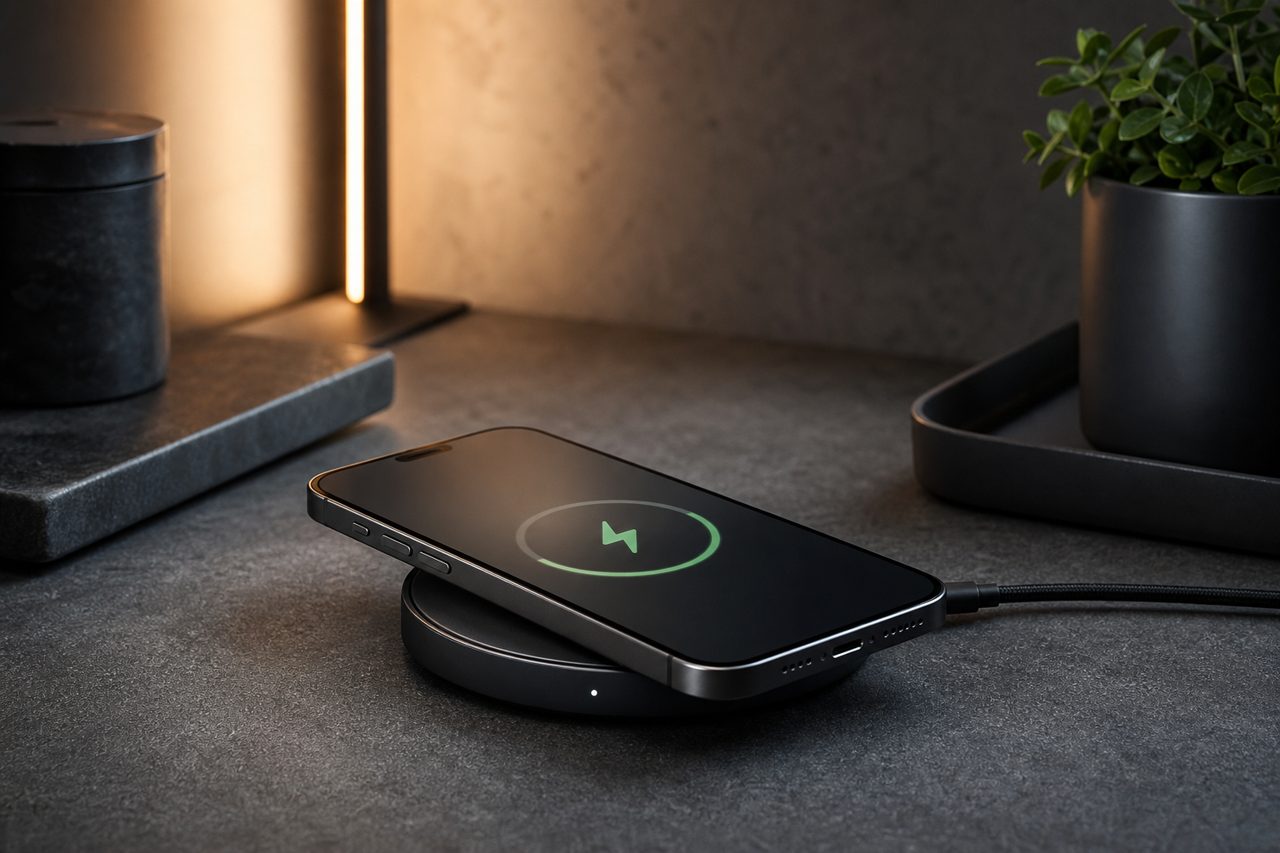
Magnetic wireless products follow the same sourcing ladder as the rest of the charging category. Stock models ship from one piece, so each form factor can be validated through dropshipping before inventory commitments. Logo printing and retail packaging start at 500 pieces per SKU with 5-7 day sampling, and a fully custom housing - mold, structure, finish - starts at 1,000 pieces per SKU with 7-12 day sampling. The charging category lists current Qi2-ready models, and the OEM/ODM process covers the custom path when a branded magnetic line is the goal.
FAQ
Do Qi2 chargers work with phones that have no built-in magnets?
Yes, with a limitation. Any Qi-capable phone charges on a Qi2 pad, but without magnets it cannot lock into the aligned position and so charges at standard Qi speeds. A case with an integrated magnet ring restores alignment and the full magnetic experience.
Is Qi2.2 25W charging backward compatible?
Yes. A Qi2.2 charger negotiates with each device: 25W-capable devices receive 25W, Qi2 devices charge at their rated level, and older Qi phones fall back to standard speeds. No device is forced beyond what it accepts.
Can any factory print the Qi logo on a charger?
No. The Qi logo is a certification mark of the Wireless Power Consortium, and legitimate use on products or packaging requires Qi certification for the specific model. Ask suppliers for the certification status per model rather than treating the logo as a default.