Single-Port vs Multi-Port Chargers: Margin and Returns Analysis
Multi-port chargers look like pure upside: same shelf space, higher ticket. The margin story is real, but so is the return risk. This comparison puts both formats side by side so the stocking decision is made on structure, not on wishful thinking.
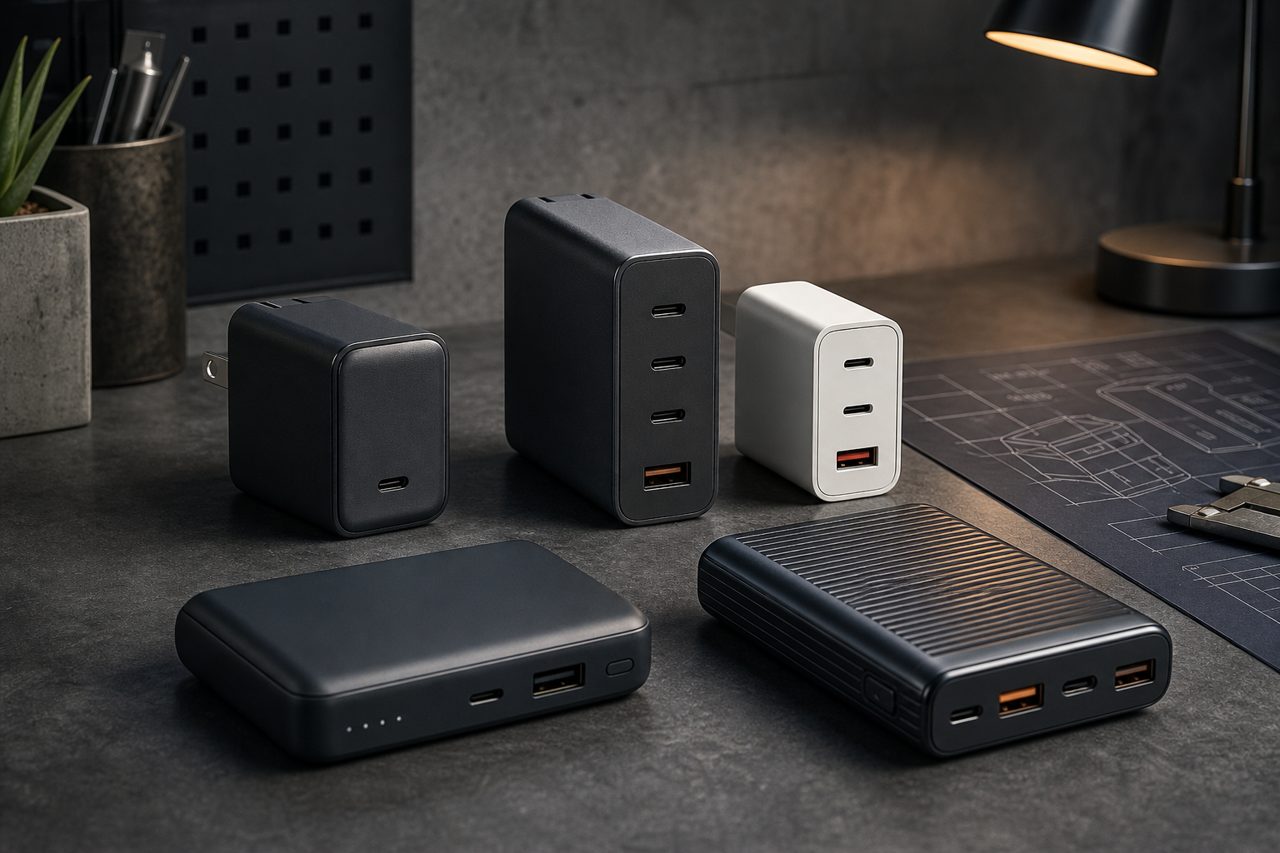
The backdrop favors both formats. The mobile accessories market is growing at a 7.8% CAGR through 2033 (Grand View Research, 2025), and within charging, the shift to GaN has been decisive: the global GaN charger market is set to grow from USD 1.06 billion in 2024 to USD 9.75 billion by 2034 (Precedence Research). Because GaN shrank the internals, a three-port charger stopped looking like a desk brick, and multi-port models moved from a niche for technologists to a default choice for households with three devices and one outlet. That mainstreaming is exactly why the decision deserves analysis: volume now flows through both formats, and each fails in different ways.
How the formats differ inside the housing
A single-port charger runs one negotiation. Its microcontroller talks to one device, agrees on a voltage and current, and delivers everything it has. The engineering problem is mature, the bill of materials is short, and behavior is predictable across devices.
A multi-port charger runs several negotiations at once under a power budget. The firmware decides how total output divides across ports, which port gets priority when a new device connects, and how the split re-balances when one device finishes charging. Each port may support different protocol sets, and thermal constraints can derate output further. Every one of those decisions is a place where the design can be generous or cheap, which is why two 100W three-port chargers can behave nothing alike despite identical headline specs.
This is the root of both the opportunity and the risk. The splitting logic is invisible in photos, so it does not sell the product; it surfaces after the sale, in reviews and returns.
Margin logic, stated honestly
The structural margin case for each format is different, and neither is automatically better:
- Single-port competes on price in a commodity band. Entry-level wattages are crowded, comparison shopping is brutal, and differentiation is limited to size, finish and plug format. Margin comes from operational efficiency: sourcing cost, defect rate and logistics speed.
- Multi-port competes on specification and moves up-ticket. The higher total wattage supports a higher retail price, and the splitting table is a genuine differentiator that comparison shoppers can read. Margin comes from specification: a well-tuned splitting design justifies its price against generic lookalikes.
The costs differ accordingly. Multi-port models carry more ports to test, more protocol chips to verify, more firmware cases to QC, and a heavier after-sale load per unit sold, because there are more combinations a customer can blame. When you model margin, model service too: the format with the higher ticket also carries the higher probability that a ticket arrives at all. Buyers who track only purchase price miss this asymmetry, and it is the single most common modeling error in this category.
Where the returns come from
Return reasons cluster differently by format, and the clusters point at different fixes. Single-port returns are dominated by compatibility surprises: a device negotiating a lower profile than the buyer expected, or a cable in the box chain capping the current. Multi-port returns are dominated by expectation mismatch: output that dips when three devices share the charger, ports that behave differently from the listing image, and confusion about which port is the fast one.
Both clusters respond to the same medicine: disclosure. The table below summarizes the structural comparison.
| Dimension | Single-port charger | Multi-port charger |
|---|---|---|
| Price positioning | Entry to mid band, commodity pricing | Mid to premium band, spec-based pricing |
| Perceived value | Set by size and finish | Set by port count, total wattage and splitting design |
| Main return driver | Compatibility surprises (cable, negotiated profile) | Expectation mismatch (splitting dips, port differences) |
| Listing burden | Low: one port, one profile set | High: splitting table per port combination |
| After-sale load | Lower per unit | Higher per unit; more combinations to troubleshoot |
| Best-fit channel | Volume marketplaces, price-led segments | Brand stores, review-driven marketplaces, B2B gifting |
| First-SKU advice | 30-65W for reach | 65-100W, 2x USB-C + 1x USB-A for coverage |
The spec lines that prevent the returns
Whatever the format, the listing should carry a power-splitting table copied from the actual specification, not invented for marketing. An honest example of what a 100W three-port disclosure looks like:
| Ports in use | Output split (example) |
|---|---|
| USB-C 1 alone | 100W |
| USB-C 2 alone | 65W |
| USB-C 1 + USB-C 2 | 65W + 20W |
| USB-C 1 + USB-A | 65W + 18W |
| Three ports together | 45W + 20W + 18W |
Three habits turn this table into return prevention. Put it in the listing images, not only in the spec sheet, because image text gets read and spec sheets get skipped. Test the rows on the sample bench before publishing, since published numbers that fail on a meter become refund evidence. And state the per-port protocol support alongside, because a laptop that negotiates 100W solo will not do so from a port capped lower.
Which format to stock first
The right opening move depends on the seller, not on the format:
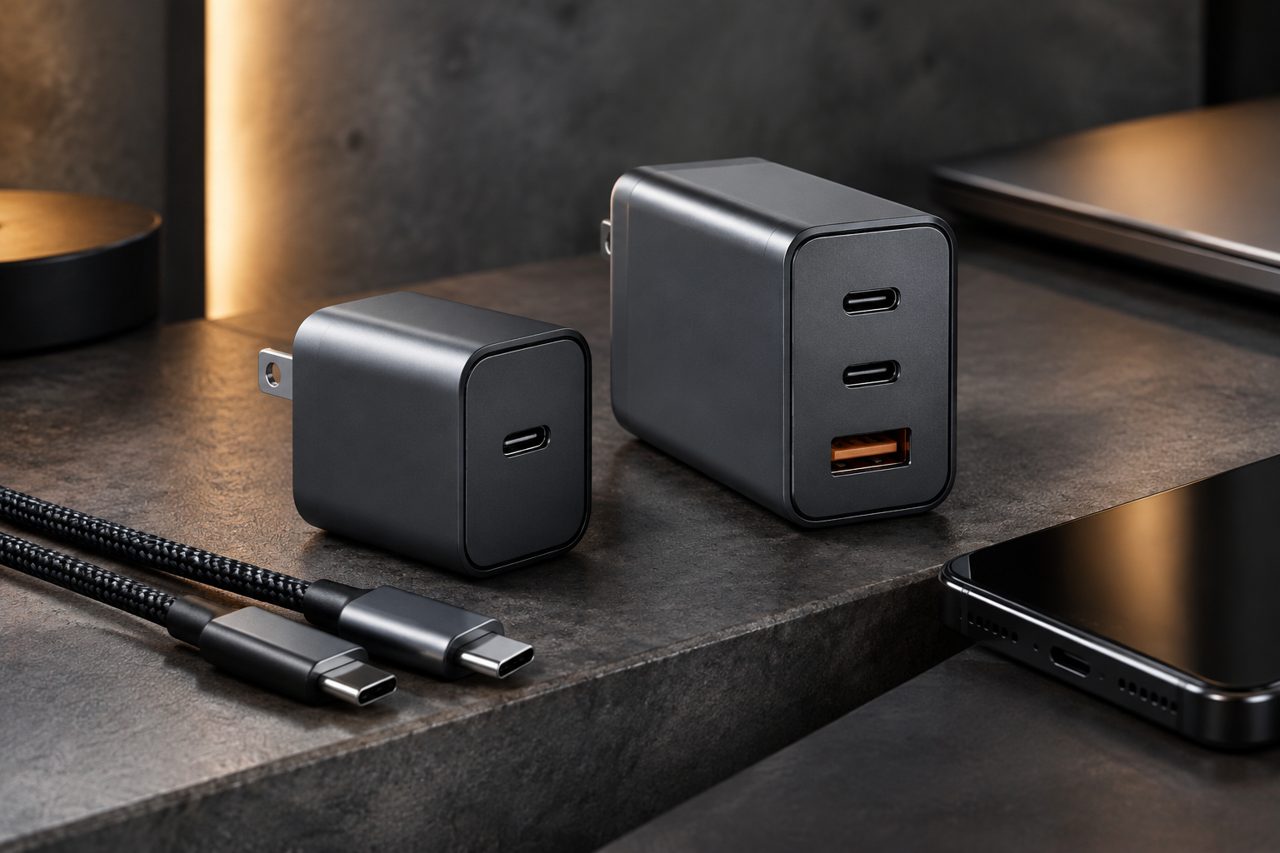
- New dropshipper. Lead with one or two single-port models at 30-65W for reach and price competitiveness, and add a single 65-100W dual-port model to capture the desk scenario. Validate review language before scaling any SKU.
- Marketplace seller with review capital. A multi-port hero SKU with a published splitting table differentiates harder than another commodity wall charger, and the review base defends the higher price.
- DTC brand or B2B gifting. Multi-port desktop models carry the brand story better: the product sits on a desk, visible, doing several jobs at once.
Wattage selection inside each format is its own decision; the wattage comparison covers how 65W, 100W and 140W segment the demand. The technology layer behind high-wattage models is covered in the GaN technology guide.
Sourcing both formats from one production line
Both formats reward the same staged sourcing. Stock models ship from a single piece, so both can be tested through dropshipping in parallel. Once a winner emerges, logo printing and retail packaging start at 500 pieces per SKU, and full OEM with a custom housing and tuned splitting firmware starts at 1,000 pieces per SKU, with structural changes from 3,000. Sampling runs 5-7 days for light customization and 7-12 days for full OEM, with volume production in 12-15 and 25-35 days. The current single- and multi-port models sit on the charging category page, and the OEM/ODM process covers custom housing and firmware work.

FAQ
Do multi-port chargers slow down when several devices are connected?
Yes, by design. Total output divides across the ports in use according to the splitting table, so a three-device setup rarely gives any device its solo maximum. It is normal engineering, not a defect, and publishing the table in the listing prevents the surprise that drives returns.
Which multi-port charger should a first-time stocker start with?
The 65-100W class with two USB-C ports and one USB-A port covers the widest audience, since a laptop plus two smaller devices is the most common desk scenario. Below that range the splitting compromises get visible; above it, the buyer niche narrows.
Is GaN required for a competitive multi-port charger?
GaN is what makes high-total-wattage multi-port housings compact and cool, and at 65W and above it is the baseline expectation. The splitting logic, per-port protocol support and thermal design decide how it actually behaves under load.