How to Choose Power Bank Capacity: 10,000 vs 20,000 mAh for Retail
Capacity is the first number a power bank shopper reads and the first decision a buyer has to defend. This guide gives resellers a working method: convert mAh to watt-hours, understand delivered capacity, match the size to the audience, and verify the claims before ordering.
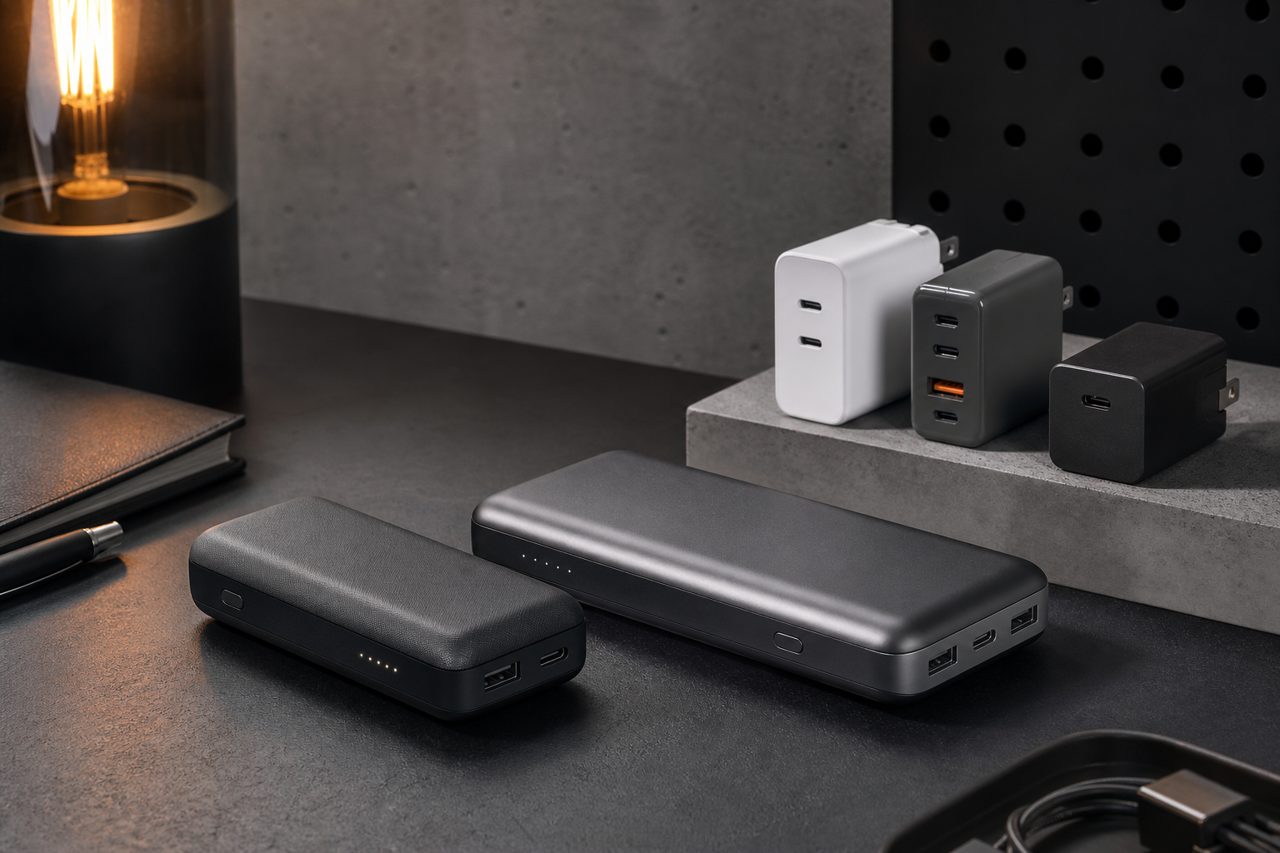
Power banks remain one of the most competitive categories in accessories. The global market was valued at USD 20.9 billion in 2025 and is projected to reach USD 39.5 billion by 2033 (Grand View Research, 2026-2033), with e-commerce already accounting for about 53 percent of sales as of 2025 (Grand View Research). Competition on marketplaces is brutal, and capacity is where sellers differentiate - and where disappointed customers return products. Choosing the right capacity tiers for your audience is therefore both a merchandising decision and a returns-prevention decision.
Step one: convert mAh to watt-hours
Milliamp-hours describe the charge in the cells, but cells run at a nominal 3.7V while phones and laptops charge at 5V and above. Watt-hours (Wh) are the honest, transport-relevant unit, and the conversion is simple:
- 5,000 mAh x 3.7V = 18.5 Wh
- 10,000 mAh x 3.7V = 37 Wh
- 20,000 mAh x 3.7V = 74 Wh
The numbers matter for two reasons. First, air transport rules worldwide use the 100 Wh line as the threshold for consumer batteries, and all three sizes sit comfortably below it - a selling point worth stating on the box. Second, Wh is the unit printed on compliance labels and airline signs, so a listing that shows Wh alongside mAh reads as more professional to informed buyers.
Step two: understand delivered capacity
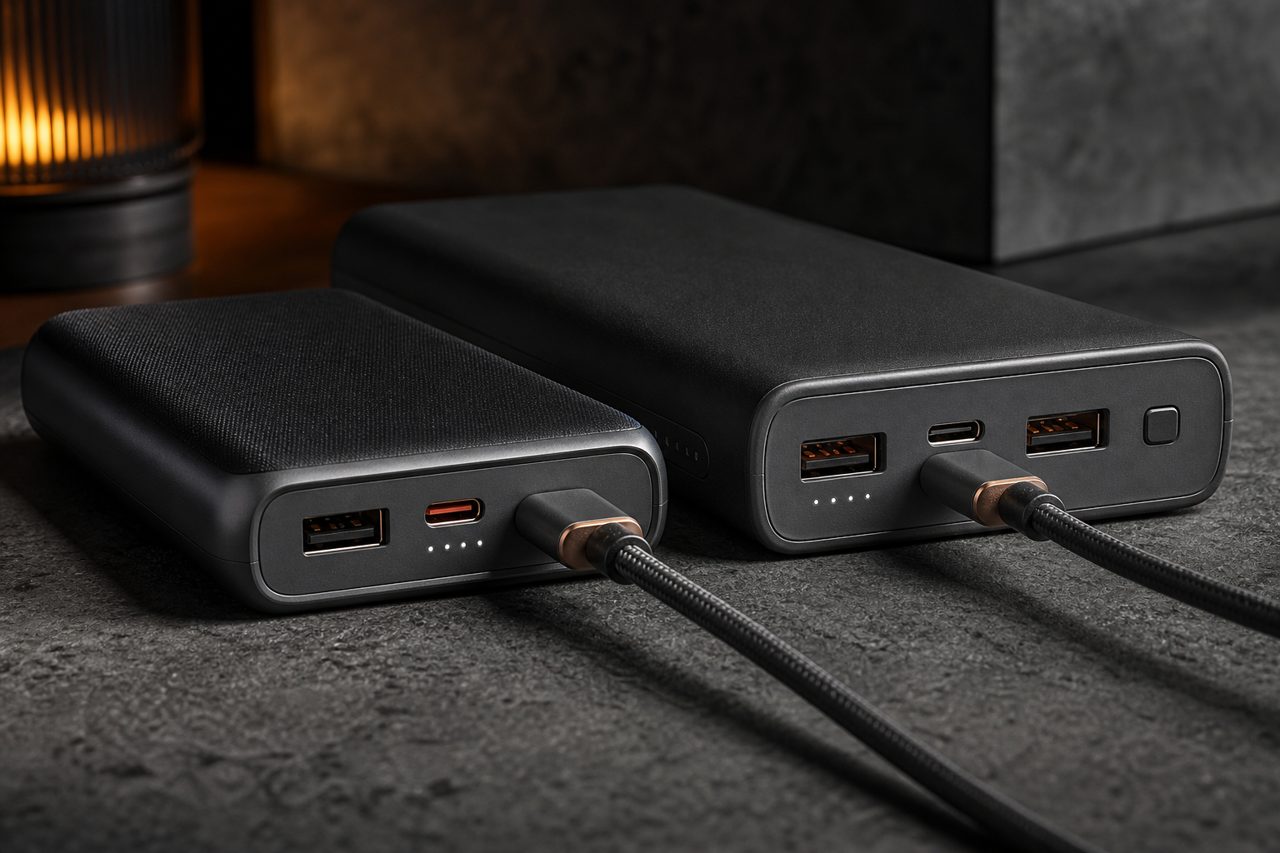
No power bank delivers its rated capacity to a device. Energy is lost at every conversion step - boosting the cell voltage up to the output level, cable resistance, and heat - which is why a 20,000 mAh bank does not charge a 5,000 mAh phone four times. As planning arithmetic, expect roughly three full recharges from a well-built 20,000 mAh unit, and scale the expectation proportionally for other sizes. Professional listings state real-world recharge counts rather than implying the theoretical maximum, and this honesty shows up directly in review scores.
Delivered capacity is also the single most common place for cheap listings to cheat: overstated cell ratings that a casual user never measures but a heavy user immediately feels. Your defense is to request a capacity verification report from the supplier and to treat any model whose delivered capacity cannot be documented as unsellable.
Capacity means little without output ratings
Capacity answers "how much", but the output profile answers "how usefully". Two 10,000 mAh banks can behave completely differently if one negotiates 20W and the other 45W with PPS. The rating to check first is output wattage per port, and the second is the bank's own recharge input: a 20,000 mAh unit that refills overnight undermines its own travel purpose, while one that accepts high input power is desk-ready in an afternoon.
For the travel and laptop segment, treat 30W output as the working minimum for USB-C laptop top-ups, with 45W-65W models acting as genuine laptop chargers. Matching the output profile to the segment is the difference between reviews about convenience and reviews about disappointment. The negotiation mechanics behind these ratings are covered in our PD 3.1 vs PD 3.0 comparison.
Step three: match capacity to the retail role
Each capacity class occupies a different shelf position, with different weights, price points and buyer expectations. The table below summarizes the working profile of the three mainstream classes.
| Class | Watt-hours | Weight class | Typical recharges | Retail role |
|---|---|---|---|---|
| 5,000 mAh | 18.5 Wh | Pocket, card format | About one phone charge | Emergency backup, impulse add-on |
| 10,000 mAh | 37 Wh | Pocket, slim format | Roughly two phone charges | Mainstream everyday carry, volume anchor |
| 20,000 mAh | 74 Wh | Large format | Roughly three phone charges | Travel and laptop top-up, step-up revenue |
Read the table as roles, not rankings. The 10,000 mAh class covers the broadest audience and usually anchors the volume; the 20,000 mAh class carries higher average order value and owns the travel and laptop scenarios; the 5,000 mAh class converts on price at checkout as an add-on.
10,000 vs 20,000: the retail decision
When buyers ask which capacity to lead with, four factors decide it:
- Audience. Commuters and everyday carriers buy 10,000; travelers, students and anyone charging tablets or laptops buy 20,000.
- Order economics. A 20,000 mAh unit supports a higher price point and margin per unit, but turns over more slowly in general-audience stores.
- Logistics weight. The larger format roughly doubles cell weight, which raises freight cost per unit - a real consideration on air channels where battery goods already price at a premium.
- Returns risk. Oversized capacity in a pocket-format listing invites weight and size complaints; undersized capacity invites the classic "does not charge as advertised" review.
A proven structure for a new store is to lead with 10,000 mAh, add one 20,000 mAh model for the travel segment, and use the pairing to capture both impulse and planned purchases. Once sales data confirms which segment actually converts, the assortment can deepen toward the winner.
Presentation should carry the same information the table above does: watt-hours next to milliamp-hours in the title block, recharge counts stated as ranges, and for the 20,000 mAh travel model, the sub-100 Wh figure stated plainly beside a carry-on graphic. Listings that answer the three questions buyers actually ask - how many charges, will it fly, how fast does it refill - convert without discounting.
Supplier verification checklist
Before any capacity decision becomes a purchase order, verify the following with the supplier - each item is a one-line request that a professional factory answers without friction:
- UN38.3 test summary for the battery, matching the exact model.
- Capacity verification report showing actual delivered watt-hours, not just cell rating.
- Per-port output profile table: PD levels and PPS ranges supported on input and output.
- Recharge input rating - how fast the bank itself refills, a top driver of satisfaction on 20,000 mAh units.
- Protection set: over-charge, over-discharge, over-current, short-circuit, temperature.
- Pass-through behavior, if the listing plans to advertise charging while recharging.
- Housing material and thermal behavior at sustained rated load.
- Destination-market certification status (CE, FCC, RoHS and others as applicable).
Compliance and logistics realities
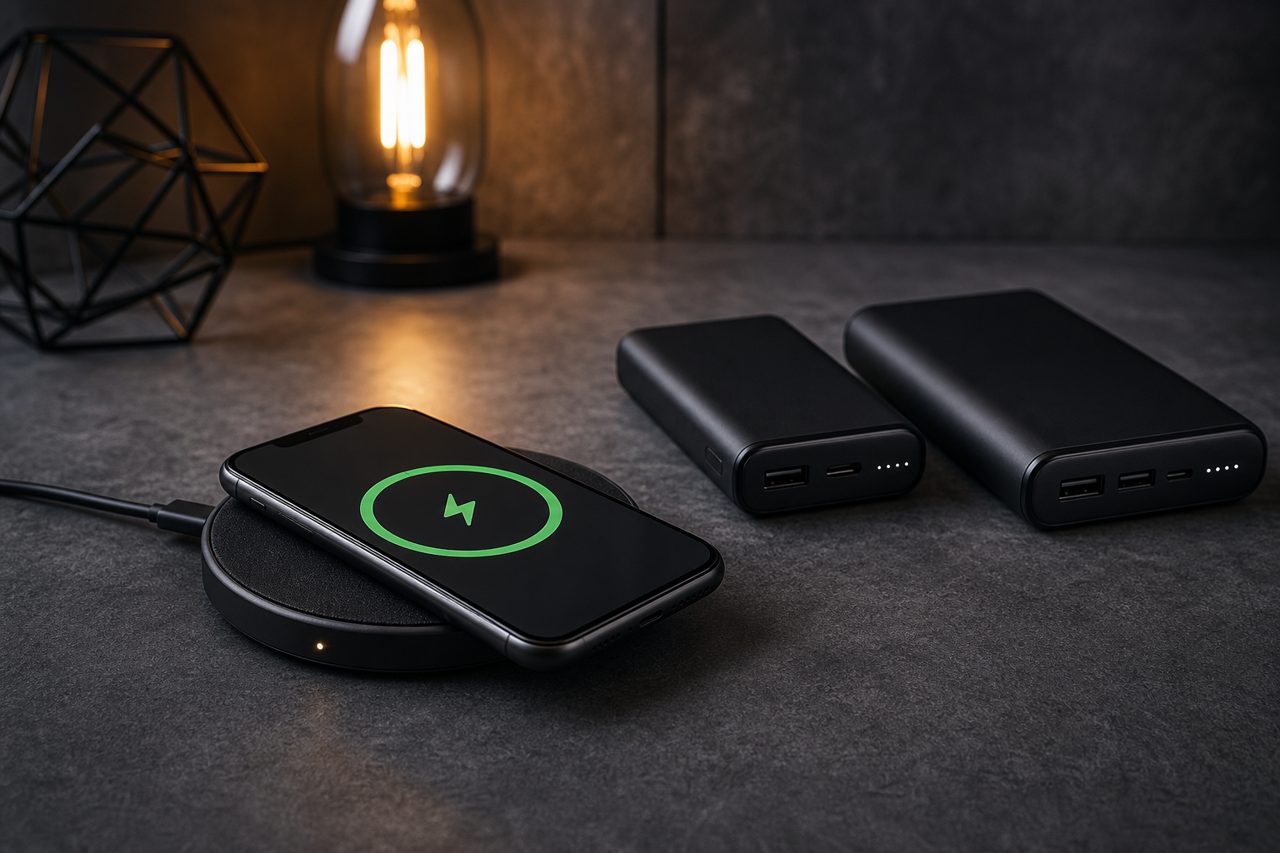
Power banks are standalone lithium batteries in transport terms - classified UN3480 when shipped alone - which shapes what a supplier must handle. Our UN38.3 shipping guide covers the framework in detail; the operational takeaway is that battery goods move on dedicated compliant channels, typically 8-18 days door to door on our battery line, while non-battery accessories travel general cargo in 7-15 days. Overseas warehouse fulfillment shortens the last mile to 2-5 days in covered regions.
For assortment building, stock models ship from one piece, which makes dropshipping the natural validation stage: list both capacities, read the return reasons, and only then commit to inventory. Logo and packaging customization starts at 500 pieces per SKU with 5-7 day sampling, and a fully custom model starts at 1,000 pieces. The current power bank lineup shows both capacity classes with their verification documents listed per model.
Service terms matter on this category more than most. Dispatch within 48 hours keeps marketplace promise dates intact, and a 30-day damage replacement policy supported by photo evidence absorbs the transit risks that battery cargo inherently carries. Together they turn the compliance burden of the category into a service advantage over sellers who treat it as an afterthought.
FAQ
Which power bank capacity sells best in retail?
The roles are consistent even though no universal answer exists. Around 10,000 mAh is the mainstream everyday-carry SKU with the broadest audience; 20,000 mAh carries a higher price point and serves travel and laptop users. Lead with 10,000 mAh and use 20,000 mAh as the step-up.
Can a 20,000 mAh power bank go on a plane?
In most cases yes, in carry-on baggage. A 20,000 mAh battery at a nominal 3.7V equals about 74 watt-hours, below the widely used 100 Wh threshold for consumer batteries. Power banks belong in carry-on, not checked luggage, on essentially all airlines.
What documents should I request before ordering power banks?
At minimum: the UN38.3 test summary for the exact battery model, a capacity verification report showing delivered watt-hours, the per-port output profile table, and destination-market certifications. These four items separate professional suppliers from hopeful listings.