UN38.3 Explained: Shipping Power Banks Legally by Air
Every power bank is a regulated dangerous good the moment it enters a cargo network. Understanding UN38.3 and the packing instructions behind it is what separates sellers who scale from sellers whose shipments get seized, refused or quietly destroyed.
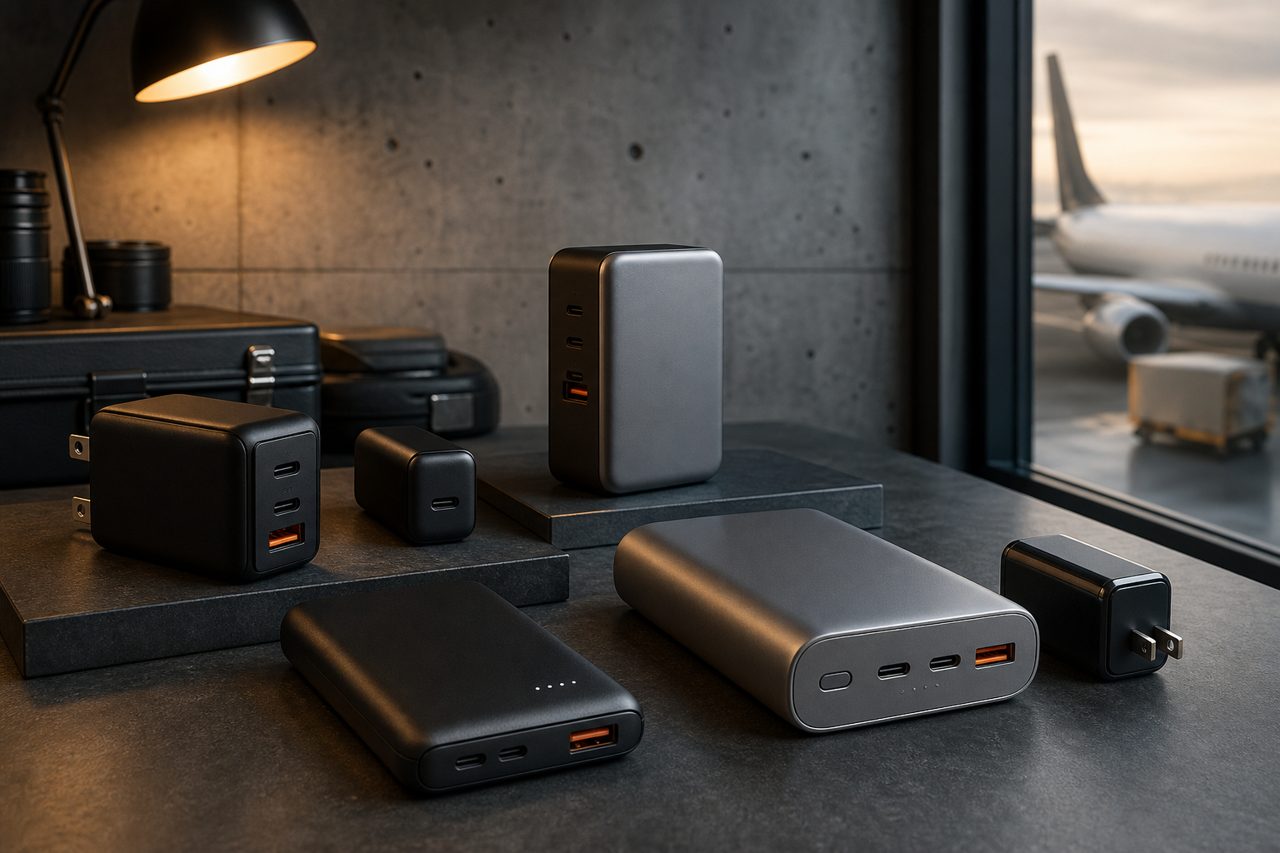
On a retail shelf, a power bank is an accessory. In an aircraft hold, it is a fire risk with its own UN number, its own packing instructions and its own documentation trail. Air transport rules treat lithium batteries with a severity that surprises many first-time importers, and the paperwork is not optional: shipments without it are not fined after the fact, they are stopped before the fact. For any buyer in the charging category, UN38.3 is therefore not a compliance detail. It is a supplier selection criterion.
The costs of getting this wrong are lopsided. Cargo is delayed or confiscated at the port of origin, marketplaces delist battery products that cannot produce documentation on request, and a single compliance failure can suspend an account that took years to build. Set against that downside, the work of keeping documents current is trivial.
Why power banks are regulated cargo
Lithium-ion cells store a large amount of energy in a small volume, and in a failure mode called thermal runaway, a damaged or defective cell can ignite itself and propagate to neighboring cells. In the air cargo environment, an uncontrolled battery fire is exponentially more dangerous than on the ground, which is why aviation authorities regulate lithium batteries as Class 9 dangerous goods. Power banks are the purest expression of the risk: unlike a phone or headphones, a power bank is nothing but battery - its entire function is storing and delivering charge.
This is also why the rules cannot be waived by a courier, argued down at check-in, or absorbed as a cost of doing business. The framework exists because aircraft cannot accept the downside scenario.
What UN38.3 actually tests
UN38.3 is the United Nations manual of tests and criteria that a lithium cell or battery must pass before it may be transported. The test series simulates the hazards of transport rather than everyday use:
- T.1 Altitude simulation - low-pressure storage equivalent to air transport conditions.
- T.2 Thermal test - cycling between high and low temperatures to expose weaknesses in seals and chemistry.
- T.3 Vibration - the vibration profile of transport, which can work connections loose.
- T.4 Shock - mechanical impact such as rough handling.
- T.5 External short circuit - a worst-case short at elevated temperature.
- T.6 Impact and crush - physical deformation of the cell.
- T.7 Overcharge - for rechargeable batteries, abuse of the charging system.
- T.8 Forced discharge - draining a cell against its design.
A design that passes earns the right to be transported; the proof artifact is the UN38.3 test summary, a document every buyer in this category should be able to request without explanation. Note that the tests apply to the specific cell and battery design - a new model is a new test subject, which is why "borrowed" reports from other models are a red flag.
UN numbers and packing instructions
UN38.3 is the qualification; the UN number and packing instruction describe how a given battery may actually fly. The IATA Dangerous Goods Regulations define the framework, and the distinctions matter operationally:
| Shipping situation | UN number | Packing instruction | Key operational points |
|---|---|---|---|
| Standalone lithium-ion batteries - e.g., power banks shipped alone | UN 3480 | PI 965 | Cargo aircraft only; state of charge limited to 30 percent for air transport; full dangerous goods packaging, marks and documentation |
| Batteries packed with equipment - battery and device in one box, battery separate | UN 3481 | PI 966 | Strong inner packaging protecting the battery; lithium battery mark with UN number |
| Batteries contained in equipment - e.g., earbuds, watches, trackers | UN 3481 | PI 967 | Device and battery travel as one; equipment must be protected from accidental activation; lithium battery mark applies |
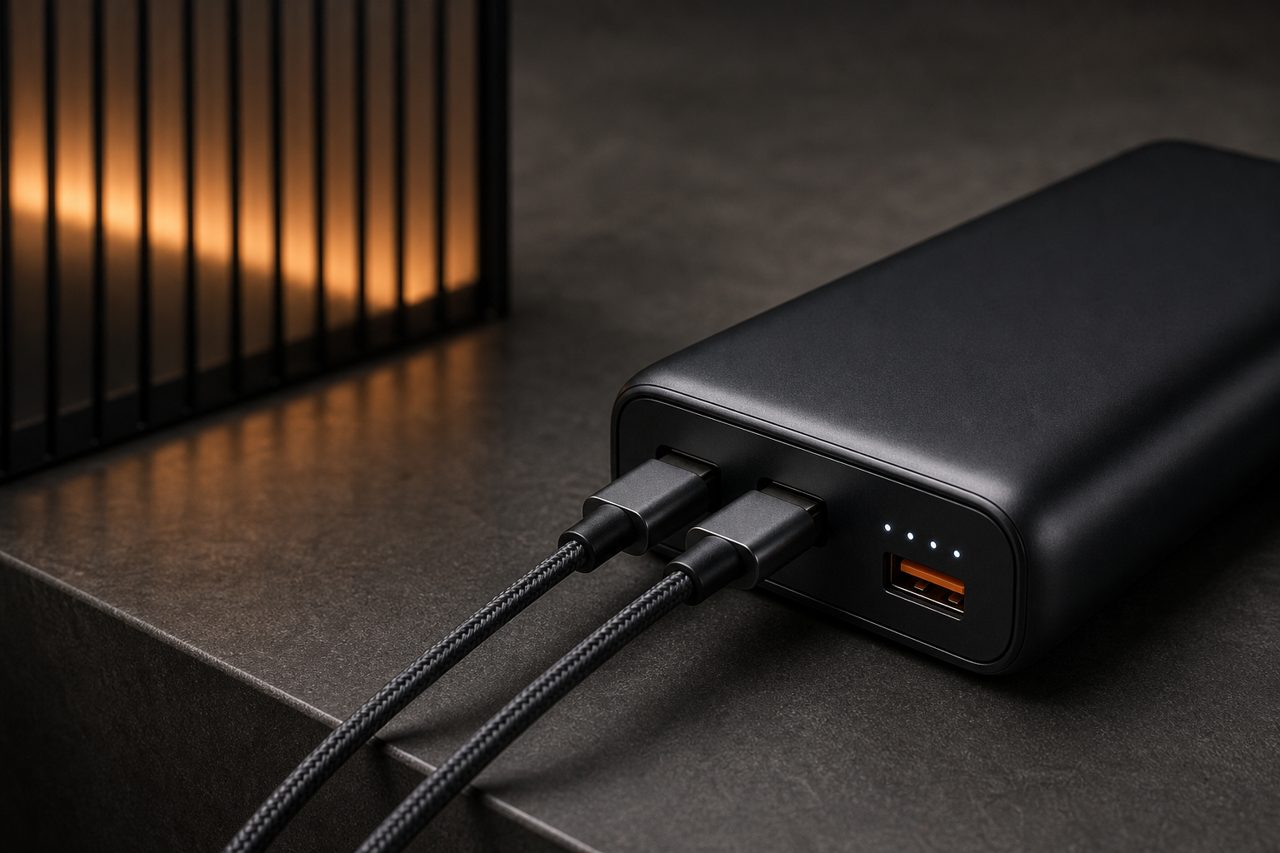
Read the first row twice: a power bank shipped by itself is the most strictly handled case in consumer electronics logistics. It travels cargo aircraft only, at a reduced state of charge, in packaging a regular parcel line cannot legally provide. It is also the case most often attempted through ordinary parcel posts, which is precisely how battery shipments end up in enforcement news. The practical consequence for buyers is simple - whoever ships your power banks must operate battery-compliant channels, or they are not shipping your power banks; they are gambling with them.
What to request from a supplier
The document list below is short enough to demand on every purchase order, and a serious factory answers it without friction:
- UN38.3 test summary covering the exact cell and battery model in the shipment.
- Safety data sheet for the battery chemistry.
- Laboratory evidence - which facility ran the tests, since report credibility rests on the tester.
- Packaging confirmation that inner boxes, marks and labels meet the applicable packing instruction for the shipping mode.
- State-of-charge handling for standalone battery shipments, which must be managed to 30 percent or below for air.
Treat hesitation on any of these items as information. Suppliers who move battery goods legally have these files at hand because forwarders, airlines and customs ask for the same list. Also ask whether the report matches the current design revision; batteries evolve, and an updated cell or protection board is a new test subject, not a footnote.
What this means for sellers
For dropshipping sellers, the battery rules apply parcel by parcel: the line that carries a single power bank to a consumer must itself accept battery goods under PI967 or PI965 conditions, which many low-cost postal lines do not. For bulk importers, the same rules apply at pallet scale, and the forwarder needs dangerous-goods handling capability, not just a rate quote. In both cases, the compliance chain starts at the factory - a battery without UN38.3 has no legal path into an aircraft at any price.
Seller-facing claims deserve equal care. Travel-oriented listings should describe the passenger side accurately: power banks ride in carry-on baggage, not checked luggage, and the watt-hour figure on the label is what airline staff verify at the gate. A product whose label makes that check effortless is quietly doing marketing work at every boarding door.
This is also where supplier choice compounds. TECHORIGIN's charging products are UN38.3 tested and shipped in compliance with IATA PI965/PI967 requirements, which is what makes worldwide battery delivery routine rather than exceptional (IATA Dangerous Goods Regulations). Our battery channel runs 8-18 days door to door, general cargo moves in 7-15 days, and overseas warehouse fulfillment shortens the last mile to 2-5 days in covered regions - with dispatch within 48 hours and photo-evidence damage replacement within 30 days on every channel.
The commercial takeaway is that battery compliance is a moat, not a burden. Sellers who build on compliant channels face fewer catastrophic losses, fewer marketplace suspensions, and a delivery promise they can actually keep - advantages that compound precisely where competitors cut corners. For a structured view of which battery models to carry, see our power bank capacity guide, browse the charging category, or review the dropshipping program to see how battery-compliant fulfillment is wired into the service.
FAQ
Are power banks classified as UN3480?
Yes. A power bank is a standalone lithium-ion battery whose only function is storing and supplying charge, so shipped alone it is UN3480 under packing instruction PI965. Devices that merely contain a battery, such as earbuds or watches, fall under UN3481 with PI966 or PI967.
Can power banks fly on passenger aircraft as cargo?
No. Standalone lithium-ion batteries (UN3480) are restricted to cargo aircraft only, must be at or below 30 percent state of charge for air transport, and require compliant packaging, marks and documentation under the IATA Dangerous Goods Regulations.
What documents should I request from a power bank supplier?
The UN38.3 test summary for the exact cell and battery model, the safety data sheet, evidence of the testing laboratory, and packaging confirmation against the applicable packing instruction. Suppliers who ship batteries legally produce these quickly because the same list is demanded by forwarders, airlines and customs.