USB PD 3.1 vs PD 3.0: What Changes for 140W Charging
USB Power Delivery 3.1 pushed the USB-C ceiling from 100W to 240W and put 140W chargers on retail shelves. For buyers, the practical questions are what EPR actually changes, which SKUs need it, and where marketing claims quietly overstate the reality.
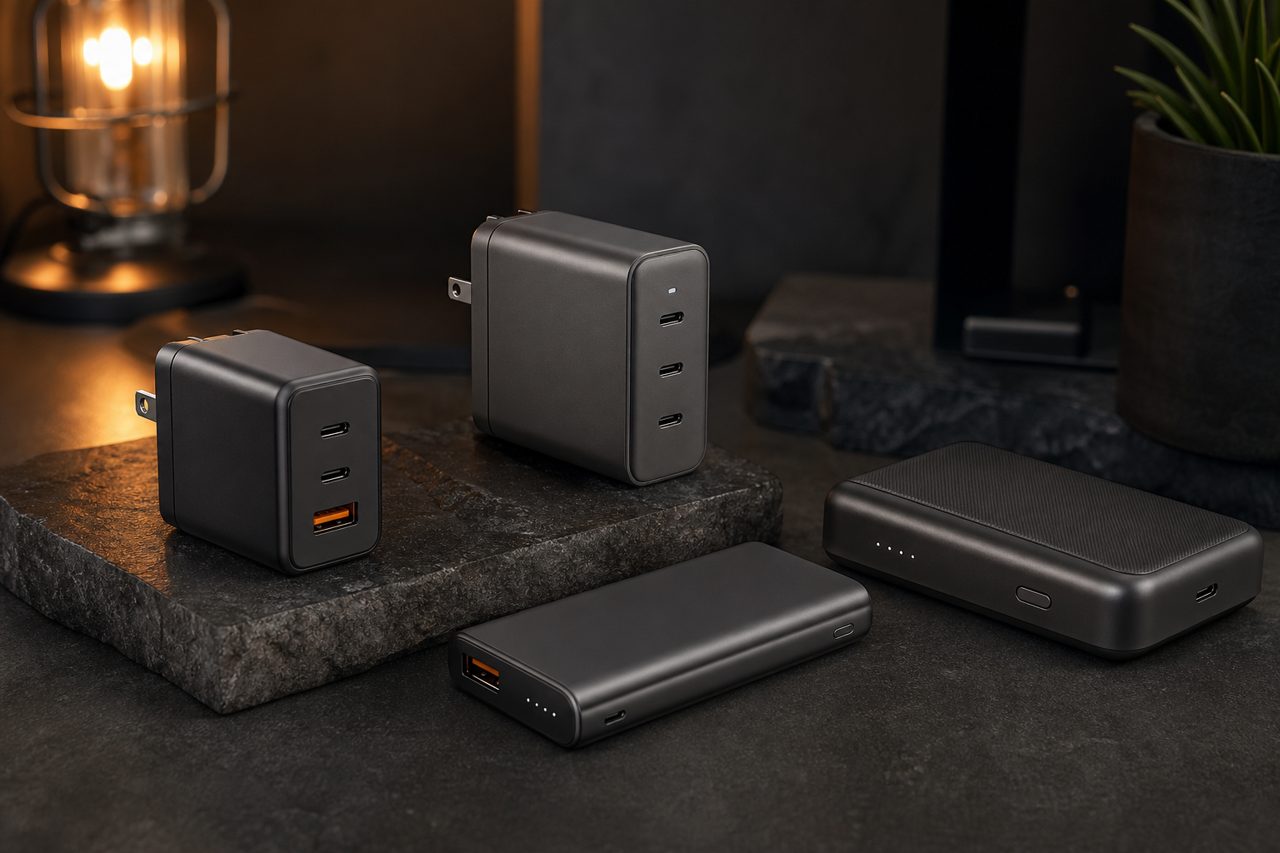
USB-C charging has moved from an option to a regulatory baseline. Since December 28, 2024, the EU requires a common USB-C charging solution on phones, earbuds, tablets and a list of other handheld devices (European Commission, 2024), with laptops following from April 2026. As that rule pulls every category onto USB-C, buyers now see chargers labeled 65W, 100W and 140W side by side - and the difference between them is the difference between two versions of the same standard.
What USB Power Delivery actually negotiates
USB Power Delivery (PD) is a protocol, not a wire rating. When a device plugs in, source, cable and sink exchange messages and agree on a voltage and current pair. The charger advertises what it can supply; the device requests what it can accept; the cable certifies how much it can carry. Every charging decision is the intersection of those three.
PD offers two kinds of supplies. Fixed levels step through familiar voltages such as 5V, 9V, 15V and 20V. Programmable Power Supply (PPS) profiles let the device request finely adjustable voltage within a range, which improves efficiency and thermal behavior on phones that support it. Any comparison of PD versions has to be read against this negotiation model: higher wattage is only available when the full chain - charger, cable, device - supports it.
Where PD 3.0 tops out
PD 3.0 operates in the Standard Power Range (SPR). The ceiling is 100W, delivered as 20V at 5A, and every charger below that - 18W, 30W, 45W, 65W - lives inside the same range with the same cable requirements. This covers phones at full speed, tablets, and compact laptops, which is why 65W remains the volume anchor of most charging assortments.
The limitation shows up exactly at the top. Sustained 100W is enough for many ultraportable laptops but leaves no headroom for larger machines under load, and multi-device desks have to split a modest budget. PD 3.0 simply had no standardized way to go beyond 100W over USB-C.
Multi-port designs tighten the picture further. A 65W dual-port unit often drops to a lower shared budget once both ports are active, and individual ports may cap below the headline rating. None of this is unique to PD 3.0, but the 100W ceiling makes the constraints sharper: there is simply less power to divide across ports.
What PD 3.1 adds: EPR and the 140W tier
PD 3.1 introduced the Extended Power Range (EPR). EPR adds three fixed voltage levels above 20V - 28V, 36V and 48V - while keeping the 5A maximum current, which lifts the theoretical ceiling to 240W. The 140W chargers that now anchor premium assortments sit at the 28V EPR level: 28V multiplied by 5A.
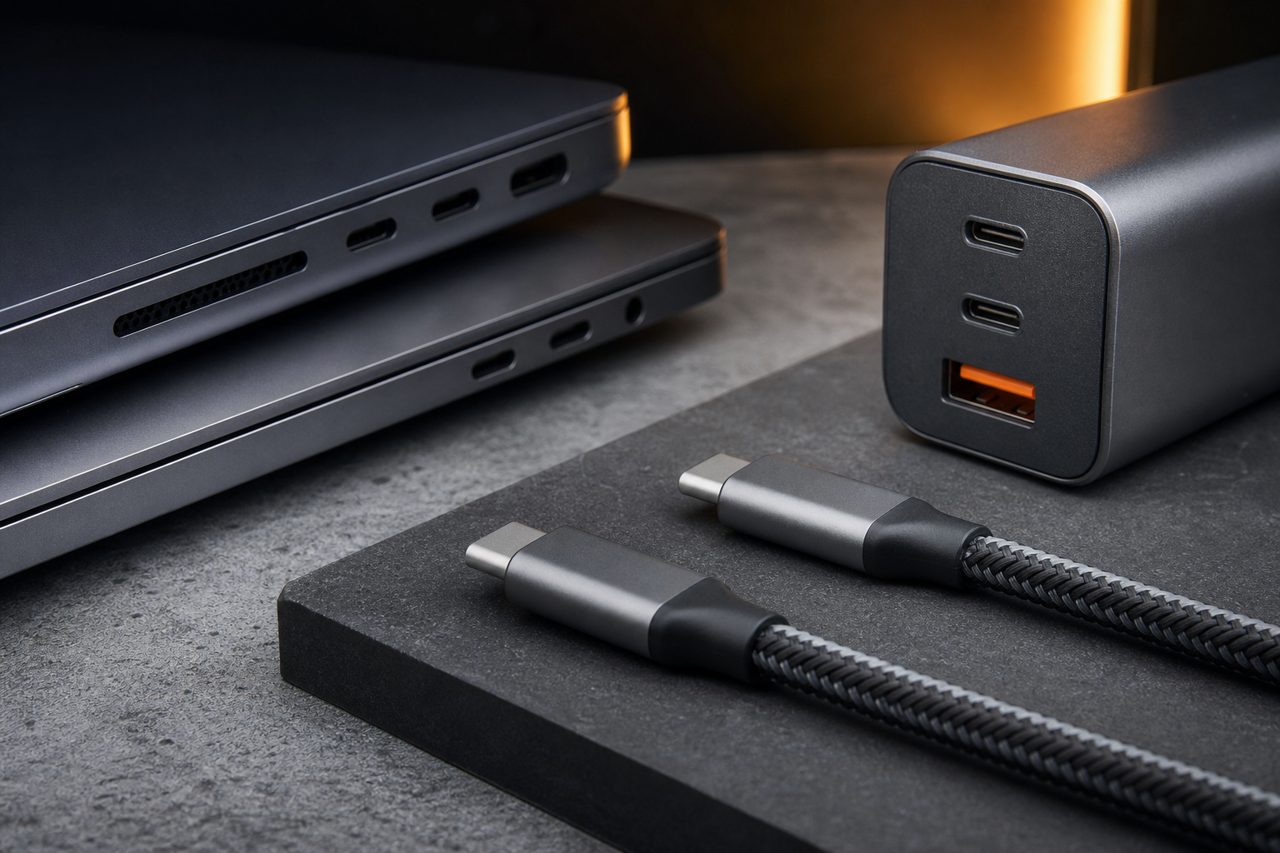
Everything below 100W is unchanged. EPR is an extension, not a replacement: a PD 3.1 charger negotiates downward without friction, which is why one 140W unit can still fast-charge a phone, top up a tablet and drive a laptop in sequence or simultaneously on multiple ports.
For assortment planning, treat 3.1 as a top-end attribute. It changes the parts list and the cable, not the everyday behavior a customer experiences below 100W, so the premium belongs on the SKUs that actually reach the new levels.
The cable is part of the spec
The most practical change for buyers hides in the cable. EPR operation requires a cable with an e-marker chip configured for EPR - rated 50V at 5A. A common 100W-rated cable (20V, 5A) will safely negotiate down; it cannot carry a 28V session. This is why genuine 140W chargers ship with a dedicated cable, and why a replacement cable bought on price alone quietly caps the whole setup below its rated speed.
For retailers this creates two obligations. First, the in-box cable must match the charger's rating, or returns will explain the gap. Second, selling replacement or spare cables next to high-wattage chargers is an attach-rate opportunity - the customer needs an EPR-rated cable whether or not the original was lost.
PD 3.0 vs PD 3.1 at a glance
| Dimension | PD 3.0 (SPR) | PD 3.1 (adds EPR) |
|---|---|---|
| Maximum power | 100W | 240W |
| Maximum voltage | 20V | 48V (28V/36V/48V levels) |
| 140W output | Not supported | Supported at the 28V EPR level |
| Cable requirement | 5A e-marked cable | EPR-rated e-marked cable (50V/5A) |
| Typical products | Phones, tablets, compact laptops, most chargers | 140W-240W chargers, performance laptops, high-power docks |
| Backward compatibility | Baseline | Full - negotiates down to SPR |
What this means for your product line
Version choice follows the SKU, not the catalog. Below 100W, PD 3.0 capability is fully sufficient and PD 3.1 adds nothing a customer can feel. The standards question only becomes commercial at and above 140W: laptop-first chargers, desktop units meant to power a performance machine, and power banks advertised to charge those laptops.
Two marketing traps deserve attention. The first is total versus per-port power: a "140W multi-port charger" may only deliver EPR on one port while the rest share the remainder, which is legitimate engineering but must be stated plainly on the box. The second is the unqualified claim of "PD 3.1" on a charger whose negotiated table tops out at 20V - ask suppliers for the full per-port negotiation profile rather than the version label. A GaN-based 140W unit is where the smaller-body benefit matters most, as covered in our GaN technology explainer.
Assortment logic follows the same line. Keep the 65W and 100W rungs on PD 3.0-class engineering and spend the incremental cost where EPR pays: one or two 140W models aimed at customers who carry performance laptops. With EU rules extending the common-charger requirement to laptops from April 2026 (European Commission), that audience is set to widen, and early movers will hold the shelf positions.
When sourcing 140W models, verify the negotiated profile per port on the bench, confirm the in-box cable is EPR-rated, and check that the charger steps down gracefully when a second port opens. A supplier that documents these behaviors in the spec sheet is a supplier that has actually built the product.
Sourcing checklist for 140W SKUs
- Request the complete per-port negotiation table, including which ports support 28V EPR and how power splits under multi-port load.
- Confirm the bundled cable carries an EPR-rated e-marker (50V/5A) and order spares against the same spec.
- Bench-test with a laptop that actually draws EPR, not only with phones that top out near 30W.
- Match certifications to the destination market before committing to packaging.
- For custom versions, plan the MOQ tier: light customization from 500 pieces, full OEM from 1,000, structural changes from 3,000.
The charging category lists current 65W-140W models with their negotiation profiles documented, and the OEM/ODM process covers custom firmware, housing and packaging when a buyer-ready 140W SKU needs your brand on it.
Validation does not require a bulk commitment. Stock models ship from one piece for dropshipping tests, logo and packaging customization runs from 500 pieces per SKU with 5-7 day sampling, and a fully custom housing starts at 1,000 pieces. Matching the sourcing tier to the validation stage keeps capital exposure proportionate to what the market has actually confirmed.
FAQ
Do PD 3.1 chargers work with older PD 3.0 devices?
Yes. PD 3.1 is backward compatible. The charger negotiates with each connected device and falls back to the profiles the device supports, so phones and tablets limited to PD 3.0 levels charge at their normal speed on a 3.1 charger.
Is 140W output safe for phones and small devices?
Yes, on a properly designed charger. PD is a negotiated protocol: the device requests the voltage and current it accepts and the charger delivers only what was agreed. A phone on a 140W charger still draws only what it supports.
Do 140W chargers require a special cable?
Yes. Outputs above 100W use Extended Power Range and require an e-marked cable rated 50V/5A. A standard 100W cable negotiates down to 100W or less, so the in-box and spare cables must match the charger rating.