The EU Common Charger Rule: What It Means for Cable Sellers
One regulation has quietly standardized the most valuable centimeter of the accessories business: the plug that goes into the device. The EU common charger rules made USB-C the required charging port across a long list of product categories, and for anyone selling cables and chargers into Europe, the question is no longer whether to comply but how to position for a market where the old connectors are aging out.
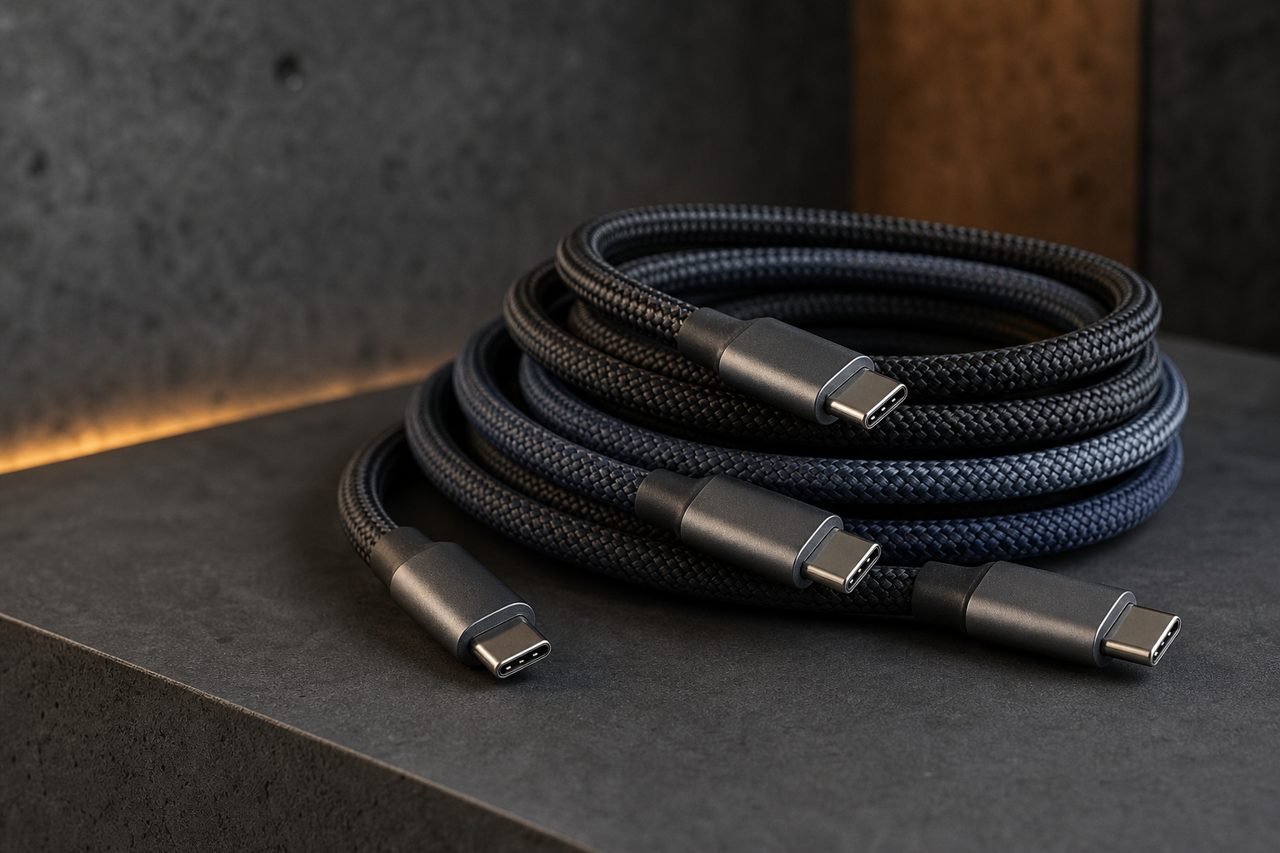
The commercial backdrop is a large and growing market. The global mobile accessories market reached USD 105.5 billion in 2025 and is projected to grow to USD 189.9 billion by 2033 (Grand View Research, 2025), and Europe is one of its densest retail regions. A regulatory change that standardizes the charging interface across that region is therefore not a compliance footnote. It redraws which SKUs make sense, which inventory ages, and which listings convert, and it does so on a published schedule that sellers can plan against.
What the rule requires
The rules were adopted as an amendment to the EU Radio Equipment Directive, and their core is simple to state: categories of radio equipment that recharge via a wired cable must use a single, harmonized USB-C charging port. Since December 28, 2024, that obligation has applied to mobile phones, tablets, headphones and earbuds, digital cameras, handheld game consoles, portable speakers, e-readers, keyboards, mice and portable navigation devices, among others (European Commission). Laptops join from April 28, 2026. The same harmonization effort reaches beyond the port itself: devices that support fast charging are expected to follow the USB Power Delivery protocol for their communication, and harmonized labeling tells buyers what charging capability a product offers and whether a charger is included in the box.
Two boundary points matter for reading the rule correctly. First, the legal obligation falls on the devices, not on every accessory; a cable sold standalone in Europe is not individually "mandated." Second, the mandate is about the port, not about power levels; it standardizes the shape and the negotiation framework, and leaves buyers to choose wattage as before. Both points shape how the demand wave actually hits the accessories trade.
The schedule gives the change its character. Because the first wave arrived at the end of 2024, the phone-and-earbud accessory market in Europe has already repriced legacy connectors, and much of that repricing happened quietly, in clearance bins and in assortments that simply stopped reordering. The laptop wave is different in kind: laptops are the highest-wattage, longest-lived devices in the mandate's scope, and their migration moves 100W-class accessories from a power-user niche into the mainstream of a whole region's desks.
How the obligation lands on accessory sellers
Although cables and chargers are not the regulated objects, they inherit the consequences. When every new phone, earbud case and tablet sold in the EU charges over USB-C, the installed base of compatible devices shifts almost entirely, and so does every purchase decision downstream of it: the spare cable in the drawer, the family charging station, the travel kit, the car. The rule therefore functions as a demand-redistribution machine, moving purchases away from legacy-connector accessories and toward USB-C, faster than natural replacement cycles would.
| Category | Rule status | What it means for accessory sellers |
|---|---|---|
| Phones, tablets, earbuds, cameras, handheld consoles, portable speakers | USB-C port mandatory since December 28, 2024 | Installed base now migrates; legacy-connector accessories lose their host population |
| Laptops | USB-C port mandatory from April 28, 2026 | Final major category joins; high-wattage USB-C cables and chargers gain a structural audience |
| Accessories (cables, chargers sold standalone) | Not individually mandated | Design and demand default to USB-C; listing expectations reset even where law does not |
| Devices above 15W that support fast charging | USB Power Delivery expected for charging communication | Power-rating honesty on listings becomes a sales argument, not just compliance hygiene |
What changes in practice for a cable catalog
Three practical workstreams follow for any seller with EU traffic, and all three can start immediately.
- Inventory audit with a calendar. Legacy-connector SKUs now serve only the shrinking installed base of older devices. Each should carry a deliberate decision, clearance, market exit, or continuation only where demand data justifies it, rather than an automatic reorder. The laptop deadline in April 2026 is the natural checkpoint for the next review.
- Assortment weighting toward USB-C with verified ratings. In a market where USB-C is the default, the differentiator moves from shape to quality: honest wattage, working e-markers, correct data classes. The buyer's reference work on power ratings and e-markers is covered in our e-marker guide and applies directly here.
- Packaging and listing alignment. Harmonized labeling principles reward listings that state wattage, cable rating and charging behavior plainly. A box that claims more than the cable delivers now reads as non-compliant in spirit, and reviews punish it before any authority does.
Reading the deadlines as a buying calendar
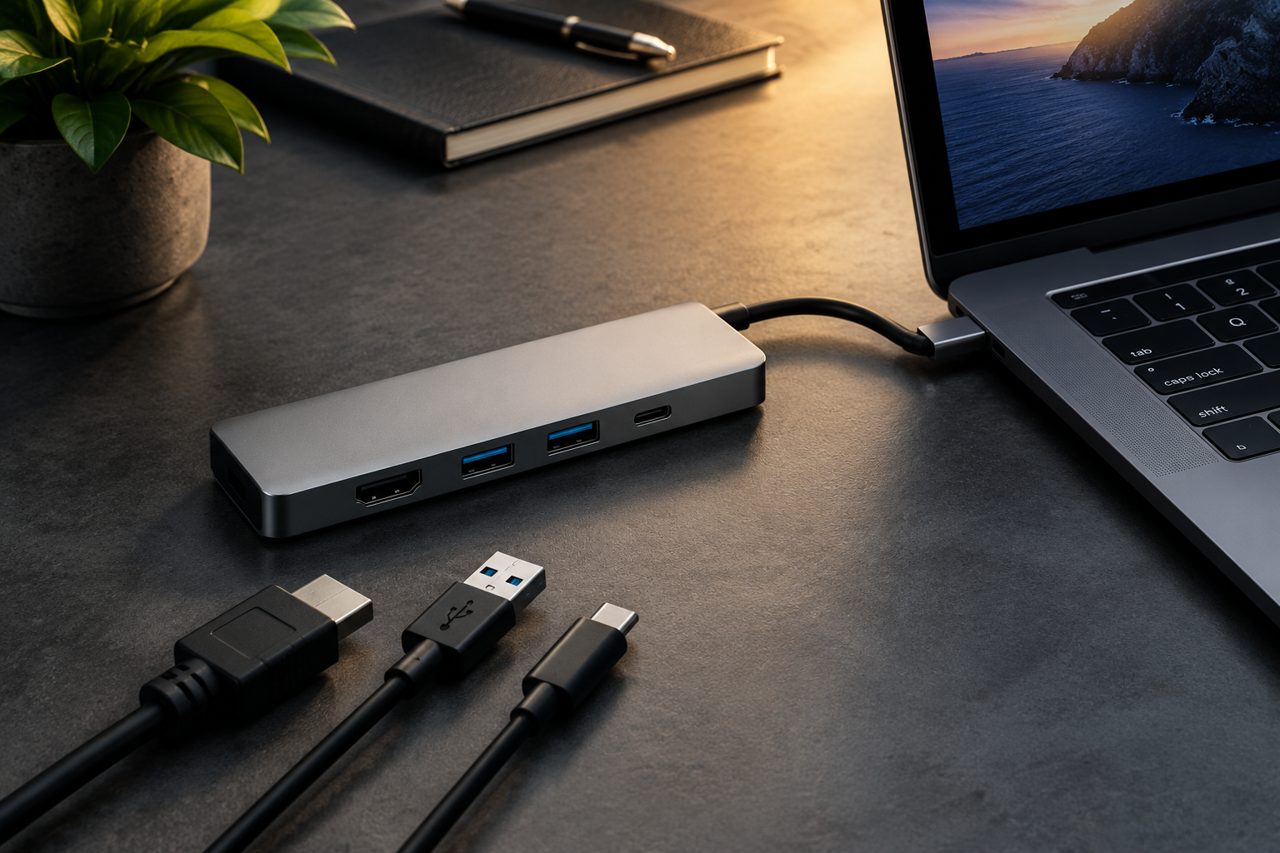
Deadlines are most useful when translated into reorder behavior. The first wave, devices covered since the end of 2024, has already reset the phone-and-earbud accessory base, so USB-C should be the default lead SKU in every EU-facing listing today. The second wave, laptops from April 2026, moves the high-wattage tiers: 100W cables, capable e-markers, and chargers that hold their rating under sustained load become the growth edge of a European assortment. Sellers who treat April 2026 as a buying deadline, with orders placed so that verified stock arrives ahead of it, will be positioned when laptop users begin their replacement cycle; sellers who treat it as a compliance date will meet the same demand three months late. Since stock models dispatch within 48 hours, the gap between the two postures is planning, not lead time.
Positioning the assortment for the post-mandate EU
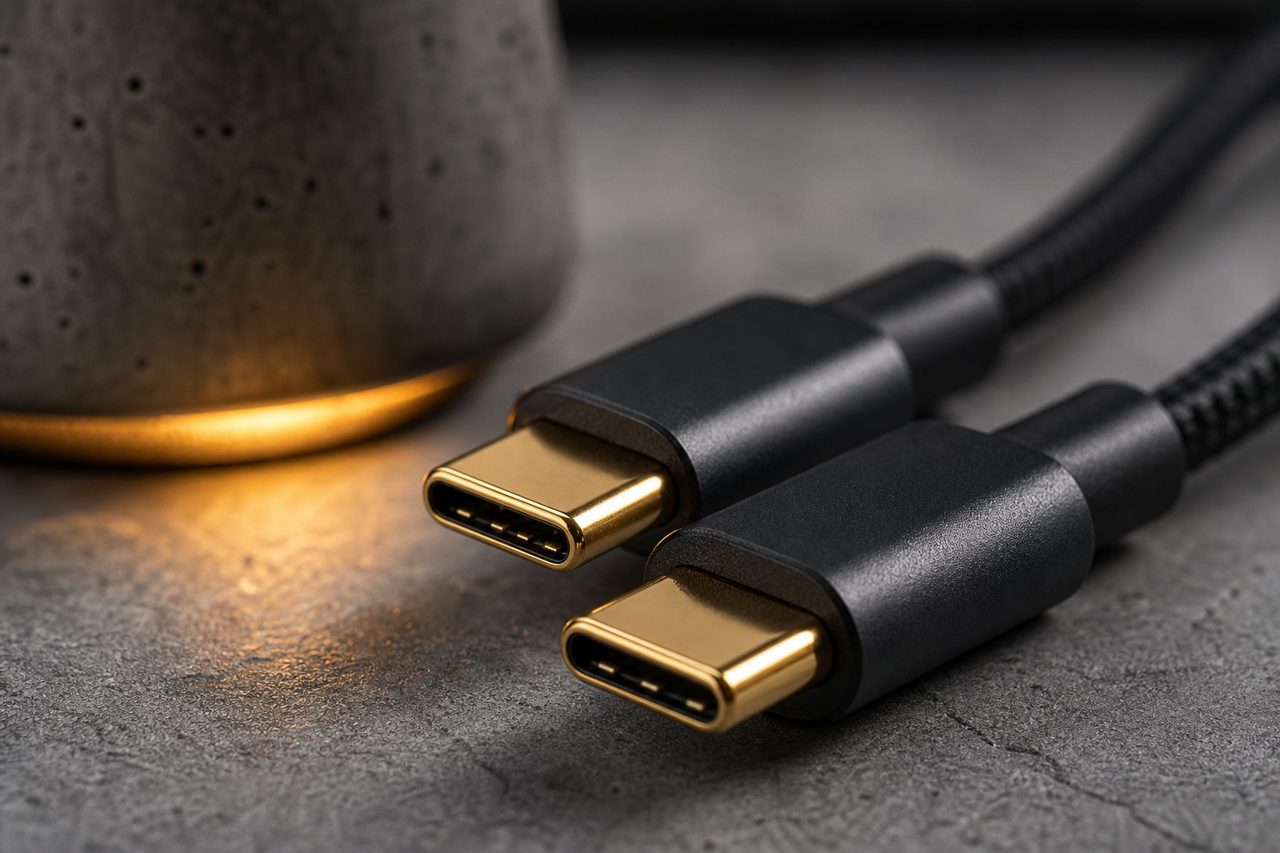
The winners in a standardized market are the sellers who make the standard look premium. With every competitor offering "a USB-C cable," the attributes that remain are the ones this guide series keeps returning to: conductor gauge, e-marker integrity, data-class honesty, packaging that states specs plainly, and compliance files for the destination market. A focused European line, a 60W everyday cable, a 100W laptop cable, a 240W-class assembly for power users, plus a compact charger, covers the mandate-driven demand without bloating the catalog. Browse the cables and hubs lineup for the USB-C foundation, and validate any new European SKU through one-piece dropshipping before bulk orders; regulation moves slowly, but the replacement cycles it triggers arrive on schedule.
FAQ
Does the EU common charger rule require every cable sold in the EU to be USB-C?
No. The obligation falls on categories of radio equipment that recharge via a cable, which must use a USB-C charging port by the applicable deadline. Standalone cables and chargers are not individually mandated, but the rule resets buyer expectations and product design toward USB-C, which is where its commercial force lies for accessory sellers.
What are the key deadlines in the EU common charger rules?
Since December 28, 2024, covered devices such as mobile phones, tablets, headphones, earbuds, cameras, handheld consoles and portable speakers sold in the EU must feature a USB-C charging port. Laptops follow from April 28, 2026. The rules were adopted as an amendment to the EU Radio Equipment Directive (European Commission).
What should a cable seller do before the laptop deadline in April 2026?
Audit the assortment for legacy-connector SKUs and stop reordering those that only make sense pre-mandate, align packaging claims with the USB-C reality, and weight new buying toward USB-C cables and chargers with verified power ratings. Stock models can be validated with one-piece dropshipping before any bulk commitment.