Tablet Accessories: The Underserved Middle Market
Phone accessories get the shelf space, the SKUs and the launch calendars. Tablets get the leftovers. Yet tablets sit on desks, kitchen counters and classroom carts for years, and the accessory demand around them is steadier and less contested than the phone market. This scenario guide builds a tablet range for the middle market that phone-first catalogs ignore.

Why phone-first catalogs leave tablets behind
The logic that produces a phone-first catalog is sound per SKU. Phone models turn over annually, launch spikes concentrate demand, and a case that misses its window becomes dead stock. Tablet economics look worse at first glance: fewer buyers per model generation, slower replacement, no launch-week surge. What the first glance misses is duration. A tablet stays in a household, a classroom or a field crew for years, and it keeps consuming stands, folios, styluses and protectors the entire time. The demand curve is flatter but longer, which is exactly the shape that suits stockists rather than launch chasers.
The backdrop keeps growing regardless: the global mobile accessories market reached USD 105.5 billion in 2025 and is projected at USD 189.9 billion by 2033 (Grand View Research, 2025). Tablet accessories ride inside that growth while carrying a fraction of the model coverage burden, because tablets ship in a handful of screen size families rather than dozens of brand-generation variants. One well-banded SKU covers years of the installed base.
There is a season to respect as well. Back-to-school is to tablets what launch week is to phones: the single most concentrated window of purchase intent, driven by study setups and family hand-me-downs. A tablet range that is stocked and photographed before the school season starts collects that window every year without the model-guessing that phone launches demand.
A starter range that covers the middle
Five SKU families cover most tablet demand with minimal model-specific risk. Build them in this order:
- Universal folio stands. Folios fitted by screen size band rather than model, with a viewing-angle cover. A band covering the common 10-to-11-inch class reaches most of the market with a handful of SKUs. Position for work and study.
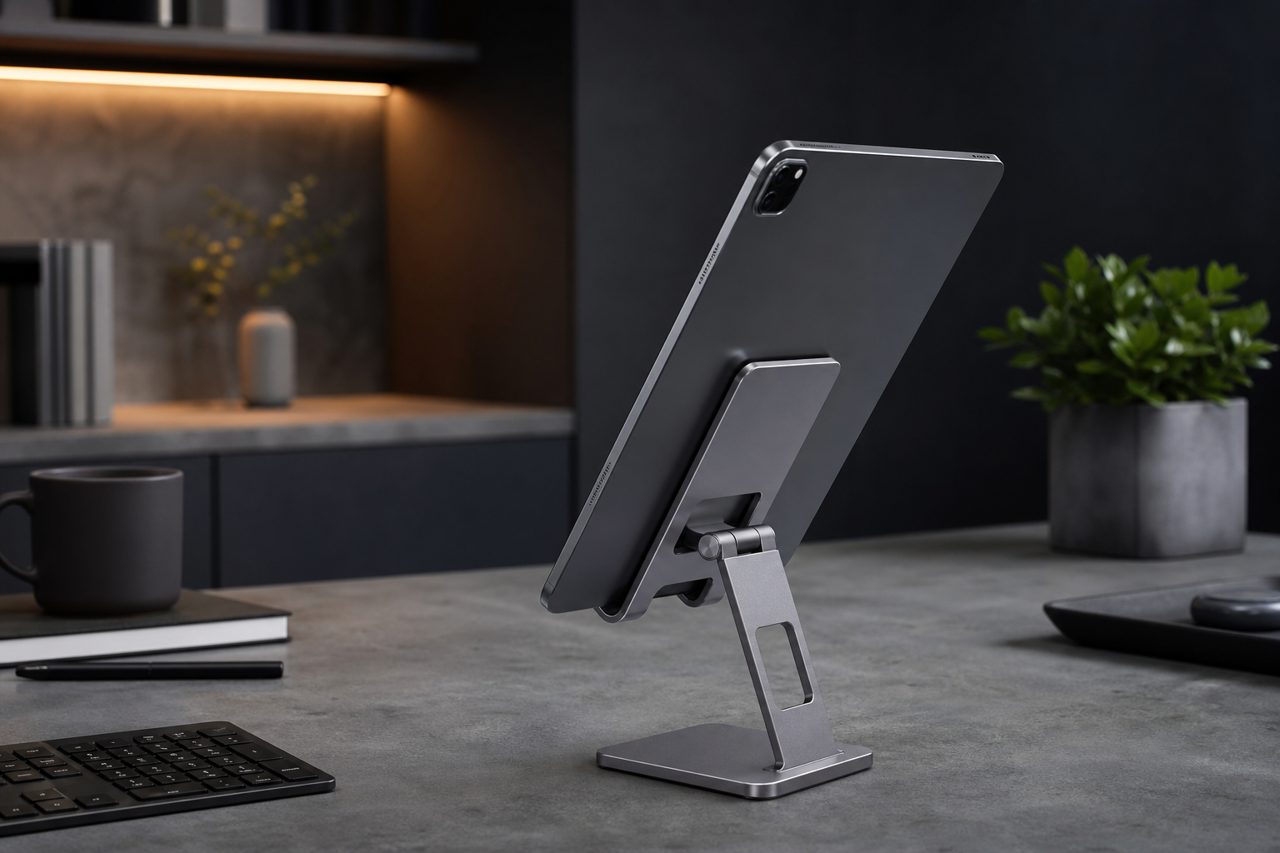
- Desk and kitchen stands. Fully universal adjustable stands that hold a tablet steady for video calls, recipes and dashboards. Zero model risk, long shelf life, and the calmest returns profile in the range.
- Active stylus kits. Generic active styluses with palm rejection, tilt and replaceable nibs, USB-C charged. Position by function, never by device brand. Note the battery: this is the one family that ships on battery-compliant channels.
- Tempered film by size band. Protectors cut to the same size families as the folios, offered in two-packs. Natural attach item on every folio listing.
- Rugged family cases. Kid-proofing for the family tablet: reinforced corners, handles, kickstands. Parents buy on drop stories and handle photos, not on spec sheets.
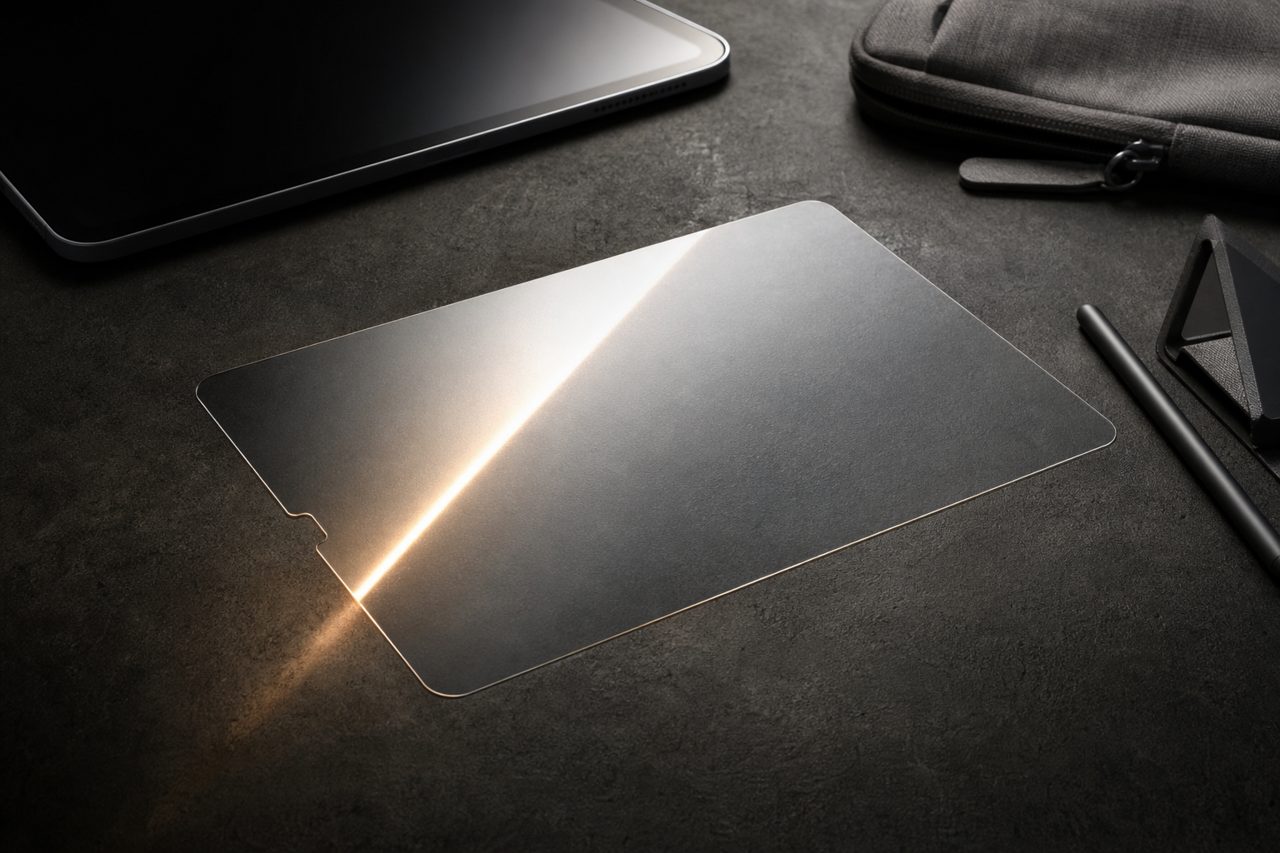
The range is deliberately universal-heavy. Every universal SKU in the list has no model death date, which means stock risk decays slowly and depth can be added to proven movers instead of being spread across a compatibility matrix that changes every autumn. Colorways follow one rule: dark neutrals for the work segment, bright options where the family buyer shops, and no SKU that depends on a fashion color to move.
The B2B segments that actually pay
Retail demand for tablet accessories exists, but the orders that build a quarter come from institutions:
- Education resellers. Classroom tablets live on carts, take abuse and get refreshed on budgets. Rugged cases, film in bulk and stylus kits reorder on the school cycle, and the buyer standardizes one SKU across a fleet.
- Enterprise and field operations. Logistics, warehousing and retail point-of-sale run on tablets; stands, folios and chargers are purchased as standards, not browsed as SKUs. Procurement cares about consistency across reorder cycles.
- Hospitality. Menus, ordering and check-in on counters and walls; stands and secure mounts in repeatable volumes per venue.
- Corporate gifting and onboarding. A folio plus stylus kit is a legible onboarding package for distributed teams, and it inherits the customization ladder cleanly.
These buyers order in multiples and reorder on lifecycle, which is precisely the flat-and-long demand shape the range was built to serve. One institutional account behaves like a season of consumer sales without the launch-week anxiety.
Listing and launch advice
- Lead with the size band, not the model. "Fits most 10-to-11-inch tablets" stays true for years; a model list starts aging the day it is published.
- Publish a compatibility table for the few specific items. Where a folio is cut close to a device family, put the generation table in the listing and keep it current.
- Shoot surfaces, not products. Tablets live on desks, counters and laps; the photo that sells a stand shows the video call it holds steady.
- Bundle the work-study kit. Folio plus stylus plus film is one decision, and the bundle carries the attach rate for the range.
- Price above phone equivalents. Tablet buyers have spent more on the device and expect to spend more on its accessories; discounting to phone-tier prices only repositions the range as an afterthought.
One habit protects the whole range: collect fit feedback in reviews and fold it into the compatibility table visibly. Universal products live or die on trust in the band, and a listing that shows its table being corrected and extended reads as maintained, which is the strongest signal a universal SKU can send.
Operations: test, then deepen
Validate each family through dropshipping at one piece before stocking anything; universal SKUs make this cheap because nothing goes out of date while the test runs. Non-battery items, folios, stands, film and cases, ride the standard channel at 7-15 days to major markets. Stylus kits contain lithium cells and travel battery-compliant: UN38.3-tested cells, IATA PI967 handling, and 8-18 day windows; the mechanics are laid out in the UN38.3 shipping guide. When a family proves itself, packaging and colorways move through light customization from 500 pieces per SKU with sampling in 5-7 days, and full OEM development, including custom folio structures or stylus housing, from 1,000 pieces per SKU with sampling in 7-12 days. Transit damage is covered by photo-based replacement within 30 days of delivery. The full range, tablet families included, sits on the phone and tablet accessories category page.
FAQ
Do universal tablet accessories really sell without model-specific fit?
Yes, because the size band does the work the model name does in phones. Tablets ship in a handful of screen size families, so an accessory engineered for the common 10-to-11-inch band covers most of the installed base and never dies with a model generation. The discipline is honest banding plus a compatibility table, not a long model list that ages badly.
Which tablet accessory family should a phone-first shop try first?
Desk and kitchen stands. Fully universal, zero compatibility risk, flat demand and the calmest return profile in the range, since a stand either holds the angle the buyer wants or it does not. One dropshipping validation cycle tells you whether the middle market is real for your traffic.
How do active stylus kits ship internationally?
Styluses contain lithium cells, so they travel battery-compliant: UN38.3-tested cells, IATA PI967 handling, and 8-18 day delivery windows instead of the 7-15 days of standard service. Keep certification documents organized per SKU so platform and customs questions are answered from one file.