Smart Rings vs Bands: The New Sleep-Tracking Battle
Sleep tracking has become the beachhead of the wearables market, and it has produced a form-factor fight: the screenless smart ring against the familiar fitness band. They collect overlapping data with very different trade-offs, and they fail commercially in different places. For a reseller deciding which to stock, here is the honest comparison.
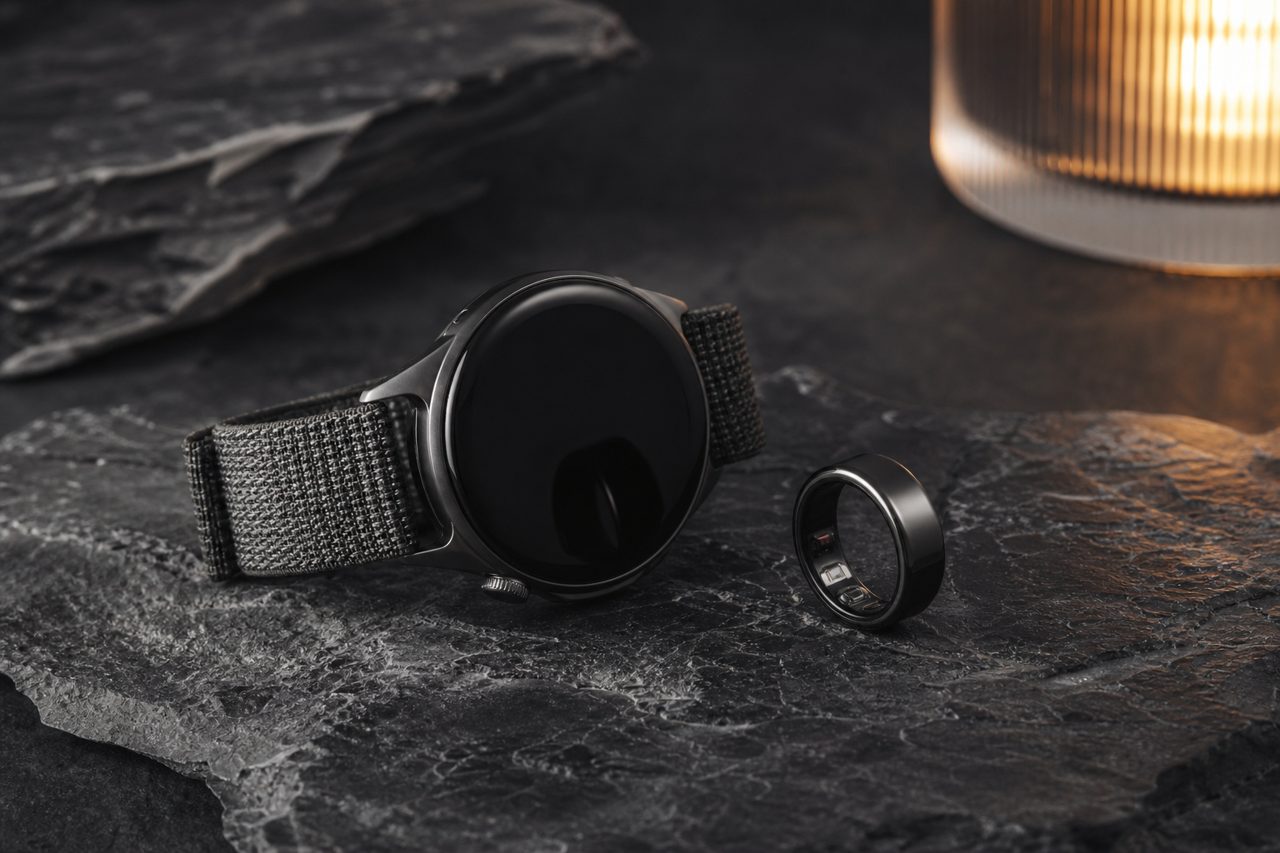
Two form factors, two jobs
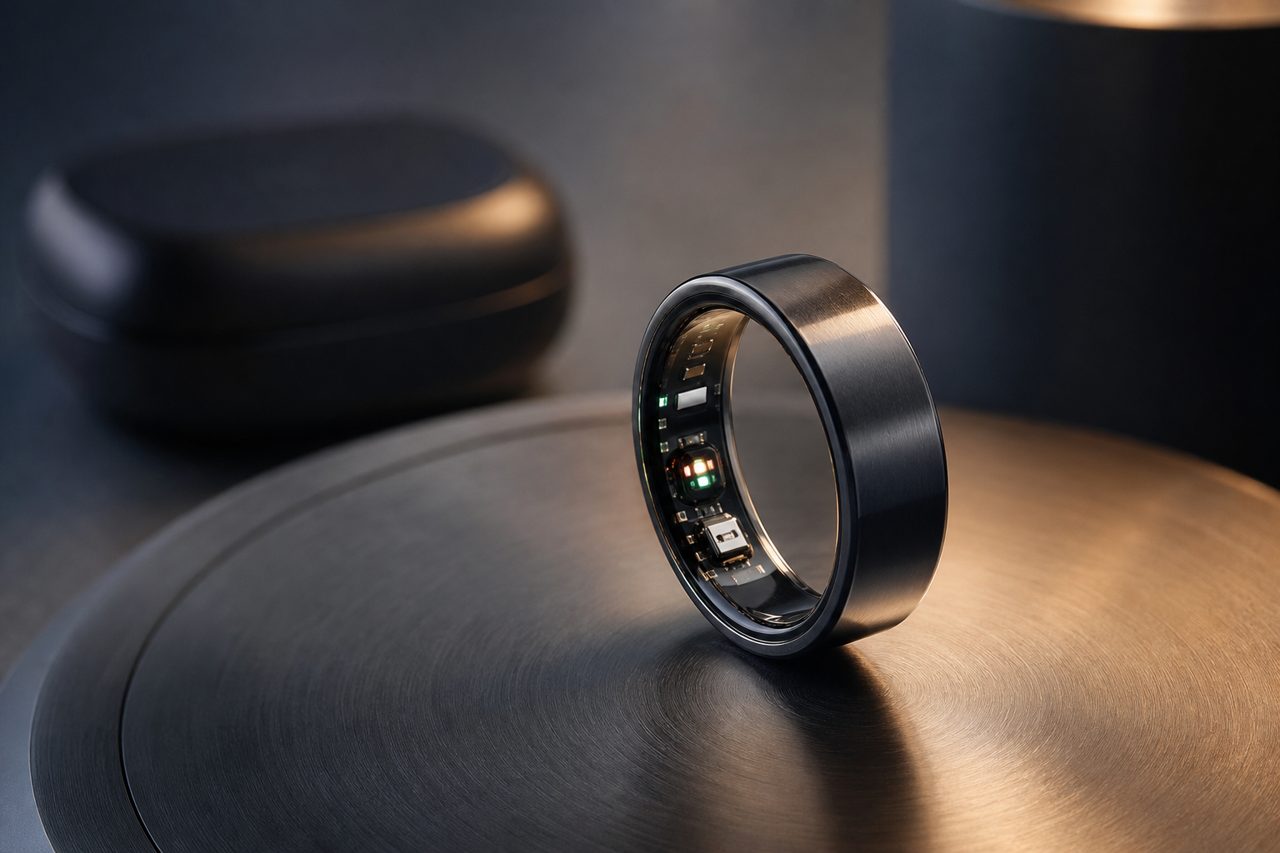
A smart ring is an instrument. It packs optical heart-rate sensing, skin temperature measurement and an accelerometer into a finger-sized shell, and it deliberately leaves out the display. Everything it collects is read later, in an app. The omission is the point: no screen means no light at night, no buzzing wrist, and room for a battery sized in days rather than hours. A fitness band is a dashboard worn on the wrist: it measures the same vital signs through the same optical physics, adds a display, notifications and often a larger battery budget, and invites all-day interaction. The two products overlap on data and diverge on the experience wrapped around the data.
Positioning follows the hardware. The band competes in the widest market, entry and mid prices, family buyers, first wearables. The ring competes for a narrower buyer with a higher budget: adults who already believe in sleep and recovery data and want the least intrusive way to collect it. In retail terms, the band is the volume shelf and the ring is the counter under the glass; both can be true in the same store.
How each one handles the sleep job
Night is where the fight happens, because sleep is the use case that drives first purchase in both categories. The ring's advantages are structural: a low-profile shell does not catch sheets, no screen lights up at two in the morning, and a multi-day battery means charging rarely costs a night of data. The finger is also a stable measurement point for skin temperature, one of the signals sleep algorithms lean on. Its structural weaknesses mirror the strengths: a ring cannot deliver a silent alarm gracefully, and during the day it is a passive pendant without its phone.
The band answers with immediacy: continuous heart-rate sampling, a screen for on-the-spot feedback, silent alarms that genuinely wake a sleeper, and daytime context from steps to notifications. Its night weaknesses are equally structural: wrists feel devices more than fingers do, and a shorter charge cycle means the charging calendar eventually lands on a night, which is exactly when the product is supposed to be earning its keep. Neither wins universally. They win different sleepers, and your listings should say which sleeper each one serves.
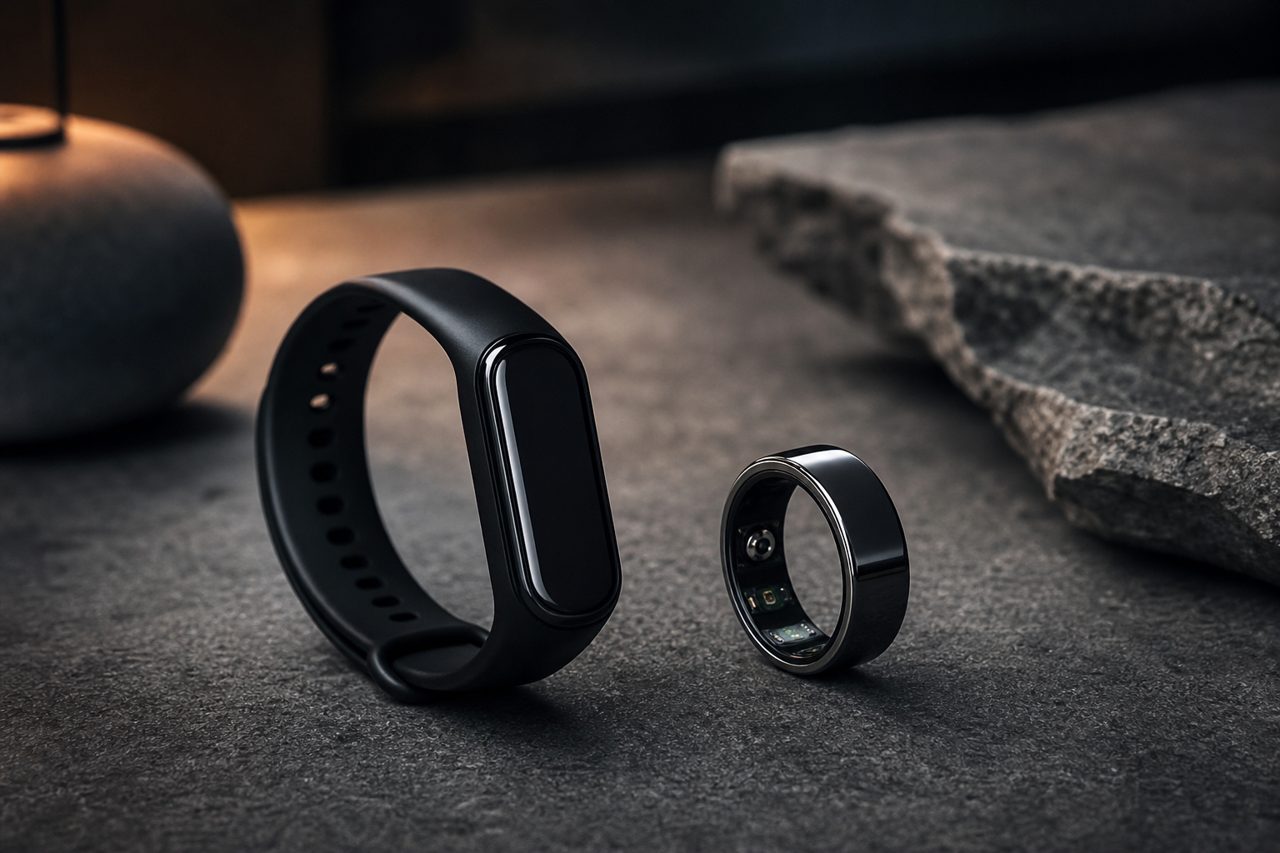
The side-by-side comparison
| Dimension | Smart ring | Fitness band |
|---|---|---|
| Primary job | Sleep and recovery instrument, worn passively | All-day activity dashboard with feedback on the wrist |
| Night comfort | High: no screen, low profile under bedding | Good; strap and screen felt by light sleepers |
| Battery pattern | Commonly quoted around a week per charge | Commonly quoted one to two weeks, screen dependent |
| Display | None; everything in the app | Color touch display with notifications |
| Sensing focus | PPG, skin temperature, accelerometer | PPG, accelerometer, often SpO2 |
| Charging | Small magnetic dock or puck | Pogo-pin clip or magnetic cable |
| Sizing and returns risk | High: fixed sizes in a variable world | Low: adjustable strap absorbs fit |
| Data presentation | App-first, sleep and recovery scores | On-wrist plus app |
| Best-fit buyer | Data-first adults, premium gifting | Mass market, family and kids, first wearable |
| Price band | Highest in consumer wearables | Entry to mid |
Read commercially, the table says the two categories are not substitutes but shelves. A ring competes on almost no dimension a band competes on except sensing, and the dimensions where bands cannot follow, discretion, night comfort, gift presentation, are precisely where ring margins live.
The ring's real business risk: sizing
Bands return for function; rings return for fit. A ring is a fixed circle in a world of variable fingers, and the costliest moment in the category is the unboxing of a wrong size: one disappointed gift morning, one exchange, one lost review. Mature sellers treat sizing as a program rather than a hope. Ship a sizing kit, or at minimum a printable sizing guide, before purchase; list every size with its inner diameter in both millimeters and local units; and treat exchange records as data about which SKUs run small. The kit itself becomes an attach product and a returns-prevention tool in one, and sizing discipline is the difference between a ring line that compounds reviews and one that compounds freight bills.
Which one to stock
- Sleep and recovery audience, premium gifting: the ring. It prices, presents and photographs like the premium object it is.
- Mass market, family and first wearable: the band. Price, adjustability and screen feedback do the converting.
- Both: position them as a ladder. The band wins the entry order; the ring is the second device for the buyer whose sleep data now matters, and it can be offered to existing band customers as an upgrade rather than an alternative.
The ladder framing matters because the two products share an app-shaped future: the customer who starts on a band and graduates to a ring is one relationship, not two acquisitions.
A note on gifting, because it moves real volume in both categories: bands gift like gadgets, rings gift like jewelry, and the packaging, presentation and copy should follow each object's native register. A ring listing that borrows the band's spec-sheet tone undersells the object; a band listing that borrows the ring's romance overprices it. Match the register, and each category's conversion does what it is built to do.
Operations and customization
Both are battery products: they travel battery-compliant on UN38.3-tested cells with IATA PI967 handling, in 8-18 day windows, and the method for verifying their battery claims is laid out in the wearable battery testing guide. Sensor verification follows the same optical physics as watches, covered in the sensor accuracy guide. Commercially the ladder is standard: validate either form factor one piece at a time through dropshipping; light customization of straps, engraving and packaging starts at 500 pieces per SKU with sampling in 5-7 days; full OEM, including ring size tooling, custom shells and sizing kits, starts at 1,000 pieces per SKU with sampling in 7-12 days. Transit damage on either product is covered by photo-based replacement within 30 days of delivery. The current lineup sits on the wearables category page, and the customization path on the OEM/ODM page.
FAQ
Do smart rings really track sleep better than bands?
Their sensing hardware is comparable; the ring's advantage is friction. A screenless, low-profile shell with a multi-day battery gets worn every night without charging breaks, and consistent wear produces better data than occasional wear. The better sleep tracker is the one that is actually worn.
Which category has the higher return risk?
Rings, by a wide margin, because fit is fixed while fingers vary. A band's adjustable strap absorbs most fit problems; a wrong-size ring comes straight back. The mitigation is a sizing program: a kit or printable guide before purchase, listed inner diameters, and exchange records used to spot SKUs that run small.
Can rings and bands coexist in one catalog?
They coexist best as a ladder, not as rivals. The band serves the entry tier; the ring is the premium instrument for buyers who already care about sleep and recovery data, including existing band customers. Framed as attach rather than either-or, the pair raises average order value instead of splitting it.