Creator Gear Packaging: Showing the Setup on the Box
In most accessory categories the box protects the product. In creator gear the box does something harder: it demonstrates the product, because what the buyer purchased is not a light or an arm but a working setup. Packaging that shows the setup sells better on shelves, converts better in listing photos, and quietly prevents the returns that vague boxes invite. This article lays out the approaches and the discipline behind them.
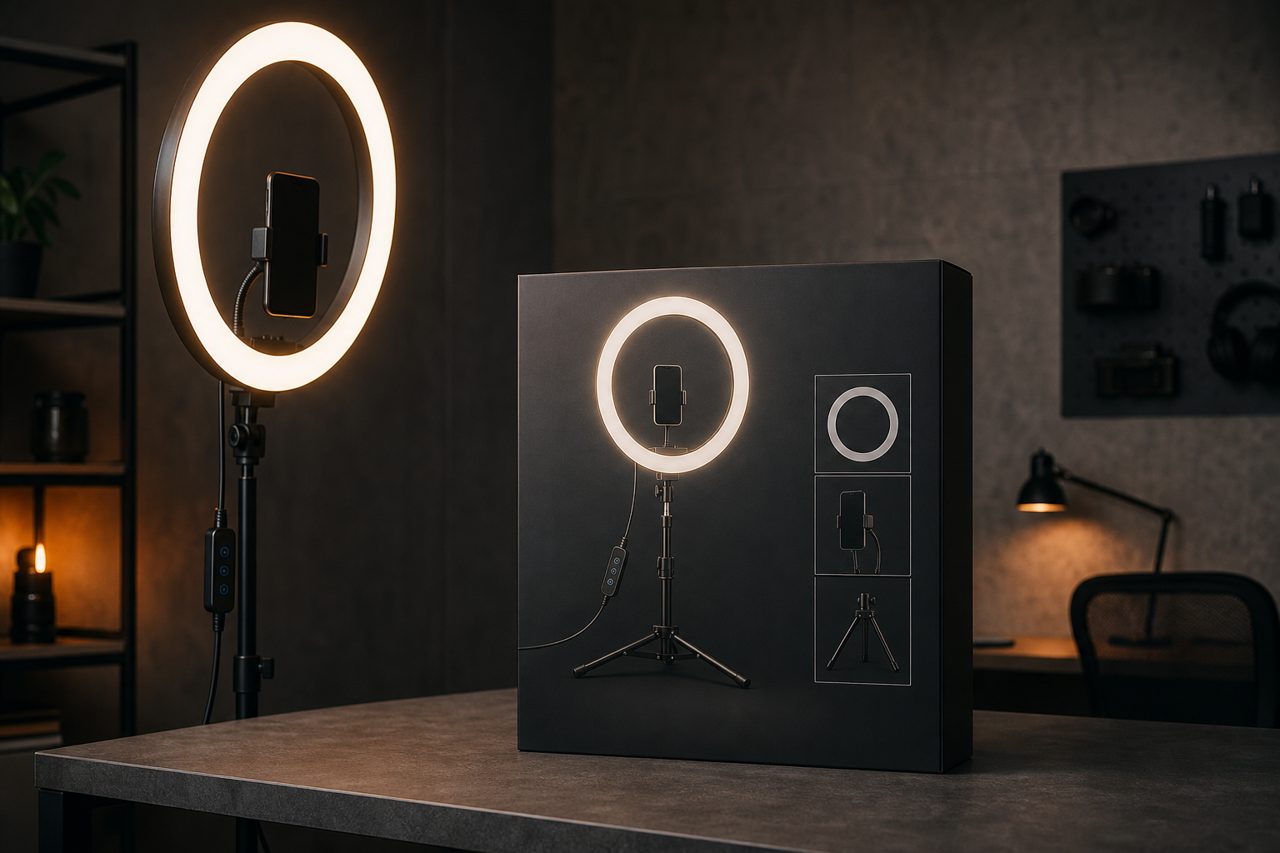
The logic starts with how creator gear is bought. The buyer is purchasing an outcome they have seen in someone else's frame — a lit face, a stable walking shot, a clean desk — and the product is merely the means. Any packaging that shows only the hardware asks the customer to complete the story alone. The ones that show the hardware working are doing the buyer's imagination for them, and that labor shows up in every metric that matters: shelf pickup, listing click-through, gift appeal and, not least, the gap between expectation and reality that decides whether a return happens. There is a bonus particular to this category: its buyers film things for a living, which turns every box into both a sales tool and likely content.
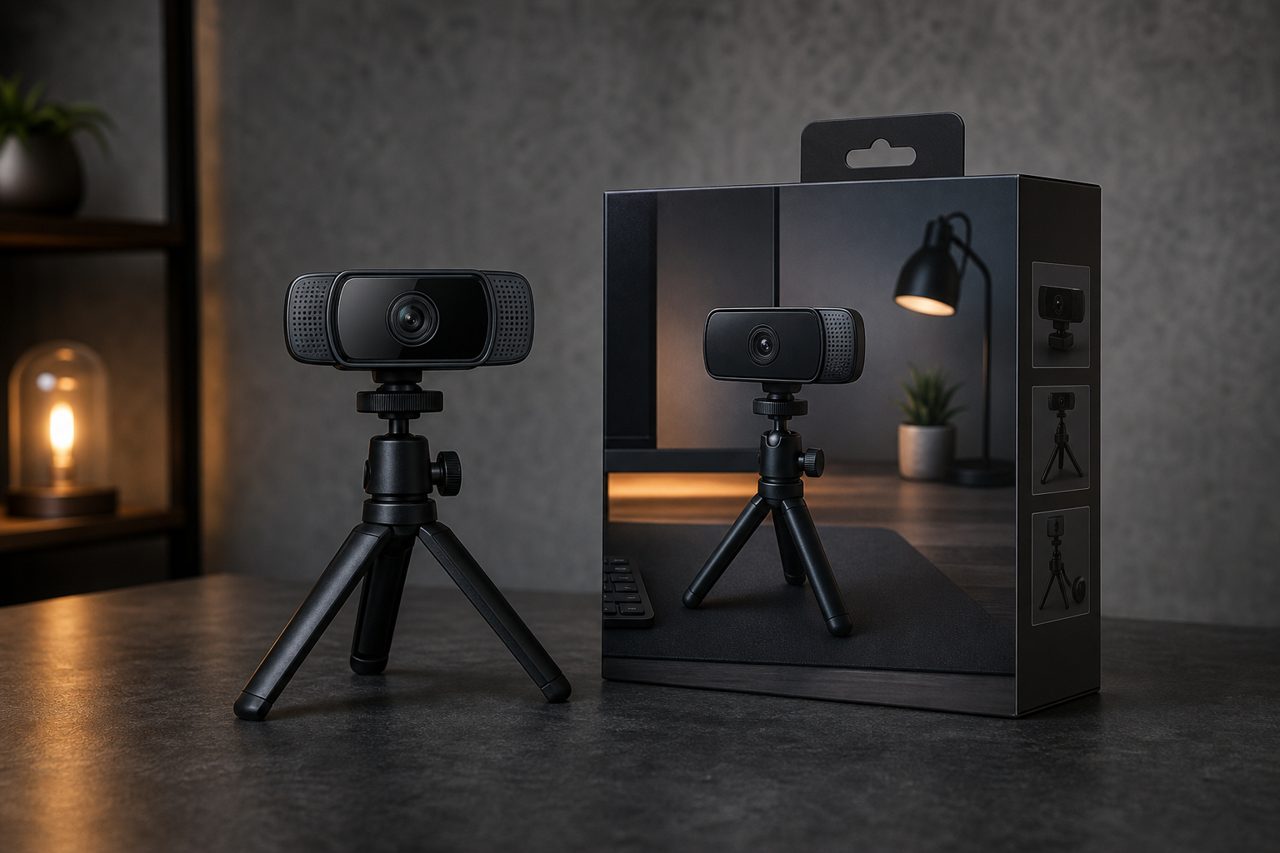
A fourth job is quieter but worth naming: photographability. Every panel will appear in listing galleries, social unboxings and marketplace shots, so the box is a prop in its own marketing. Panels designed around one strong frame — the setup image, the brand mark, one claim — survive thumbnail size, while busy panels dissolve into noise. Designing the box to be filmed is not vanity; it is distribution, because every customer unboxing is a studio the brand does not pay for.
What the box has to communicate
Three jobs, in strict order of importance. First, show the outcome: the assembled product in use, in a scene the target buyer recognizes. Second, list the contents: exactly what is in the box, including cables, mounts and the setup sheet, because surprises are the raw material of returns. Third, state the claims: resolution, color temperature range, load rating — the numbers the category argues about, printed once, honestly, with room on the panel to breathe. A box that does all three replaces a paragraph of listing copy at the exact moment the buyer is closest to deciding.
Five packaging approaches, by scenario
Different products and channels call for different structures. The working set:
| Approach | Best for | Cost posture | Watch-outs |
|---|---|---|---|
| Setup-first printed box | Lights, webcams, microphones — anything whose value shows in use | Moderate; full-bleed print | The hero photo must show the product working, not floating on white |
| Window box | Tactile items: grips, tripods, braided cables where texture sells | Higher; die-cut window and tray | Window reveals must be production-neat; security needs rise on shelf |
| Eco kraft with diagram insert | Kits and bundles aimed at conscious buyers; travel pouches | Lower per box; value carried by the insert | Kraft forgives little — print registration and photo quality must be higher |
| Setup-sheet insert card | Every SKU without exception | Minimal | Numbered steps with illustrations; one language per market or pictograms |
| Bundle sleeve over plain cartons | Multi-SKU kits assembled to order | Low; sleeve carries the brand, carton stays generic | Sleeve stock must survive transit; seal design matters |
Two of these deserve emphasis. The insert card is the highest-leverage item on the list: a single illustrated page that walks the buyer from box to working setup prevents more returns per dollar spent than any other packaging element. And the bundle sleeve is how small sellers sell kits without paying for custom kit boxes — the sleeve carries brand and box list while the inner cartons remain standard stock.
Copy and claims on the box
The panel is a legal and commercial surface at once, and the rules are stricter than on a webpage. Claims must be specific and verifiable: a band in Kelvin rather than "warm white", a load rating with its conditions, a watt-hour figure next to milliamp-hours. Trademark discipline applies everywhere but especially in print, where the evidence is permanent: describe compatibility factually in plain language, and keep borrowed brand names off the box entirely. Certification marks — CE, FCC, UKCA, RoHS — appear only where the market requires them and the file actually exists; a mark without a certificate is a liability printed in ink. And every claim on the panel should match the listing word for word, because divergent copies of the same claim read as two different products and disputes follow.
Retail shelf versus e-commerce parcel
The same product may need two answers. Retail packaging sells at arm's length: the front panel does the selling, shelf security matters, and the box must survive a handling chain between warehouse and peg. E-commerce packaging survives instead: the box rides in a mailer or a courier network, where crush and moisture replace shoplifting as the enemies, and the unboxing moment replaces the shelf moment as the brand surface. Kits complicate both, because multiple cartons must arrive as one product — which is why kitting capability matters as much as design. A supplier whose boxes arrive dented has not saved money; it has relocated the cost into replacements, and a photo-based damage replacement policy honored within 30 days of delivery is the safety net that keeps those costs honest and small.
The customization path and its economics
Packaging customization is staged, and the stages map to proof. Validate the product first through one-piece dropshipping — the product earns its box before the box gets designed. Light customization starts at 500 pieces per SKU: logo printing, a standard box in brand colors or kraft, a branded insert with the setup diagram, with sampling in 5-7 days. Full OEM packaging design — structural design, full-bleed art, multi-language panels — runs from 1,000 pieces per SKU, with sampling in 7-12 days. The staged sequence is not caution for its own sake; it ensures the money spent on print lands on a product whose reviews have already proven the story the box tells.
Inserts and sleeves deserve sequencing of their own: they are the lightest, most adaptable surfaces in the line, so localizing the setup sheet per market is usually the highest-return print decision available — setup confusion is language-shaped, and the insert can be adapted market by market without touching the box structure.
The packaging brief: a checklist
- Hero image: the product working in a recognizable scene, not the component on white.
- Box list: every included item, including cables and the insert, verbatim with the listing.
- Claims: specific numbers only, matching the listing word for word, no borrowed trademarks.
- Marks: certification logos only for markets and certificates that actually exist.
- Insert: numbered setup steps with illustrations; language matched to the destination market.
- Structure: transit-tested for the channel it will actually ride; kits packed as one unit.
- Stage: light customization at 500 pieces to brand a proven product, full OEM from 1,000 when the story is proven.
- Thumbnails: review every panel at phone-thumbnail size before approval — most buyers will meet the box small, in listing galleries and unboxing videos.
The sourcing bottom line
Packaging is where a good product finishes becoming a good brand: show the setup, list the box, claim only what the file proves, and spend on print after the reviews exist. The customization stages — 500-piece light branding and 1,000-piece full OEM — are on the OEM/ODM page, the products they wrap sit on the creator gear category page, and the charger packaging article covers the same discipline for the charging category.
FAQ
What should the front of a creator gear box show?
The setup in use, not the component. Creator gear is bought as an outcome — a lit face, a stable frame, a clean voice — so the front panel should be the hero image made physical: the assembled product working in a recognizable scene. Component photography belongs on the sides beside the box list.
Does better packaging actually reduce returns?
Yes, three ways: a setup photo and explicit box list prevent the mismatched expectations that drive most accessory returns; an illustrated insert resolves confusion before it becomes a defect claim; and structurally adequate boxes prevent transit damage — the category a 30-day photo-based replacement policy keeps small and honest.
Can small sellers get custom packaging affordably?
By staging it: light customization — logo, standard box in brand colors or kraft, branded insert — starts at 500 pieces per SKU with 5-7-day sampling, and full OEM design runs from 1,000 pieces. Validate the product through one-piece dropshipping first, then pay for the box once the product has earned one.