Charger Certifications by Market: CE, FCC, PSE, KC
A charger without the right certification is not a discount, it is a liability - seized at customs, delisted by marketplaces, and uninsured when something goes wrong. This guide maps the certification landscape by market and turns it into a document checklist for buyers.
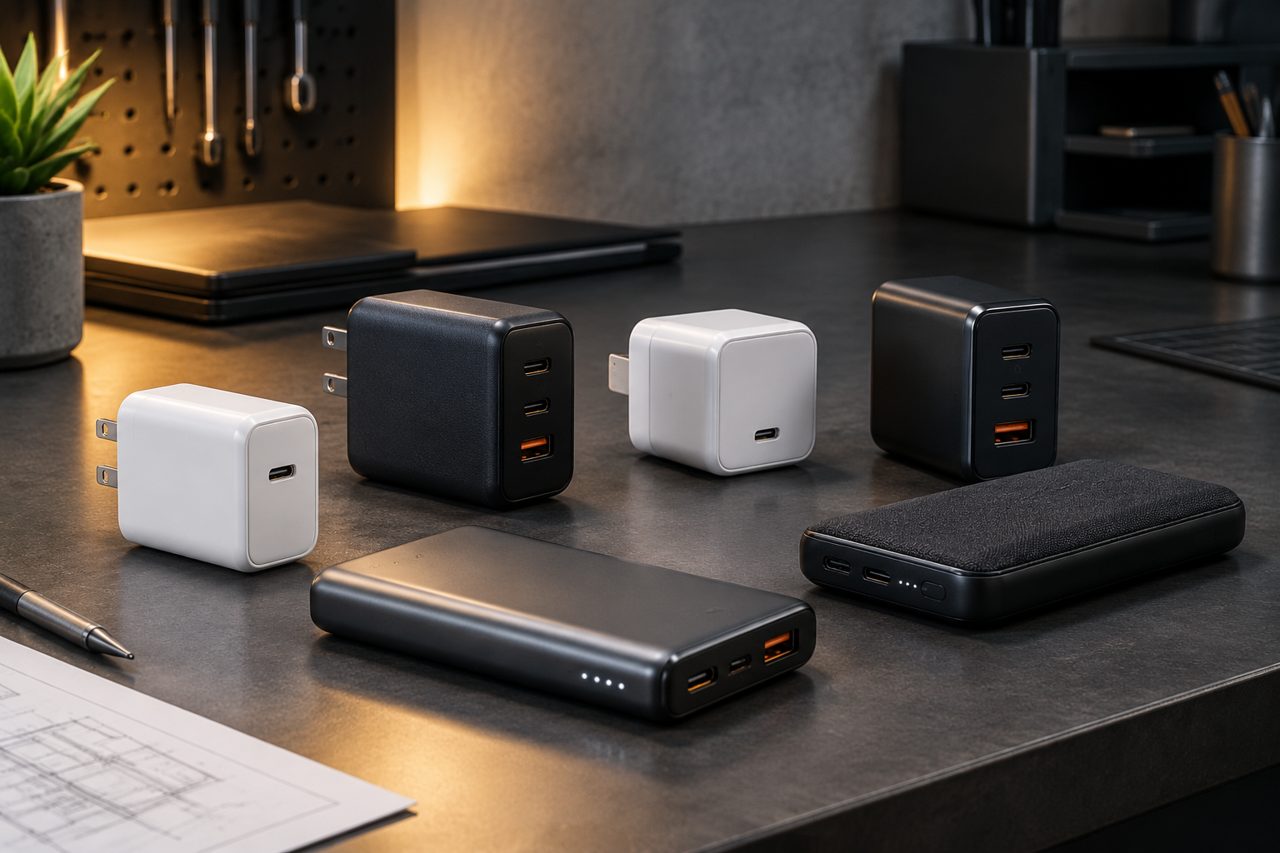
Certification is the part of charging procurement that buyers most often discover late. The product works, the samples impress, the price is right - and then customs holds a shipment, or a marketplace demands a compliance file within days, or an insurance claim meets the question of whether the product was ever legal in the market it shipped to. Every one of those scenarios traces back to the same root: certification was treated as paperwork instead of as a purchasing decision. The market map below is the decision, and the document list at the end is how it gets enforced.
The cost asymmetry explains why order of operations matters. Testing arranged alongside development is a line item; the same testing arranged after production is a crisis - retesting fees, delayed inventory, relabeled packaging, and in the worst cases a market abandoned for a season. Certification rewards the buyer who specifies target markets before the tooling is cut, and quietly charges everyone else double.
The market map
Each destination market defines its own entry requirements, administered by its own authorities. The table summarizes the landscape a charging-category buyer works in:
| Market | Mark / scheme | What it covers for chargers |
|---|---|---|
| EU / EEA | CE marking; RoHS | Electrical safety and electromagnetic compatibility under the applicable directives; the Radio Equipment Directive where wireless features exist; RoHS restricts hazardous substances |
| United Kingdom | UKCA | The UK's post-Brexit conformity marking, covering similar ground to CE for Great Britain |
| United States | FCC | Radio-frequency emissions - unintentional radiation from digital circuitry for a basic charger, with certification for products that include radio transmitters |
| Japan | PSE | Electrical safety under Japan's appliance and material safety law for devices connected to the mains |
| South Korea | KC | Korea's conformity mark covering safety and electromagnetic compatibility |
| Air transport | UN38.3 | Not a market mark but a transport requirement - lithium cells and batteries must pass before flying, as covered in our shipping guide |
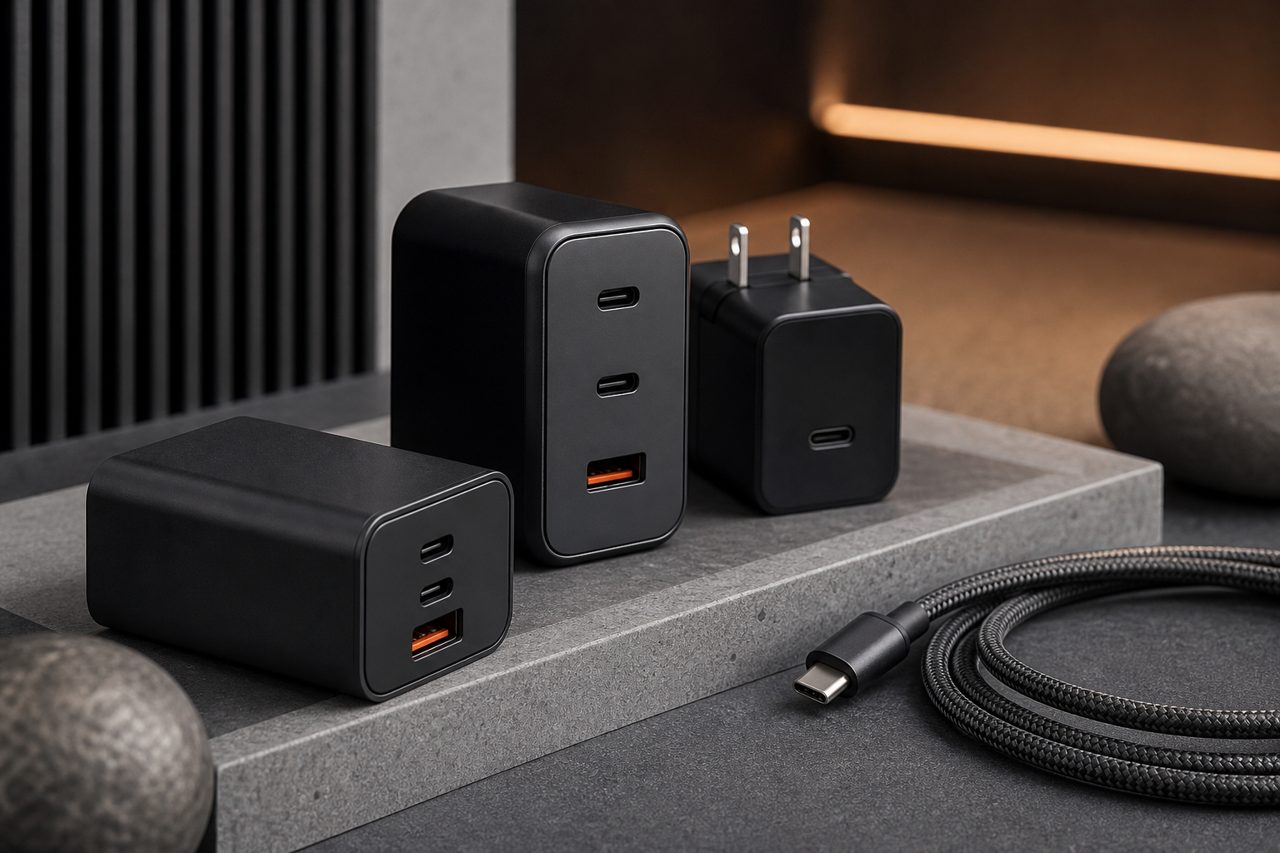
The EU layer: CE and the USB-C common charger rule
The CE mark is a manufacturer's declaration that a product meets EU directive requirements - it is self-declared in structure, which is precisely why the documentation behind it matters so much. For chargers, the substance sits in electrical safety and electromagnetic compatibility, with the Radio Equipment Directive joining wherever a product includes wireless features. RoHS runs alongside, restricting hazardous substances in the electronics.
The second EU layer is the one reshaping the category directly. Since December 28, 2024, the EU requires a common USB-C charging solution across phones, earbuds, tablets, cameras and a list of other handheld devices, with harmonized fast-charge specifications and labeling requirements attached (European Commission, 2024) - and laptops follow from April 2026. For charger sellers the direction is unambiguous: EU-bound charging products are USB-C and Power Delivery products, and the fast-charge labeling on the box is part of compliance rather than marketing decoration.
Buyers should reflect the rule in their document requests: a declaration of conformity that covers the exact model, labeling artwork that includes the harmonized fast-charge markings where they apply, and a check that any bundled cable matches the charger's claimed capability. Three requests, all cheap at sampling stage, all expensive after arrival.
Ordering the work: a certification timeline
Certification threads through the sourcing schedule rather than hanging off its end. A sequence that holds up in practice:
- At model selection: name the destination markets; the supplier maps the required standards and confirms which models already hold current files.
- At sampling: request pre-compliance checks on the sample so surprises surface while changes are still cheap, and confirm the labeling artwork against the standards.
- Before production: lock the compliance file - reports, declarations, laboratory identity - with every document naming the production model.
- At shipment: verify marks on the cartons and the file set that customs and marketplaces may request.
- After launch: re-verify whenever the design revision changes - a new board or housing is a new subject, not a footnote.
FCC for the United States
FCC oversight reaches chargers because their digital circuitry can radiate radio-frequency energy unintentionally - the rules for unintentional radiators exist exactly for this class of electronics. A basic charger enters the US market through the supplier's declaration of conformity process; a product that adds radio transmitters moves into the certification path with FCC involvement before market entry. For buyers, the practical translation is straightforward: every US-bound SKU needs an FCC-compliant test report behind it, and the FCC statement on the listing and housing should match the test file, not the other way around.
PSE and KC: Japan and Korea
Japan's PSE regime covers electrical appliances and materials connected to the mains, which places chargers squarely in scope, and Japan's scheme distinguishes device categories with different conformity paths - one more reason the exact model, not the product family, must anchor the paperwork. Korea's KC mark similarly attests to safety and electromagnetic compatibility for the Korean market. Both regimes are managed through authorized bodies and testing, and both are routinely underestimated by sellers who treat Asia as a single compliance zone. It is not: a CE-marked charger does not clear Japanese or Korean customs on the strength of its CE file.
The document checklist
Whatever the market, the enforcement instrument is the same: documents, named to the exact model. Before any purchase order, the buyer should be able to hold:
- Test reports per standard - safety, EMC, radio where applicable - for the specific model being purchased, current in revision.
- Declaration of conformity or certificate naming the model, the standards applied, and the responsible entity.
- Laboratory identity - which facility tested, so report credibility can be judged rather than assumed.
- Labeling artwork - the marks and statements that appear on the housing and box, checked against the test file.
- RoHS or equivalent chemical compliance where the destination requires it.
A certificate for a sibling variant is not a certificate. Family-level shortcuts are the most common way compliant-looking products turn out to be non-compliant at the worst moment - an audit, a claim, a marketplace review.
How a source supplier supports this
Certification is a solvable procurement problem when the supply chain treats it as one. A source supplier maintains the market matrix per model - CE, UKCA, FCC, RoHS, REACH, California Prop 65, PSE, KC - arranges testing through partner laboratories, and displays certificate numbers for each model so buyers can verify before ordering rather than after landing. Buyers define the destination markets before production; the supplier aligns the compliance file, the labeling artwork and the certification schedule to match. That division of labor is how a charging assortment stays shippable across markets as it grows, and it is built into the OEM/ODM process for custom models. The charging category lists current models with their certification documentation identified per SKU - the fastest way to see what a compliant sourcing file looks like in practice.
FAQ
Which certification does a charger need for the European Union?
The CE mark backed by the applicable directives - electrical safety and EMC, plus the Radio Equipment Directive when wireless features exist - together with RoHS. Since December 2024 the EU also mandates USB-C common charging and harmonized fast-charge labeling across its covered device categories.
Does a charger without wireless features still need FCC approval?
Yes. A charger's digital circuitry can emit radio-frequency energy unintentionally, so it falls under FCC rules for unintentional radiators and enters the US market via the declaration-of-conformity path. Added radio features move the product into certification.
Who arranges and pays for charger certification?
A source supplier typically arranges testing through partner laboratories and keeps certificates current per model, while buyers specify target markets before production. The rule that matters: certificates must name the exact model purchased - a sibling variant's certificate is not a certificate.