Case Printing Techniques: IMD, IML and Digital Explained
A phone case is a commodity until something on its surface makes a customer pick it up. That surface, the pattern, the logo, the finish, is produced by a small set of industrial processes with very different economics. Understanding them turns decoration from a quoting detail into a margin decision.
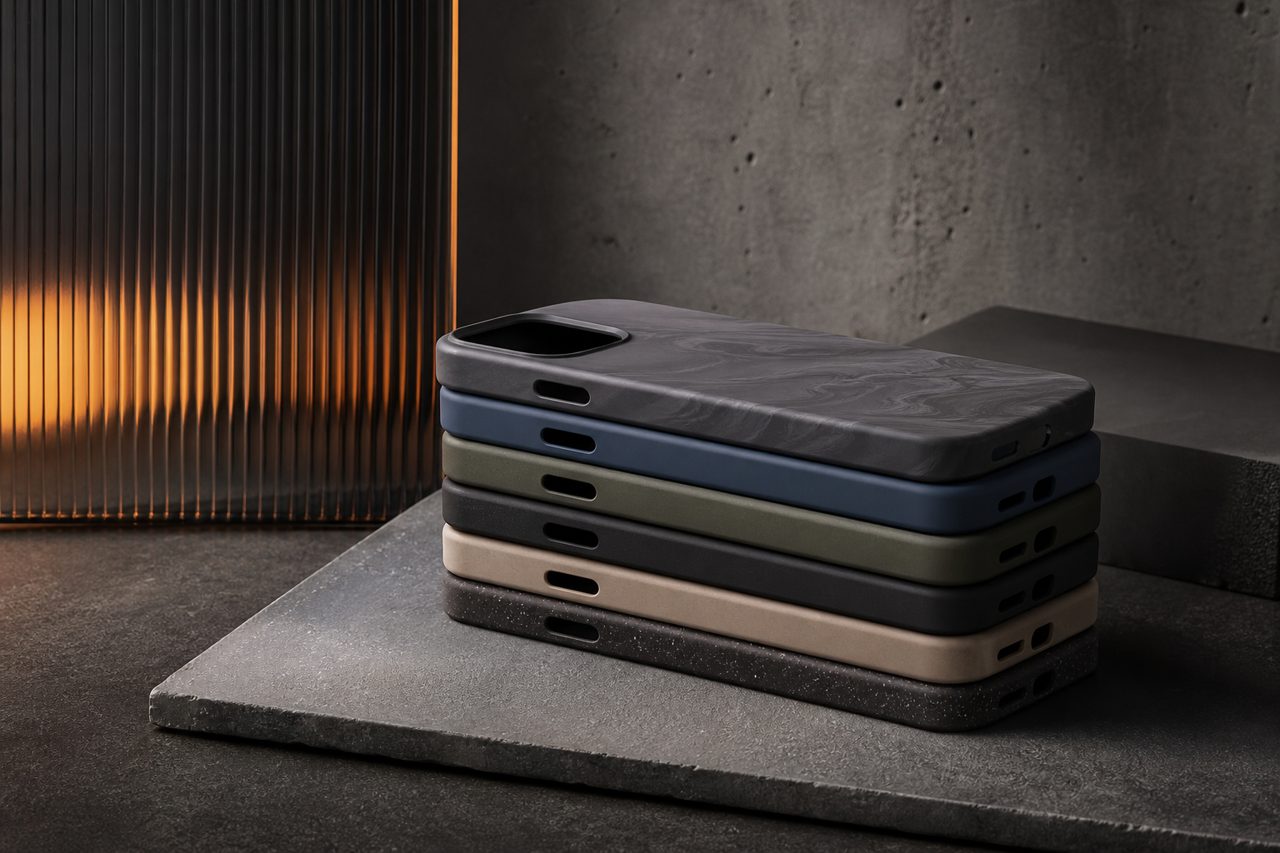
Case decoration sits inside a market that keeps expanding: global mobile accessories reached USD 105.5 billion in 2025 and are projected at USD 189.9 billion by 2033 (Grand View Research, 2025). Within cases specifically, the printed surface is often the only visible difference between a product that sells at a multiple of its competitor and one that competes on price alone. Buyers who treat printing as a line on a quote sheet usually discover the difference later, in returns and reviews. This guide explains the main process families, what each is good at, and how to qualify them before volume.
The process families at a glance
Six processes cover nearly everything a supplier will offer. The table summarizes them; the sections after expand on the ones that decide most case ranges.
| Process | How it works | Best for | Durability | Cost behavior |
|---|---|---|---|---|
| IMD (in-mold decoration) | Printed film loaded into the tool; pattern bonds under the surface during injection | Full-coverage patterns, gradients, marbling | High; print sits under the surface | Film-dependent; low per unit at volume |
| IML (in-mold label) | A pre-formed printed sheet becomes the outer skin | Deep gloss, high-definition hero patterns | Very high surface hardness on hard shells | Sheet and tooling cost; volume-friendly |
| Water transfer | Film floated on water wraps the 3D surface | Full-wrap camouflage and textures on curves | Medium; depends on topcoat | Setup per pattern; mid volumes |
| UV digital | Inkjet printing directly onto the shell | Short runs, variable designs, proofs | Moderate; topcoat improves it | No tooling; flat per-unit cost |
| Pad printing | Silicone pad transfers logo ink onto curves | Logos and small marks | High for small marks | Very cheap per unit at volume |
| Laser engraving | Laser ablates the coating to form the mark | Logos on matte or metallic shells | Very high; cannot rub off | Time cost per unit, no consumables |
Read the table by cost behavior first, because it dictates where each process can live. Processes that carry tooling or film investment reward concentration: fewer patterns, deeper inventory, better unit economics per design. Processes with flat per-unit costs reward breadth: many patterns, small batches, fast pruning of losers. The expensive mistake is the mismatch, pairing a film-based process with a fast-rotating pattern calendar, where film costs are paid repeatedly for patterns that never earn them back. Decide the rotation speed of the range first; the process choice follows.
IMD and IML, the workhorses
IMD places a printed film inside the mold before injection. Molten material bonds to the back of the film, so the artwork ends up beneath the surface, protected from keys, pockets and denim. That under-surface position is why IMD patterns outlast the shell around them and why the process dominates mid-market patterned cases. Its constraint is the pattern library: films are produced in series, so a range either draws from existing artwork or funds a new film run, which is a volume decision, not a styling one.
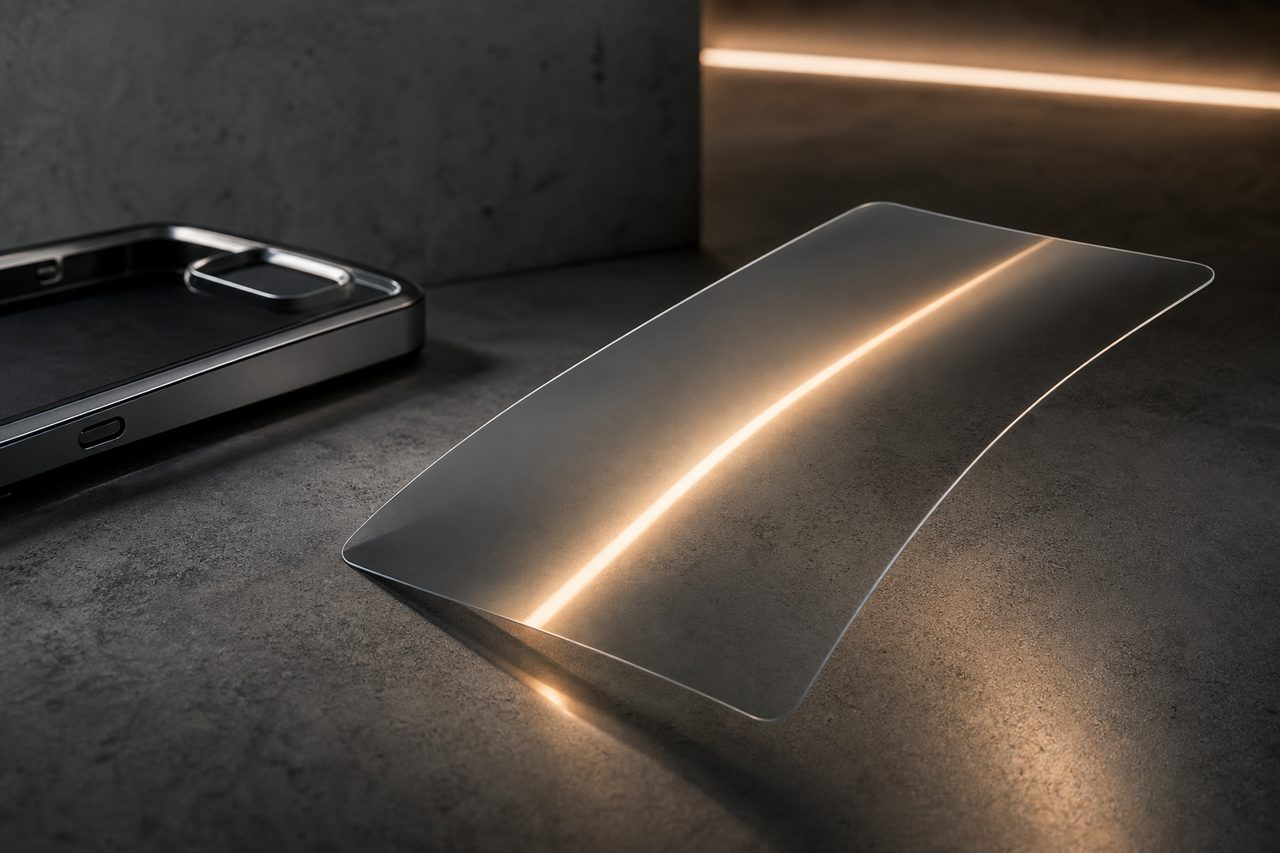
IML works differently: a pre-formed, printed sheet, usually a hard polycarbonate skin, becomes the outermost layer of the shell. The result is deeper gloss and crisper detail than IMD, which is why hero patterns and high-gloss designs use it. The trade-offs are geometry and cost. The sheet wraps flat faces and gentle curves well but struggles at tight corners, and tooling plus sheet costs push the break-even volume higher. The practical test for a buyer is simple: request corner samples, because corners are where IML quality shows first.
A practical sourcing note closes this section: an established source supplier maintains a standing pattern library across film series and mold families, and much of it never appears on a website. Before commissioning new artwork, ask what already exists; adapting a proven film to a current shell model is faster, cheaper and lower-risk than funding original art. New artwork then becomes a deliberate investment made for patterns the sales data already supports, not a gamble attached to a quote.
Digital and short-run routes
UV digital printing changes the economics rather than the look. Because ink is jetted directly onto the shell, there is no film, no tool and no setup per design, so a hundred different designs cost roughly the same per unit as a hundred copies of one design. That makes digital the natural route for proofs, creator collaborations, personalized SKUs and market tests. Its weaknesses are texture and longevity: the ink layer sits proud of the surface and wears faster than an under-surface IMD print, though a clear topcoat narrows the gap. Treat digital as the iteration engine and IMD or IML as the volume engine; the pattern that wins on digital graduates to film.
Pad printing and laser engraving occupy the small-mark end. Pad printing handles curved surfaces cheaply at volume, which is why nearly every logo in the category is a pad print. Laser engraving spends machine time instead of consumables and cannot rub off, making it the default for matte and metallic finishes where printed ink would sit visibly on the surface.
Quality checks before you commit volume
Decoration failures are predictable, and therefore testable. Before a bulk order, run the sample set through five checks:
- Rub and alcohol test. Cotton with isopropyl alcohol, rubbed repeatedly across the print; ink that lifts on the bench will lift in a pocket.
- Tape test. Standard adhesive tape pressed and peeled repeatedly over pattern edges.
- Sweat and sunscreen exposure. Cases are handled daily; watch for ink bleed on coated surfaces.
- UV and yellowing exposure. Light shells and clear coats discolor near windows and dashboards.
- Corner inspection under magnification. Film alignment and IML wrapping problems appear at corners first.
The same scrutiny applies to newer material families: printing and coating adhesion on recycled or bio compounds must be verified on the shipped blend itself, as covered in the eco-friendly case materials comparison.
Matching process to run size and channel
The process decision follows the volume ladder. Validate demand with stock shells or digitally printed samples shipped one at a time through dropshipping. A pattern that proves itself moves to light customization, with logo and packaging programs from 500 pieces per SKU and sampling in 5-7 days. Only patterns with sustained volume justify the film and tooling of IMD or IML at 1,000 pieces per SKU, sampling in 7-12 days, with structural changes from 3,000. In practice, marketplace ranges usually start digital and graduate to IMD; corporate gifting lives comfortably at pad-printed logos on stock shells; boutique retail pays for IML gloss. The current case range sits on the phone and tablet accessories category page, and the full customization path, from logo programs to tooling, is on the OEM/ODM page.
FAQ
What is the difference between IMD and IML in phone cases?
IMD bonds a printed film under the surface during molding, so the artwork is protected inside the shell. IML uses a pre-formed printed sheet as the outermost skin, giving deeper gloss and crisper detail but less corner coverage and higher tooling cost. IMD hides the print, IML wears it, and corners are where IML quality shows first.
Which printing method suits small trial orders?
UV digital printing, because it needs no film or tooling and costs roughly the same per unit for one design or a hundred different designs. Use it for proofs, market tests and variable designs, then graduate winning patterns to IMD film, where the print sits under the surface and wears better.
How do I verify print durability before a bulk order?
Five checks on samples: alcohol rub across the print, repeated tape peel at edges, sweat and sunscreen exposure, UV exposure for yellowing, and corner inspection under magnification. Ask for the supplier's internal reports and keep signed retention samples from the production run.