Eco-Friendly Cases: Recycled TPU vs Bio Materials
Eco-friendly phone cases have moved from trade-show curiosity to a standing line item on buyer briefs. The two material families that dominate the segment, recycled TPU and bio-based composites, look similar on a shelf and behave very differently in a supply chain. This comparison breaks down what each one is, what it costs you, and which channels reward it.
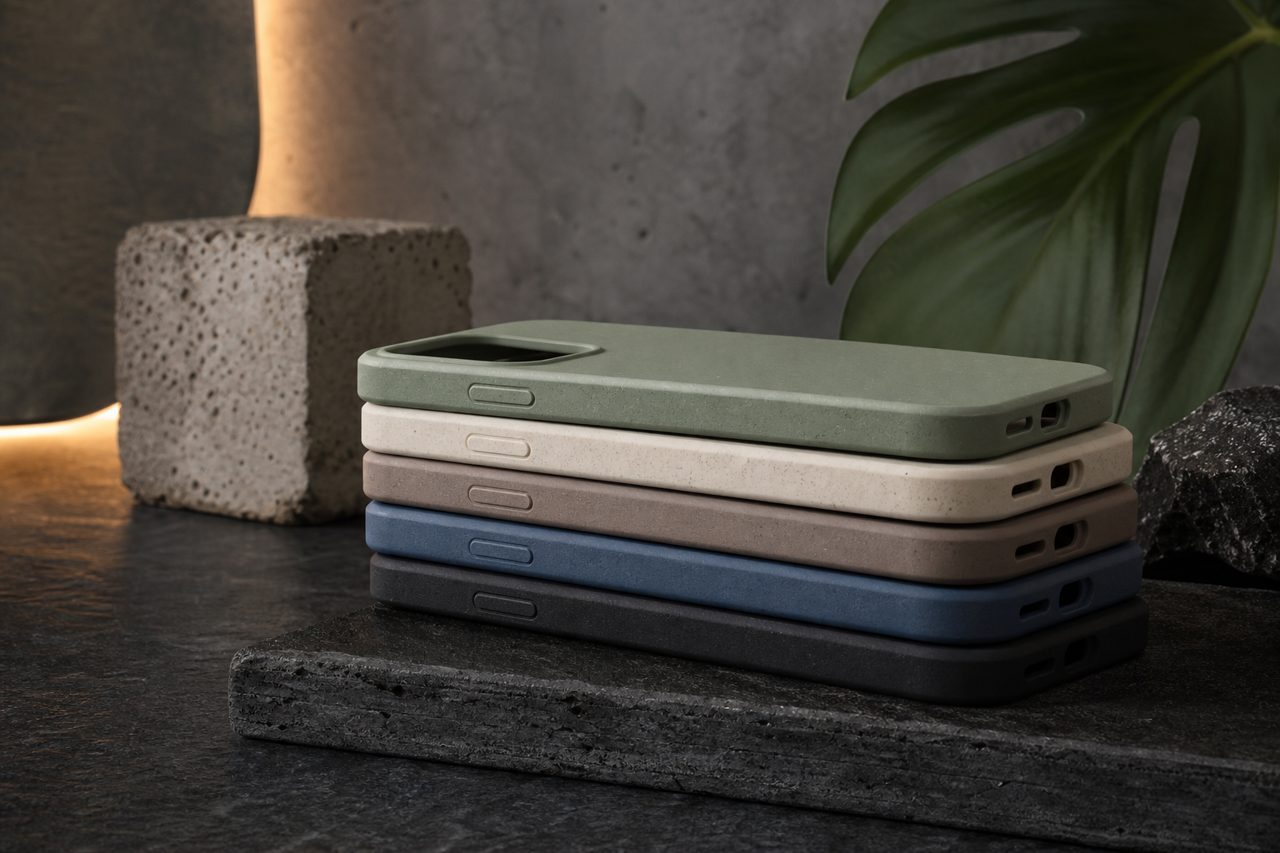
Phone cases remain the anchor of the mobile accessories market, and the market keeps expanding: Grand View Research values global mobile accessories at USD 105.5 billion in 2025, projected to reach USD 189.9 billion by 2033 (Grand View Research, 2025). In a category this crowded, shelf-level differentiation is scarce, which is exactly why sustainability stories have migrated from packaging inserts into the product itself. For a buyer assembling a case range, eco materials are no longer a moral footnote. They are a positioning decision with real cost, real claim risk and real upside.
Why eco cases earned a place in the assortment
Two forces push eco cases onto mainstream shelves. The first is buyer-facing: a visible material story is one of the few remaining ways to make a commodity product feel considered, and it photographs well in marketplace listings. The second is procurement-facing: recycled and bio-based grades are now producible at volume with cosmetic quality close to conventional stock, so the historical trade-off between green claims and shelf appearance has narrowed. Neither force turns eco into a default choice. Both make it a testable niche, and testable niches are usually where durable winners start in this category.
The two material families, defined
Recycled TPU starts as scrap: post-industrial offcuts from case and cable production, or post-consumer products re-entering the material stream. The scrap is cleaned, re-compounded into pellets, then molded into new cases. Mechanically, a well-compounded recycled grade behaves like its virgin parent: flexible, shock-absorbent, easy to color. The differences live at the margins of batch consistency, not in fundamental material behavior.
Bio-based materials are a broader family. The common versions in phone cases are plant-derived polymer blends, PLA compounds, wheat-straw fiber composites and bamboo-fiber mixes, usually blended with a conventional polymer to keep moldability, plus surface treatments such as cork veneers. The critical distinction for your listing copy: bio-based means the carbon comes from plants, not that the case biodegrades in a drawer. Biodegradability is a different, stricter claim with its own test obligations.
The head-to-head comparison
The table below compares the two families across the dimensions that actually move buying decisions:
| Dimension | Recycled TPU | Bio-based composites |
|---|---|---|
| Feedstock | Post-industrial or post-consumer TPU scrap, re-compounded | Plant-derived polymers and fibers, usually blended with conventional polymer |
| Feel and look | Near-identical to standard TPU; colors occasionally slightly muted | Distinct matte, textured or speckled surfaces; visibly different |
| Drop protection | Equivalent to comparable virgin grades when properly compounded | Typically stiffer; verify results on the actual shipped blend |
| Color range | Wide, with some batch-to-batch variation | Narrower; natural tones dominate |
| Decoration | Standard printing and coating processes apply | Surface behavior varies by blend; test adhesion first |
| Claim substantiation | Recycled-content share backed by chain-of-custody paperwork | Feedstock origin documents; biodegradability is a separate claim |
| Cost position | Modest premium over standard TPU | Highest premium in the case range |
| Claim risk | Low when documentation is in order | Higher; over-claiming biodegradability invites scrutiny |
| Best-fit channel | Marketplace value and mid tiers, volume programs | Corporate gifting, boutique retail, EU eco shelves |
Read the table as two different products wearing the same green label. Recycled TPU competes on familiarity: it protects like the case a customer already owns, and the story lives in the listing. Bio composites compete on difference: the material is the visual product, which is precisely why gift and boutique channels pay for it and bargain hunters do not.
Claims: where eco positioning wins or burns
The commercial risk in this segment is not the material; it is the sentence you print about the material. Vague environmental terms are increasingly treated as unsubstantiated advertising in both the EU and the US, and marketplace enforcement follows the same direction. Three disciplines keep a case line safe. First, tie every claim to a document: recycled-content statements to chain-of-custody paperwork, and any biodegradability language to a defined standard and test condition. Second, anchor compliance testing to the shipped material: recycled feedstock can introduce substances that REACH and California Prop 65 screening must catch on the real article, not on a virgin-material datasheet. Third, prefer specific, modest wording over sweeping promises: a case described as made with a stated share of recycled content, backed by paperwork, sells the story without betting the brand on it.
The same logic applies to protection. An eco case still has to survive the same drop testing as any protective shell, and it should pass in its recycled or bio grade, not as a cousin of a certified virgin reference. Sample-stage verification is where this gets caught cheaply; after shipment it is caught by reviews.
What to verify before committing volume
Treat the first order as a documentation exercise as much as a product one. Put these six items on the table with the supplier:
- Feedstock origin and share. Post-industrial or post-consumer, and the recycled-content percentage, in writing.
- Recycled-content documentation. Chain-of-custody or equivalent paperwork a platform or regulator can check.
- Physical tests on the shipped grade. Drop and aging results for the recycled or bio compound itself.
- Batch color consistency. Recycled streams vary; ask to see consecutive production batches side by side.
- Decoration adhesion. Printing and coating behavior on the actual blend surface.
- Regulatory screening. REACH and Prop 65 reports on the shipped material.
Commercially, the MOQ ladder stays friendly to testing. Stock eco-case models validate at a single piece through dropshipping; logo and packaging customization starts at 500 pieces per SKU, and full OEM development at 1,000 pieces with structural changes from 3,000. Sampling runs 5-7 days for light customization and 7-12 days for full OEM. Use the cheap end of the ladder to prove the listing before you fund the paperwork-heavy end.
Which one to stock, by channel
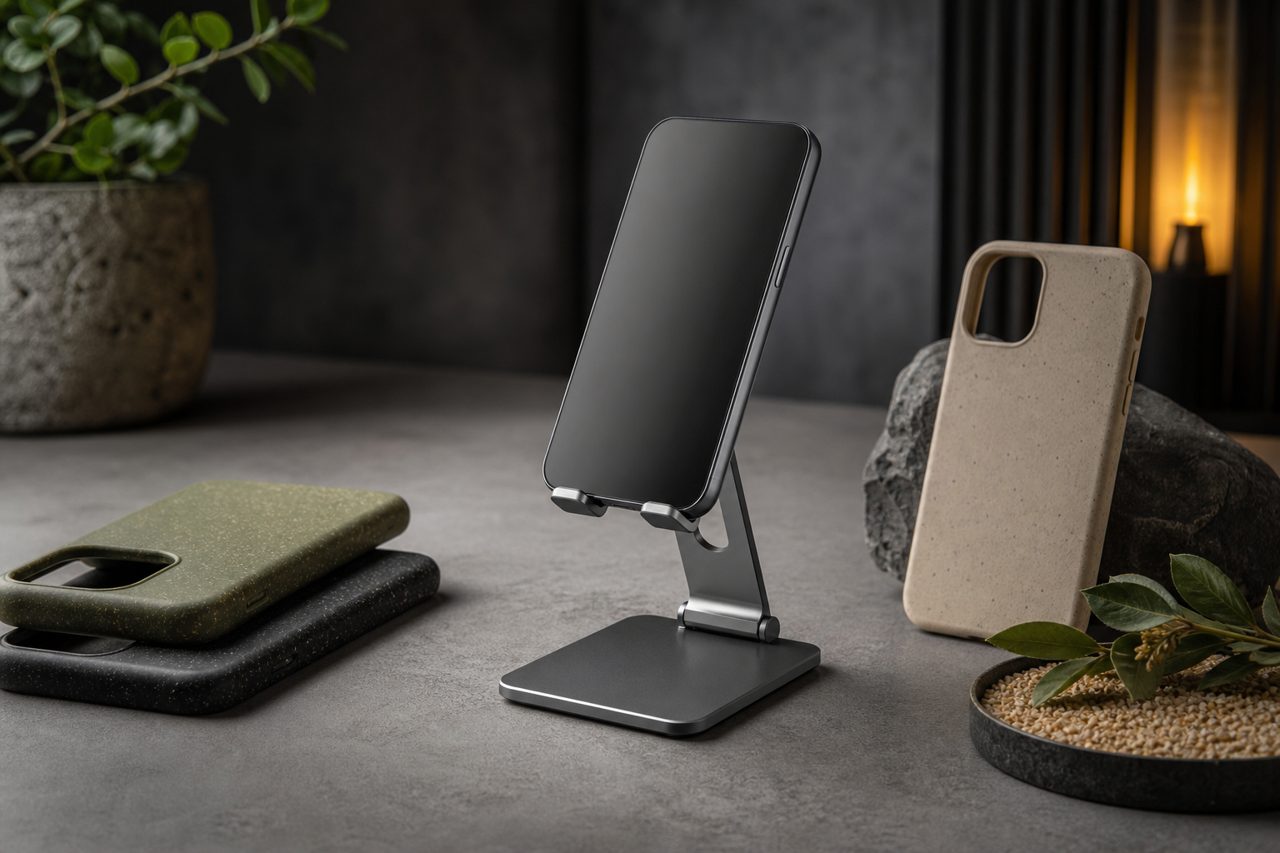
For marketplace sellers, recycled TPU is the pragmatic entry: familiar feel, proven protection, a moderate premium, and a story that fits a bullet point. For corporate gifting and boutique retail, bio composites earn their premium because the gift is the object itself, and a visibly different material is part of what is being bought. For EU-facing retail, both work, with documentation discipline non-negotiable. A sensible first range is a recycled-TPU core of two or three models in proven colorways plus one bio-composite statement piece. The full case lineup sits on the phone and tablet accessories category page, and the customization path, including material sourcing and logo programs, is detailed on the OEM/ODM page.
FAQ
Are recycled TPU cases as protective as standard TPU cases?
In properly compounded grades, yes. Recycled TPU behaves close to its virgin parent, and quality drops come from poor re-compounding rather than from recycled content itself. Require drop and aging test reports for the actual recycled grade in the shipped case, not a datasheet from a virgin reference.
Do bio-based cases biodegrade in normal use?
Bio-based and biodegradable are different claims. Bio-based means the carbon source is plant-derived; the case still behaves as a durable polymer in normal use. Biodegradability requires specific conditions and its own testing, so list bio-based cases as durable products with plant-derived content unless you hold test evidence for a biodegradation claim.
What MOQ applies to customized eco-friendly cases?
The standard three-tier ladder applies: stock models from a single piece for dropshipping validation, logo and packaging customization from 500 pieces per SKU, and full OEM from 1,000 pieces with structural changes from 3,000. Sampling takes 5-7 days for light customization and 7-12 days for full OEM.