ANC Explained: Noise-Cancellation Specs That Matter in TWS
Every TWS listing claims "up to 42dB" noise reduction or similar. This guide explains what active noise cancellation actually measures, which spec lines predict real performance, and how to compare samples before you commit to a SKU.
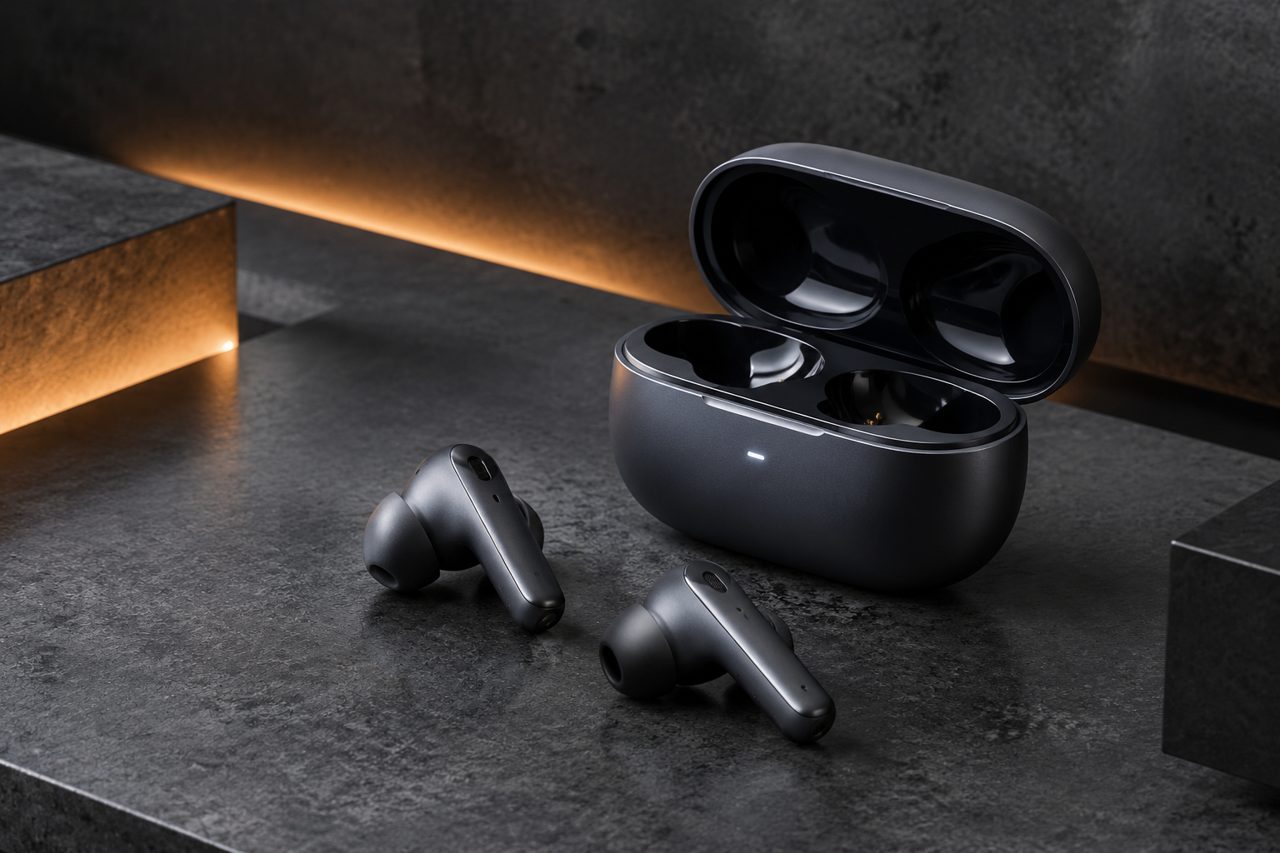
Active noise cancellation moved from a premium over-ear feature to a baseline expectation on true wireless earbuds in about three product cycles. For buyers building a catalog, that speed of adoption created a spec-sheet arms race: every listing now carries a headline dB number, and most of those numbers are close to meaningless on their own. Reading past the marketing line is the difference between a SKU that gets repeat orders and one that gets returns.
What ANC actually measures
Active noise cancellation works by using a microphone to sample ambient sound, generating an inverted sound wave, and playing it back through the driver to cancel the original noise before it reaches the eardrum. The technique is most effective against continuous, low-frequency sound such as engine drone, HVAC hum, or cabin pressure noise, and far less effective against sudden, high-frequency sound such as a dog bark or a door slam.
The dB figure printed on a spec sheet is a peak reduction number, usually measured at the single frequency where the ANC system performs best, under lab conditions the vendor chooses. It says nothing about performance across the full frequency range a wearer actually experiences, which is why two earbuds with an identical "up to 40dB" claim can feel very different on a real commute.
Feedforward, feedback and hybrid ANC
Three architectures dominate the current TWS market, and the difference matters more than the dB number:
- Feedforward ANC. An outward-facing microphone samples ambient noise before it reaches the ear canal. Cheap to implement and effective at low-to-mid frequencies, but it cannot correct for how a specific ear shape changes the sound path.
- Feedback ANC. An inward-facing microphone inside the ear canal measures what the wearer actually hears and adjusts in real time. Better at adapting to fit, but more prone to a whooshing artifact called the "handling noise" or wind-noise problem if not tuned carefully.
- Hybrid ANC. Combines both microphones, cross-referencing the ambient signal with what is actually reaching the eardrum. Covers a wider frequency range and adapts to fit variation across a population of ears, at higher component and tuning cost, which is why it concentrates in mid-to-premium SKUs.
Entry-tier SKUs built for price-point retail typically ship feedforward-only ANC and market it with the same dB vocabulary as hybrid systems. Neither is dishonest by itself, but a buyer sourcing for a premium listing needs to know which architecture is actually inside a given model before writing the product description.
Fit dependency: the variable most listings ignore
ANC effectiveness depends heavily on ear-tip seal. A loose seal lets ambient noise leak in around the driver, which no amount of processing can fully compensate for. This is why ANC earbud lines typically ship three to four ear-tip sizes, and why a fit-testing protocol matters as much as the ANC chipset when evaluating samples — see our separate fit and comfort testing guide for the bench method we use.
Wind noise is the second fit-adjacent failure mode. Outdoor movement pushes air across the feedforward microphone, which some cheaper ANC implementations misread as noise to cancel, producing an audible rushing artifact. Better designs include a wind-detection algorithm that dials back ANC intensity in windy conditions; this is worth testing outdoors before approving a sample, not just in a quiet showroom.
Battery cost of running ANC
ANC processing draws continuous power from the earbud battery, independent of audio playback. Vendors typically publish two runtime figures — with ANC on and with ANC off — and the gap is meaningful: a 20-25 percent runtime reduction with ANC active is common on current chipsets. When comparing SKUs, always request both numbers, because a listing that shows only the ANC-off figure is presenting the more flattering case.
| Spec line | What to check | Why it matters |
|---|---|---|
| ANC architecture | Feedforward, feedback or hybrid, not just a dB number | Predicts frequency coverage and fit tolerance |
| dB claim basis | Test frequency and lab conditions behind the headline figure | Peak numbers can mask weak broadband performance |
| Ear-tip sizes shipped | Count and material (silicone vs. foam) | Seal quality is the single biggest real-world ANC variable |
| Wind-noise handling | Outdoor test at walking pace, not just a quiet room | Common failure mode on entry-tier feedforward ANC |
| Runtime with ANC on | Compare against the ANC-off figure on the same spec sheet | Some listings only publish the flattering number |
| Transparency mode | Presence and latency of an ambient pass-through toggle | Increasingly expected alongside ANC in the same SKU |
Adaptive ANC: the next spec line to understand
A growing share of mid-tier and premium models now advertise "adaptive ANC," which automatically adjusts noise-cancellation intensity based on the ambient environment rather than applying a fixed level regardless of surroundings. This is a genuine improvement over static ANC when implemented well - reducing ANC intensity in low-noise indoor settings preserves more natural sound and battery life, while increasing it on a noisy commute delivers the isolation a wearer actually needs. As with the base ANC specs, "adaptive" alone is a marketing label rather than a guarantee; ask whether the adaptation is based on real-time ambient microphone sampling or a simpler preset-switching mechanism tied to a companion app, since the two behave very differently in practice despite carrying the same marketing term.
Where ANC sits in a dropshipping audio catalog
ANC has moved from a flagship-only feature to a differentiator available across most price tiers, which means the sourcing decision is less about whether to stock it and more about which architecture and tuning to lead with. A commuter-focused storefront benefits from hybrid ANC with strong low-frequency performance; a fitness-focused storefront cares more about transparency mode and wind handling than peak dB. Matching the architecture to the audience is a positioning question we cover in the TWS vs. over-ear category comparison.
Every current TECHORIGIN ANC model ships from a single piece for dropshipping validation, with the full spec sheet — architecture, dB basis, runtime both ways, ear-tip count — provided before sample order. Logo printing and custom packaging start at 500 pieces per SKU, and full OEM with custom tuning starts at 1,000 pieces per SKU. Browse the current audio lineup or review the OEM/ODM process for tuning-level customization.
FAQ
Does a higher dB noise-reduction number mean better ANC?
Not reliably. dB reduction figures are usually measured at a single frequency under lab conditions chosen by the vendor. Two earbuds with the same headline number can sound very different on a real commute because the frequency curve, not the peak number, determines what a wearer actually notices.
Is hybrid ANC always better than feedback-only or feedforward-only ANC?
Hybrid ANC, which combines an outward-facing feedforward microphone with an inward-facing feedback microphone, generally covers a wider frequency range and adapts better to fit variation. It costs more in components and tuning, so it is common in mid-to-premium tiers rather than entry SKUs.
What is the MOQ for custom-branded ANC earbuds?
Stock ANC models ship from a single piece for dropshipping validation. Logo printing and custom packaging start at 500 pieces per SKU, and full OEM with tuning and housing changes starts at 1,000 pieces per SKU.