Earbud Fit and Comfort: A Practical Test Protocol
Fit is the loudest silent driver of earbud returns: it never appears on a spec sheet, it varies with every ear, and disappointed customers rarely explain it - they just leave three stars. This protocol turns fit from a matter of opinion into a repeatable bench test with defined durations, criteria and a scoring sheet a buying team can run on samples before committing capital.
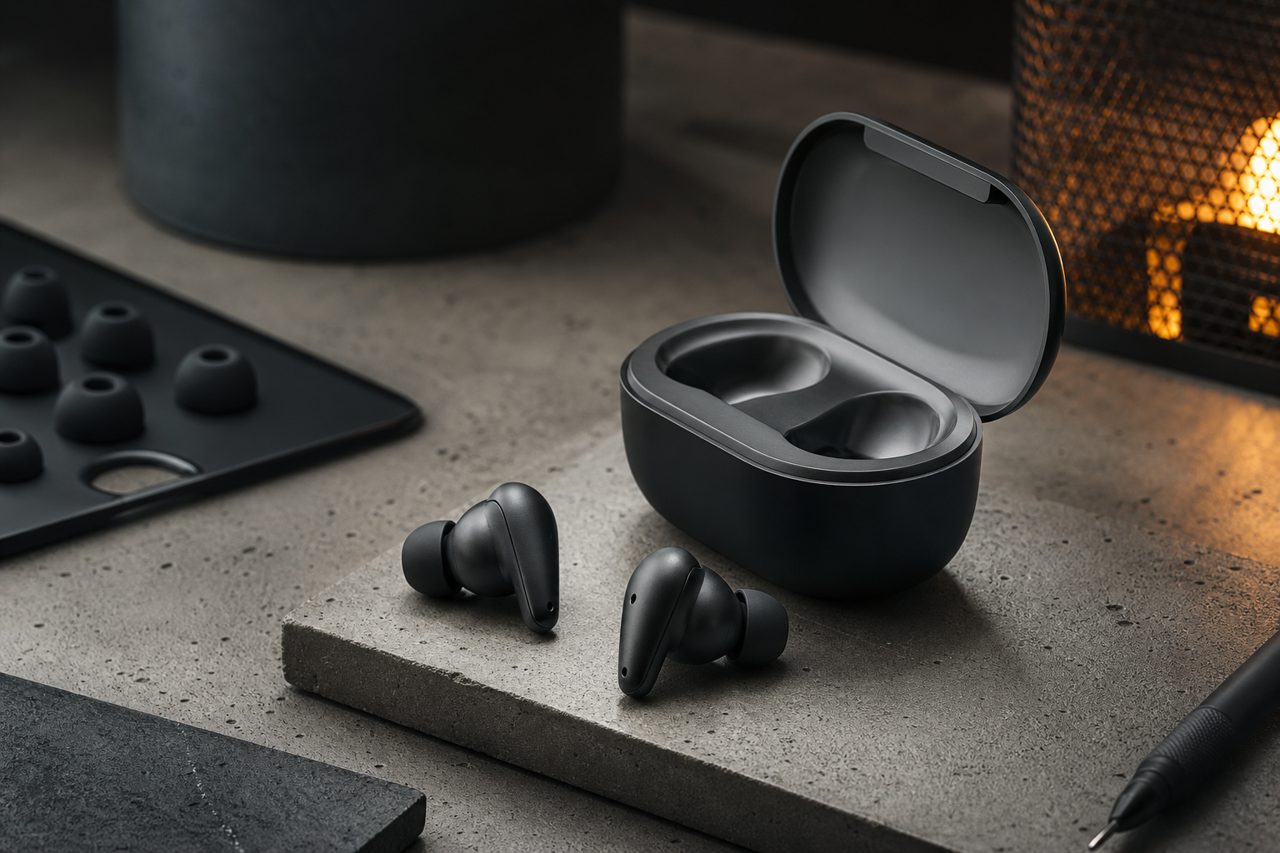
The commercial logic is blunt. An earbud that fits delivers its promised bass, keeps its ANC seal, survives workouts and earns five-star reviews; the same electronics in a shell that fights the ear delivers none of it consistently. Because no spec sheet shows fit, and because one evaluator's ear tells you almost nothing about a market, the only defense is a structured test that several people can run identically. The protocol below was built for exactly that: it needs no laboratory, fits inside two working days including the panel session, and produces numbers you can act on.
Why fit fails listings
Three failure patterns account for most fit-driven disappointment. First, the seal problem: an in-ear bud that does not seal loses bass and, on ANC models, loses the low-frequency cancellation that depends on passive isolation - the buyer experiences it as weak sound and weak noise cancelling, both blamed on hardware. Second, the hotspot problem: pressure points rarely announce themselves in a two-minute demo; they surface after thirty to sixty minutes of real wear, exactly the window a showroom test never reaches. Third, the interaction problem: glasses temples, face coverings, helmet straps and long hair all compete for the same space around the ear, and a shell that is comfortable in isolation can become painful the moment anything touches it.
The bench kit
The full kit costs little and assembles in an afternoon:
- Every tip size supplied with the product, plus one after-market multi-size set to judge whether the nozzle accepts common sizes.
- A timer - a phone works - and a notebook or spreadsheet serving as the test ledger.
- A small scale reading to 0.1 gram for weight verification against the spec sheet.
- A pair of glasses, and any headwear relevant to your audience - helmets for sports models, face coverings for commuter models.
- Two phones, since Bluetooth behavior interacts with the test experience and should be controlled.
The eight-item test table
Run the sequence in order per tester, per earbud model. Record each item in the ledger; the pass criteria are deliberately concrete so two testers reach the same verdict.
| Item | Duration | Method | Pass criterion |
|---|---|---|---|
| Seal check | 2 min | Insert with the supplied tips, play bass-rich music, then a sweep | Stable bass, no whistling or pressure leak on either side |
| Static wear | 60 min | Ordinary desk work; do not touch the earbuds | No pressure hotspot at 60 min; adjustments needed: two or fewer |
| Movement | 10 min | Walk, climb stairs, shake the head firmly in three axes | Buds stay seated with no reseat |
| Jaw test | 2 min | Chew and talk continuously | No loosening or crackle from shell movement |
| Glasses and headwear | 10 min | Wear with glasses, then the relevant headwear | No stacked pressure, no dislodging |
| Micro-climate | 20 min | Brisk walk outdoors at a pace that lightens perspiration | Grip holds; no itching or hot-spot flare |
| Cycle test | 20 cycles | Remove, reseat and case the buds repeatedly | Tips hold shape; nothing loosens over cycles |
| Weight check | 1 min | Weigh one bud and the case on the scale | Matches spec sheet within tolerance; log actual grams |
The multi-person rule
A single evaluator - usually the buyer - is the most common protocol failure. Ear canals differ in size, angle and cartilage stiffness, and a reviewer with forgiving ears will pass a product that half the market cannot wear. The practical minimum is three to five testers chosen for clearly different ear sizes and shapes, each running the full table independently and recording scores before any group discussion. Keep the ledger per person per model; the disagreement between testers is itself data, and a model that one tester loves and another cannot wear for an hour is a returns profile, not a verdict either way.
Three mistakes that waste the test
- Testing on the first day of a cold. Congestion changes ear canal geometry and hearing; the same tester scores differently a week later.
- Judging fit while judging sound. Run comfort sessions in silence or with familiar music; evaluating tuning at the same time splits attention and corrupts both verdicts.
- Skipping the retest after firmware updates. Touch controls, ANC behavior and connection stability can all shift after an update - rerun the static wear item before repeating any claim that depends on it.
Scoring and the go/no-go line
Score four observations per tester on a simple 0-2 scale: seal stability (2 = holds through the whole session), hotspot comfort (2 = none at 60 minutes), adjustment frequency (2 = two or fewer per hour), and tip-range coverage (2 = all testers found a supplied tip that seals). Sum across the panel; a model averaging below roughly seventy percent of the maximum score goes back to the supplier with the ledger attached rather than onto the shelf. The threshold is a house rule, not an industry constant - what matters is that it is written down before testing begins, so the verdict is not negotiated afterward.
Turning results into listing copy
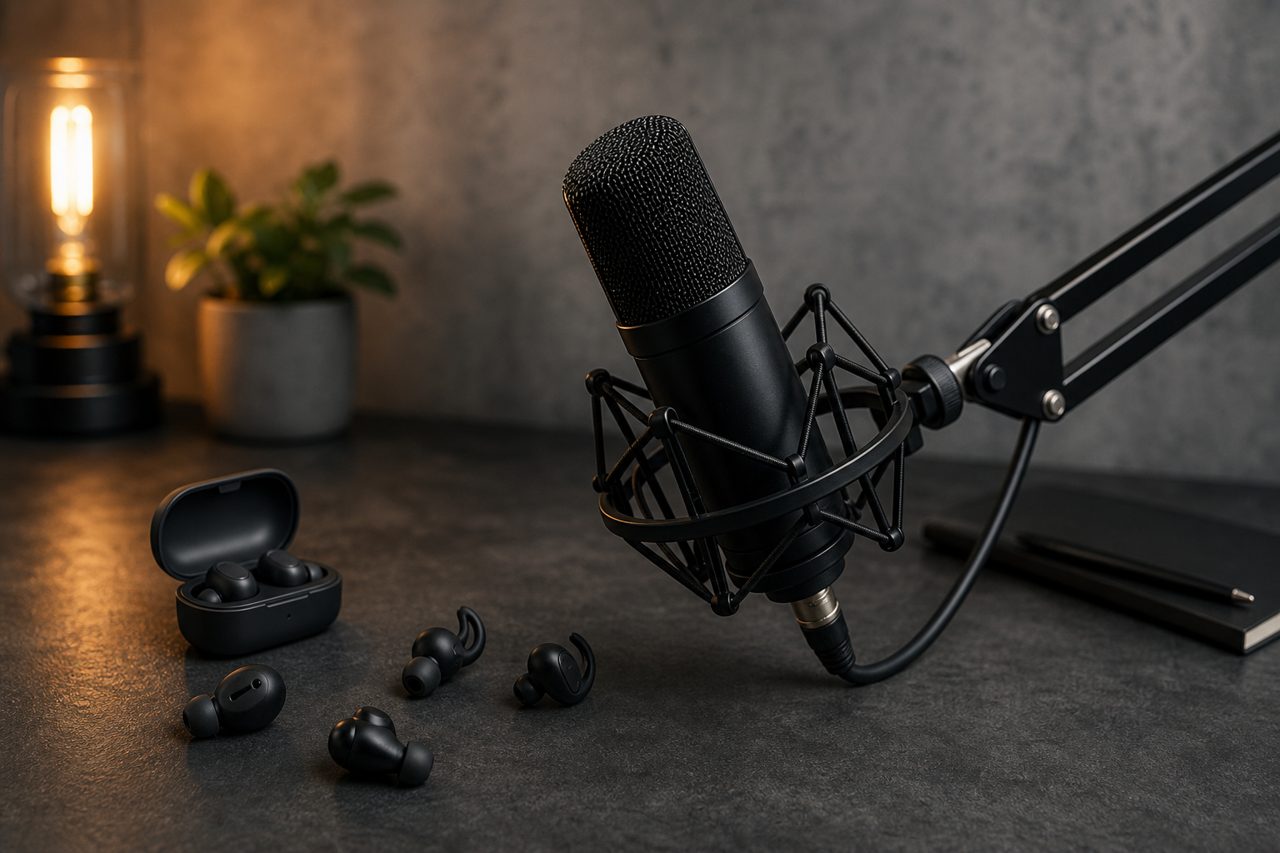
The ledger feeds directly into honest, concrete claims. If the supplied tips fit every tester, state the number of tip sizes in the box; if the buds weigh measurably little, print the grams per bud; if the shell cleared the glasses and helmet tests, say so for the commuter and sports audiences. Photograph the nozzle angle and tip profile so buyers can self-select before ordering. Every one of these lines converts test effort into conversion, and none of them requires claims you cannot demonstrate.
From protocol to purchase
Run this protocol on real units before any bulk order: stock models ship from a single piece through the dropshipping program with 48-hour dispatch, so a five-person panel can complete the full table within the week for the cost of five sample units. When a model passes and you want it as a brand product, tip configuration is a customization point, not a fixed fact - through OEM customization, tip sizes, count and silicone grade are configurable from 500 pieces per SKU, with full industrial changes from 1,000 and sampling in 5-7 and 7-12 days respectively. The current audio category lists supplied tip ranges for each in-stock model.
FAQ
How many testers are enough to validate earbud fit?
Three to five people with clearly different ear sizes and shapes is the practical minimum for a stocking decision; widen the panel for flagship-priced models. One evaluator, however honest, carries too much anatomical bias to judge a product sold at scale.
Which fit observation predicts returns best?
Adjustment frequency after the first thirty minutes, followed by pressure hotspots at the sixty-minute mark. Both show up long before reviews do, and both correlate with the two complaint families that drive earbud returns: discomfort and poor bass or ANC from a broken seal.
Can ear tips be customized for a private label model?
Yes. Tip sizes, tip count in the box and silicone grade are all configurable. Light customization with logo and packaging starts at 500 pieces per SKU; full OEM including tip and nozzle geometry starts at 1,000.