Screen Protector Types: Glass, Film and Privacy Compared
Screen protectors look like the simplest SKU in the accessories bin, and that is exactly why they punish lazy assortments. Tempered glass, flexible film and privacy filters serve different buyers, fail differently and return differently. This comparison gives resellers and distributors a working map of the three families.
Why protectors reward range over depth
Protectors ride the same wave as the rest of the category: the global mobile accessories market reached USD 105.5 billion in 2025 and is projected at USD 189.9 billion by 2033 (Grand View Research, 2025). Within that growth, protectors are an attach-rate business. They sell in the moment a phone is being protected, at low ticket and high volume, which makes assortment width, not depth, the profit lever. Carrying twelve variants of one type loses money to slow turns; carrying the right three types wins the add-on cart again and again.
Demand also concentrates. Protectors spike in the weeks around new phone launches and around gifting seasons, and the buyers are unusually decisive: someone searching for a protector already owns the decision. The assortment question is therefore not whether to stock protectors, but which of the three families earns slots for your specific models and channels.
Tempered glass: the default that is not one thing
Tempered glass dominates the segment because it preserves the feel of the display: the hardness, the smooth glide and the oleophobic coating that keeps smudges moving instead of settling. But tempered glass is a family, not a spec, and the differences are exactly where a buyer earns margin. The variables you control:
- Thickness and lamination grade. Thinner laminates preserve touch feel; thicker slabs project perceived armor. Both sell, in different tiers.
- Hardness claims. The familiar 9H label comes from the pencil-hardness scale. Treat it as a floor to verify with a scratch test, not as a differentiator; every serious supplier passes it.
- Edge geometry. Flat 2D edges, rounded 2.5D edges and full-curvature 3D edges map to different screen families, and the wrong mapping creates edge lift.
- Coating quality. A weak oleophobic layer is the top review complaint on otherwise sound glass. Rub your thumb across a handled sample; it should glide.
- Coverage style. Full-cover cutouts aligned to speakers and sensors read as premium; shrink-to-fit sizes exist to avoid conflict with cases and stay a value tier.
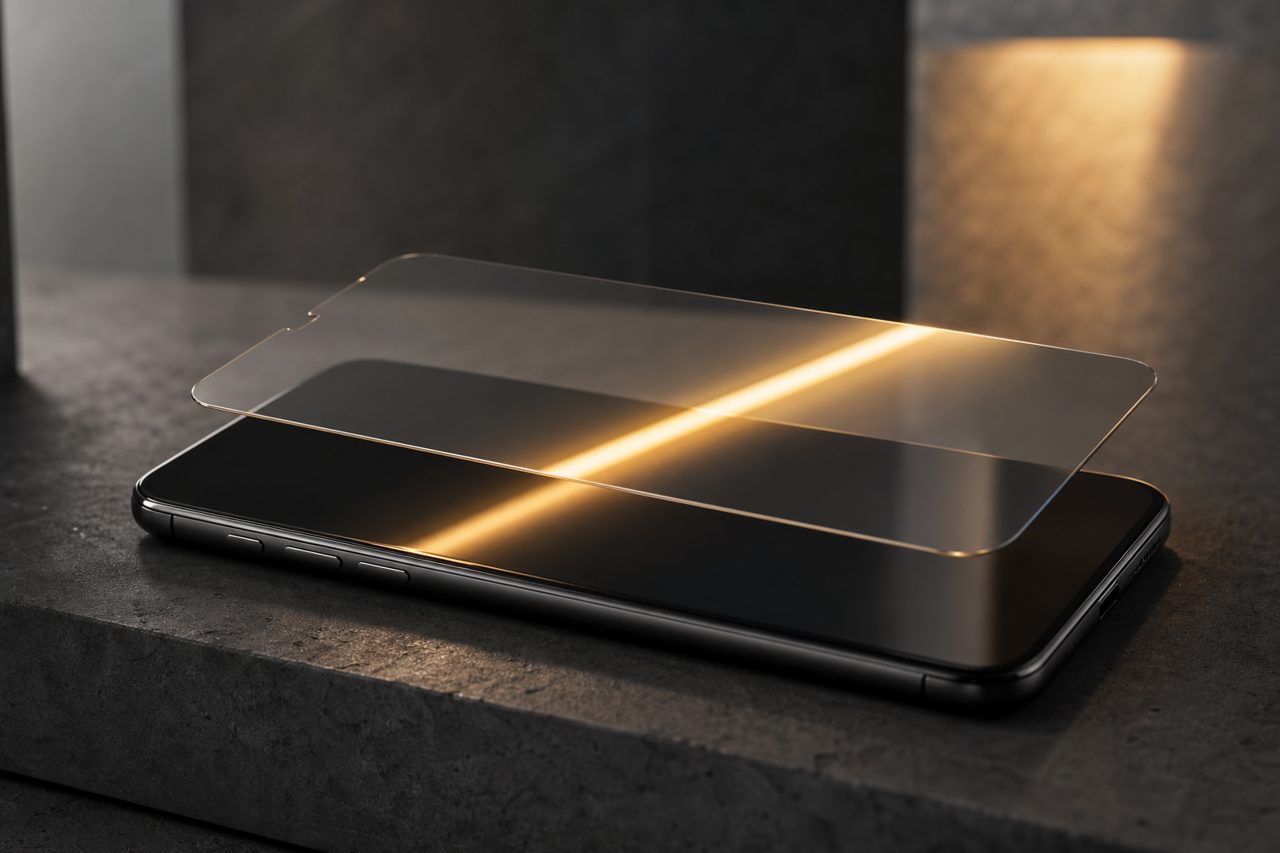
Two glass details decide returns. The first is installation: dust trapped under the film is the leading cause of immediate rejection, which is why an alignment frame and dust stickers inside the box pay for themselves many times over. The second is touch performance on curved displays, where a poorly matched curvature creates dead zones along the edges that no listing copy survives.
Film protectors: flexible where glass is not
TPU hydrogel and PET films trade scratch armor for coverage. A film wraps curved and folding displays that rigid glass cannot cover without lifting, self-heals light scuffs, and fails without shards. The compromises are real: weaker resistance against sharp objects, a softer touch that some users read as rubbery, and an installation that demands more patience than glass ever will. Films earn their slots precisely where glass coverage breaks: curved edges, foldable screens and panels with under-display fingerprint sensors.
One film detail deserves a place on the sample checklist: compatibility with under-display fingerprint readers on the actual device, not on a bench rig. Sensor sensitivity varies across models, and a film that reads perfectly on one phone can slow or fail on a sibling model. Test on the devices your market actually carries.
Privacy filters: narrow angle, narrow buyer, loyal buyer
Privacy filters add a micro-louver layer that darkens the display beyond a narrow viewing angle. The technology is honest: the screen dims for the shoulder-surfer next to the owner, and the owner holding the phone straight keeps a usable image. The trade-offs are brightness loss and a visibly darker panel, which is why privacy sells on scenario rather than on spec. Commuters, open-plan offices and students recognize the problem the moment they see it, buyers who want privacy rarely comparison-shop it away, and the price band sits comfortably above glass and film. It is the smallest of the three families by volume and often the best by margin.
The comparison table
| Dimension | Tempered glass | TPU / PET film | Privacy filter |
|---|---|---|---|
| Primary job | Impact and scratch armor | Coverage on curved and folding screens | Visual privacy in public |
| Touch feel | Closest to bare glass | Softer, slightly muted | Glass-like feel, darker panel |
| Scratch resistance | High | Low to moderate, self-healing scuffs | High |
| Impact behavior | Absorbs shock, cracks sacrificially | Minimal | Comparable to glass |
| Installation | Easy with frame; dust-sensitive | Demands patience; bubble-prone | Like glass, plus alignment care |
| Typical return driver | Dust at install; edge dead zones | Peeling edges; feel complaints | Brightness surprise |
| Price and margin | Volume tier | Volume tier, niche premiums | Premium tier |
| Best fit | Default range for all channels | Curved and foldable-heavy catalogs | Urban commuters, B2B gifting |
Read the table column-wise when planning stock and row-wise when writing listings. The listing that states the primary job, sets the feel expectation honestly and pictures the box contents intercepts nearly every return driver in its row.
Cutting returns with the box contents
Protector returns are dominated by the first five minutes of ownership, which makes the box a returns-prevention tool. Five inclusions earn their cost:
- Alignment frame. Removes the placement guesswork that causes crooked installs and rejections.
- Dust removal stickers. The single cheapest fix for the most common failure.
- Wet and dry wipes. A clean surface is half the installation.
- Printed instructions with a short link to a video. Video installs convert skeptical buyers better than diagrams.
- Camera lens protectors in the same box. A natural attach item that raises order value without a second listing.
Building and validating the range
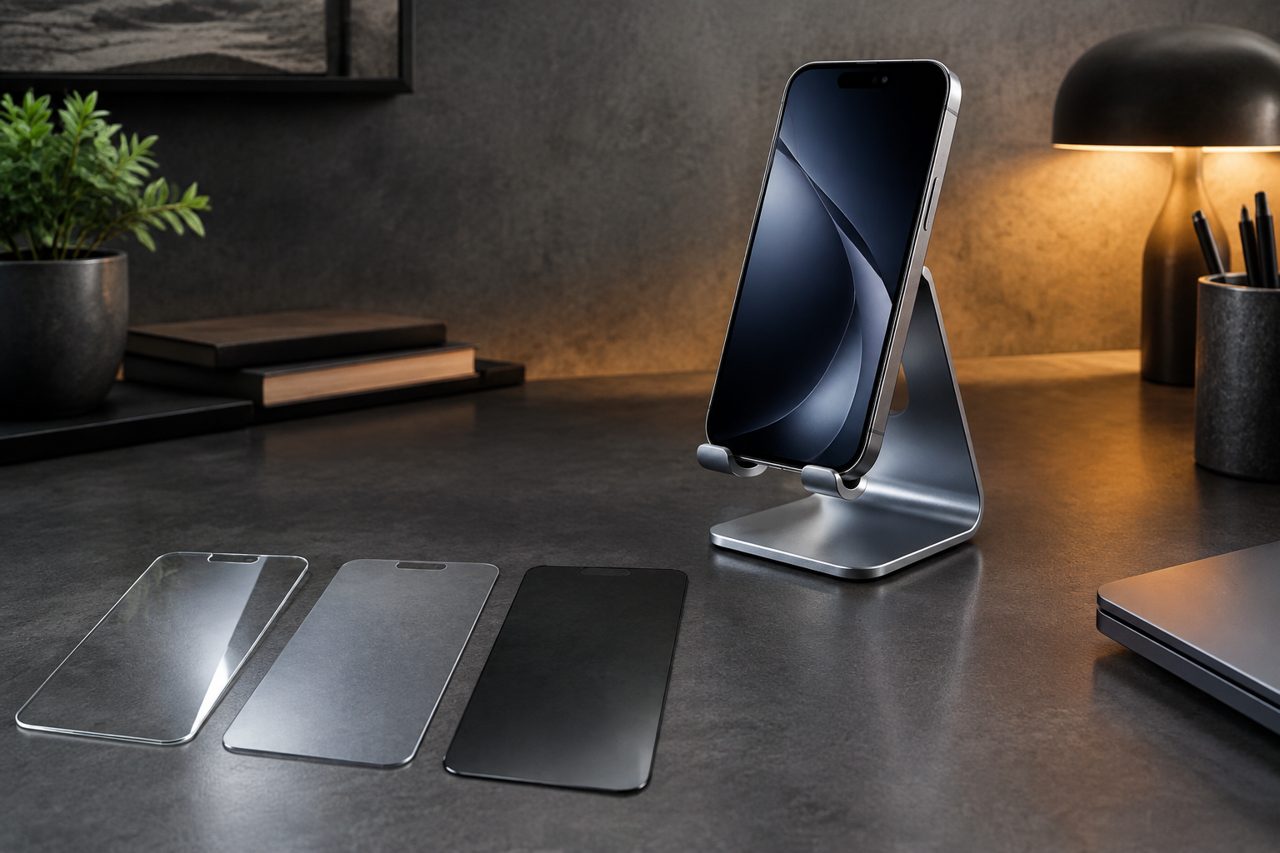
Validate demand before you invest in it. Stock protector models ship one piece at a time through dropshipping, so three families across your best-selling models can be tested for real return behavior without inventory. Once the winners are known, logo and packaging customization runs from 500 pieces per SKU with sampling in 5-7 days, and full OEM development, including custom cutouts and retail packaging, from 1,000 pieces per SKU with sampling in 7-12 days. A balanced opening range is glass across the board, film where your model mix has curved or folding screens, and one privacy filter for the commuter tier. The full lineup sits on the phone and tablet accessories category page.
FAQ
Is 9H hardness the most important spec in tempered glass protectors?
No. Hardness comes from the pencil-scale test and works as a floor to verify, not a differentiator; nearly every serious supplier passes it. What separates good glass in reviews is oleophobic coating quality and the installation experience, especially dust control, because those are what customers notice in the first week.
Film or glass: which suits curved screens?
Film wins on coverage, because flexible TPU wraps curvature that rigid glass cannot reach without edge lift. Glass wins on feel when its curvature is matched correctly. Stock both where curved models matter, test touch response along the edges on real devices, and let returns data decide which stays.
Do privacy screen protectors harm the display or battery?
The filter only attenuates light passing through it and does not interact with the display itself. The real cost is visible: the panel reads darker straight-on, so some users raise brightness to compensate. Sell privacy on the scenario, set the brightness expectation in the listing, and returns stay rare.