Ring Light Sizing: 10 vs 12 vs 18 Inch for Different Setups
Ring lights look like a one-spec product, which is exactly why wrong-sized stock piles up in the category. The inch number decides who the light serves: the desk creator, the tutorial maker or the studio streamer, and a range assembled without that logic returns inventory instead of selling it. This guide explains what the number measures, maps the three common sizes to real setups, lists the specifications worth verifying on samples, and closes with the merchandising structure that moves all three.
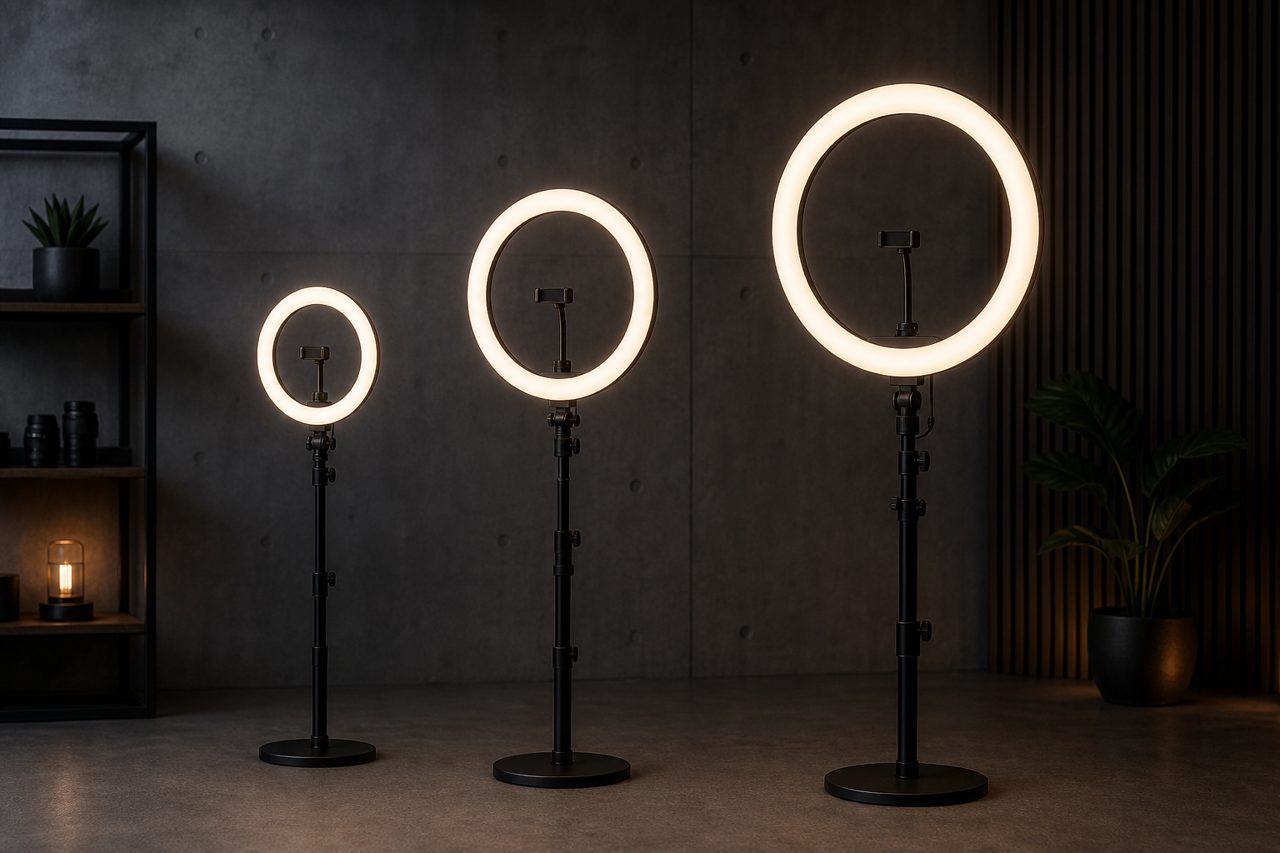
What the inch number actually measures
The figure is the diameter of the light ring, and it works on the frame in two ways at once. A larger ring spreads its light wider and wraps the subject more softly, because the light reaches the face from more angles at once; a smaller ring concentrates the glow into a tighter pool at a shorter distance. The second effect matters just as much for buyers: ring size sets the working distance, the gap between light and face where the illumination turns even. A 10 inch light wants its subject close; an 18 inch light can stand back far enough to light half a body. Sizing, in other words, is framing decisions made in advance at the factory.
The category's most common size complaint, smaller than expected, is a photography failure before it is a product failure. Buyers calibrate from photos, and a ring light shot alone on a white background always looks adequate. The fix costs nothing: listing photos that show the light at a real working distance with a real subject pre-load the correct expectation and remove the return before it exists.
The three sizes, mapped to real setups
| Size | Working distance and framing | Typical setup | Buyer | Watch-outs |
|---|---|---|---|---|
| 10 inch | Close; head and hands | Clamped to the desk beside a laptop or phone | Tight-space creators, first-time buyers | Can hotspot a face held too near; verify the diffuser |
| 12 inch | Comfortable; head and shoulders | Desk stand beside the webcam, the default studio corner | Tutorial and talking-head creators | The crowded middle; differentiate on stand and controls |
| 18 inch | Back a step; half body and wider | Floor stand, two-person frames, corner studio | Serious streamers and small studios | Bulk in the parcel; AC power; stand stability carries the weight |
Read as a ladder, the table is a merchandising plan: the 10 inch wins the entry impulse buy, the 12 inch carries the volume, and the 18 inch collects the buyers whose ambitions, and budgets, have outgrown a desk. A store needs all three shelves, but the profit behaves differently on each one.
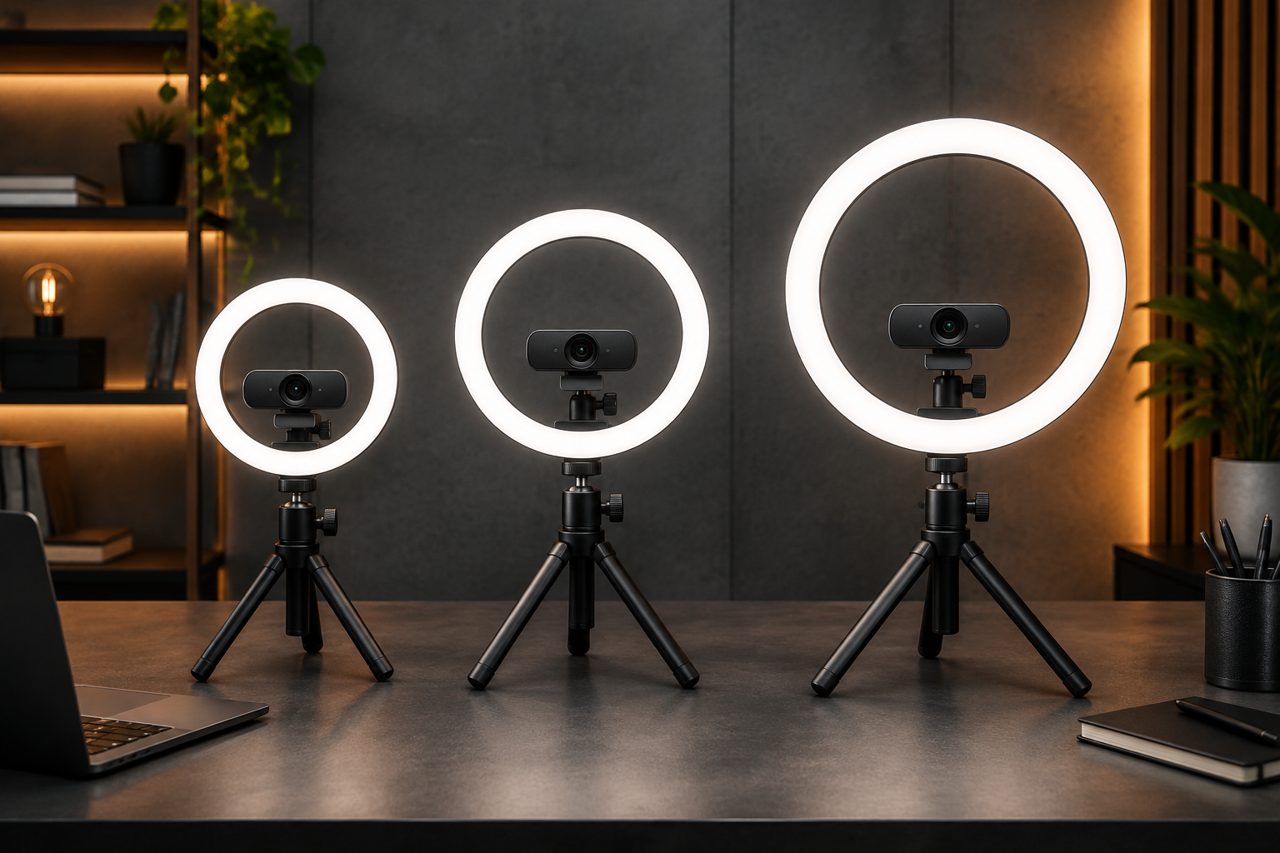
Spec lines worth verifying beyond size
- Color temperature range. Adjustable output from warm evening tones to cool daylight, commonly quoted across the 2700K to 6500K span, lets one light serve makeup, product and streaming looks. The detailed uses of each range are covered in the color temperature guide.
- Color rendering. The CRI figure describes how faithfully the light shows skin tones and product colors; the claim belongs on the listing only after the sample has shown real faces on real cameras.
- Dimming behavior. Stepless dimming reads better on camera than visible brightness steps; cycle the full range once on every sample.
- Flicker. Cheap drivers pulse visibly on high-frame-rate video; a phone slow-motion test at high shutter exposes what the eye forgives.
- Power. Small rings may run from USB; larger ones carry AC adapters. Confirm the destination market's plug standard before the box is printed.
- Stand and clamp. Height range, wobble at full extension, and a phone clamp with a real ball head decide daily satisfaction more than the LEDs do.
- Build and cable. A cable that reaches the outlet without an extension, a remote that pairs without drama, and a finish that survives a knock shape the review tone after month one.
A sample-bench checklist before volume
One evening, one desk, one phone. Run the set on every candidate:
- Cycle the color temperature across its full range and note whether the steps feel continuous on camera.
- Record a slow-motion clip at high shutter; flicker that the eye misses will ruin high-frame-rate footage.
- Film a real face at the intended working distance in both warm and cool settings; check skin tones, not brightness.
- Run the light at maximum brightness for 30 minutes and touch the diffuser and housing for hotspots or smell.
- Extend the stand to full height and nudge it; a stand that wobbles at extension fails the buyers who need the height.
- Mount a weighted phone in the clamp and tilt to the angles creators actually use; check drift and grip.
- Unpack the accessories and reconcile them with the listing line by line, remote, bag, adapter and all.
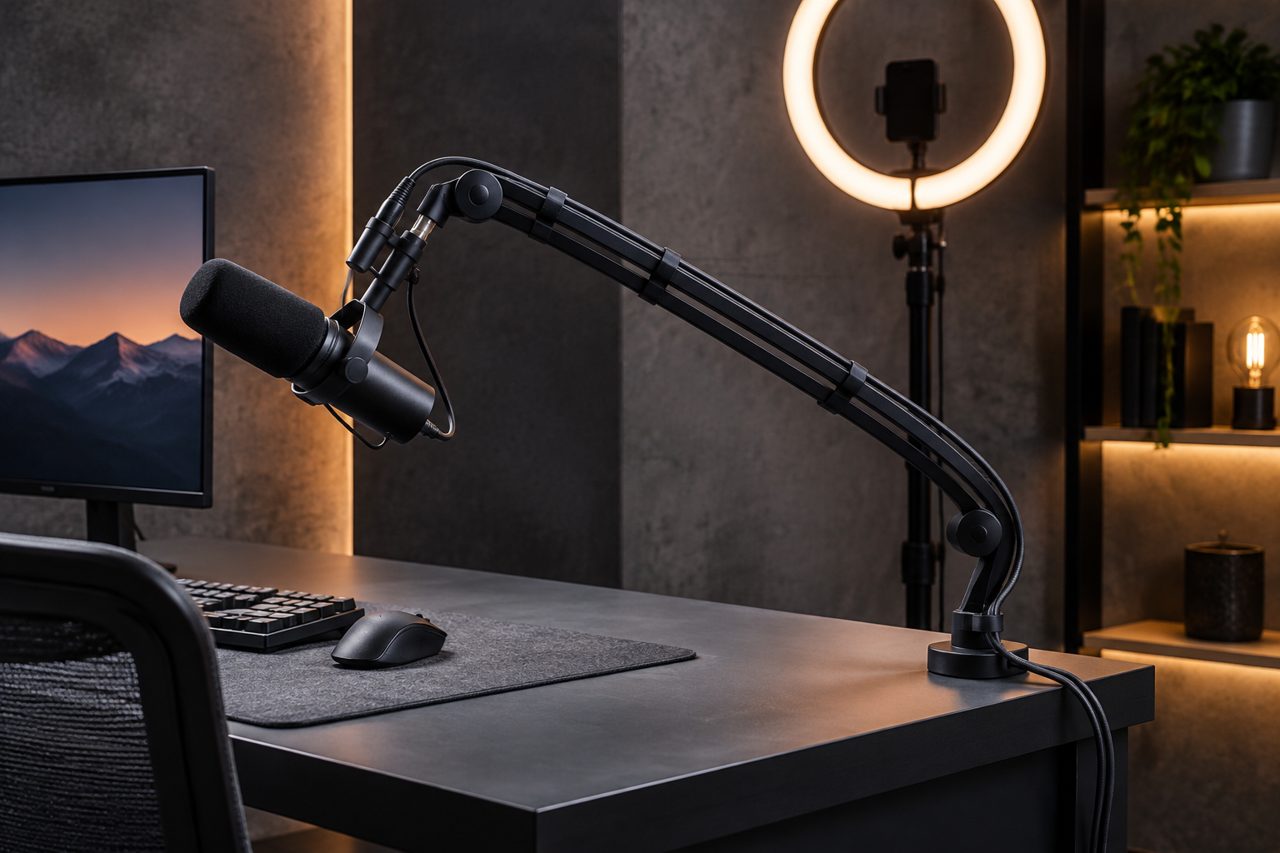
Merchandising the range
Bundles sell ring lights because they answer the setup question the buyer cannot articulate. A creator starter pairs the 10 inch with a compact tripod and phone clamp; the desk duo pairs the 12 inch with a weighted desk stand; the studio build pairs the 18 inch with a floor stand and a carry bag. Photograph each bundle at its working distance, not on a white background, because the photo is where the size argument convinces. In the listing, state the coverage and the power requirement in plain words, and warn gently that the 18 inch ships as a bulky parcel even though, battery-free as it is, it travels the standard 7-15 day small-parcel lane. Dimensional weight, not the electronics, is what the freight invoice notices.
Price the ladder with intent. The 10 inch anchors the entry price and can live near the storefront as the gateway purchase; the 12 inch carries the mid-range and deserves the deepest accessory support in stands, clamps and bags; the 18 inch is the aspirational shelf where the margin lives and the parcel weight justifies a freight-honest price. Keep the three tiers visibly related, so an upgrade path reads across them. Creator gear also has a gifting season: ring lights and tripods are the rare electronics that relatives feel confident giving, and a gift-ready bundle photographed as an object, box closed, reaches a buyer who never watches a stream.
Sourcing note
The ring light and support lineup sits on the creator gear category page; single units for the bench test above ship through dropshipping with 48-hour dispatch. Logo printing, custom color boxes and bundle configuration are light customization from 500 units per SKU with 5-7 day sampling, arranged on the OEM/ODM page.
FAQ
Which ring light size suits makeup and tutorial content?
The 12 inch ring is the default choice: at a desk working distance it frames head and shoulders with an even, flattering falloff. The 10 inch suits tight spaces and pure close-up work, while the 18 inch earns its place when the frame widens to half body or when two people share the light.
Is a bigger ring light always the better buy?
No. Size buys spread and softness, but it also buys working distance, floor space, price and shipping bulk. A creator filming close to the desk can be overexposed by an oversized ring, and an 18 inch parcel costs meaningfully more to move than a 10 inch one, so the right size is the one that matches the subject framing, not the biggest number.
Do ring lights run on USB or an AC adapter?
Small rings can run from USB power, which makes them desk-friendly and travel-friendly, while larger rings typically need their own AC adapter to drive the output. Treat the power claim as a verified spec rather than a printed one: test on samples at maximum brightness, and state the plug standard of the destination market in the listing.