The Podcast Starter Kit: Bundling Mics, Arms and Lights
Nobody records a podcast with a microphone alone - yet most catalogs sell exactly that, one component at a time, and leave the assembly problem to the customer. The starter kit solves it in one box: microphone, boom arm, light, monitoring. This guide shows B2B sellers how to compose kit bundles that convert, in three tiers, with the kitting and fulfillment mechanics behind them.
Audio remains one of the steadiest lanes in accessories - the global market is projected to keep compounding at 7.8 percent through 2033 (Grand View Research, 2025) - and voice-first content keeps pulling new buyers into it. The pattern of that demand matters more than its size: a first-time podcast buyer does not want a microphone, they want a working setup. Every component they must research separately is a chance to abandon the purchase, and every compatibility question they cannot answer is a return waiting to happen. The bundle converts that anxiety into a single, confident decision - which is why kit listings consistently outperform the sum of their parts.
Why bundles out-convert singles
- One decision instead of five. The customer buys an outcome - a working desk - rather than components they must verify against each other.
- Higher average order value. A kit sells the microphone plus the accessories that would otherwise be separate orders, or worse, never ordered at all.
- Compatibility risk absorbed by the seller. Thread sizes, load ratings and connection types are decided once, by the person best equipped to decide them.
- Gift-ability. A single box with a clear purpose is a gift answer; a parts list is not. Gift seasons reward kits disproportionately.
- A defensible brand story. "Everything you need to sound professional on day one" is a promise no single component listing can make.
The anatomy of a podcast kit
Four component families cover every tier from student desk to studio shelf:
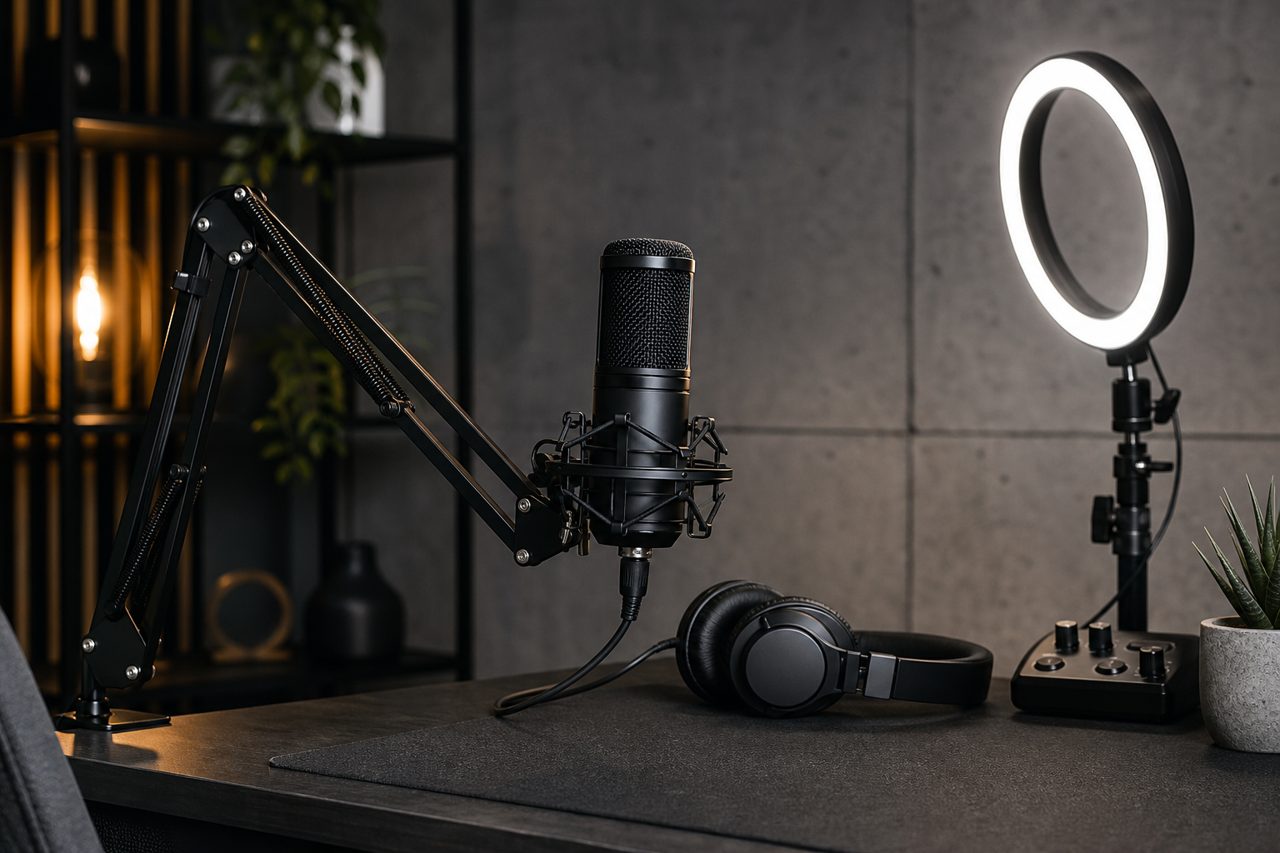
- The microphone. A dynamic USB capsule is the forgiving default for untreated rooms; multi-pattern condensers serve creators who record in controlled spaces. Direct monitoring and an on-device mute are the features users notice first.
- The boom arm. A desk-clamp arm with internal cable routing moves the microphone off the desk and out of shot. Load rating must exceed the microphone plus shock mount with margin; wobble under typing is the classic cheap-arm failure.
- The light. A desk-mountable key light lifts webcam and video quality instantly. Adjustable color temperature - warmer for evening talk shows, cooler for technical content - is the feature that makes it feel professional. Units contain lithium cells or USB power paths, which affects shipping, covered below.
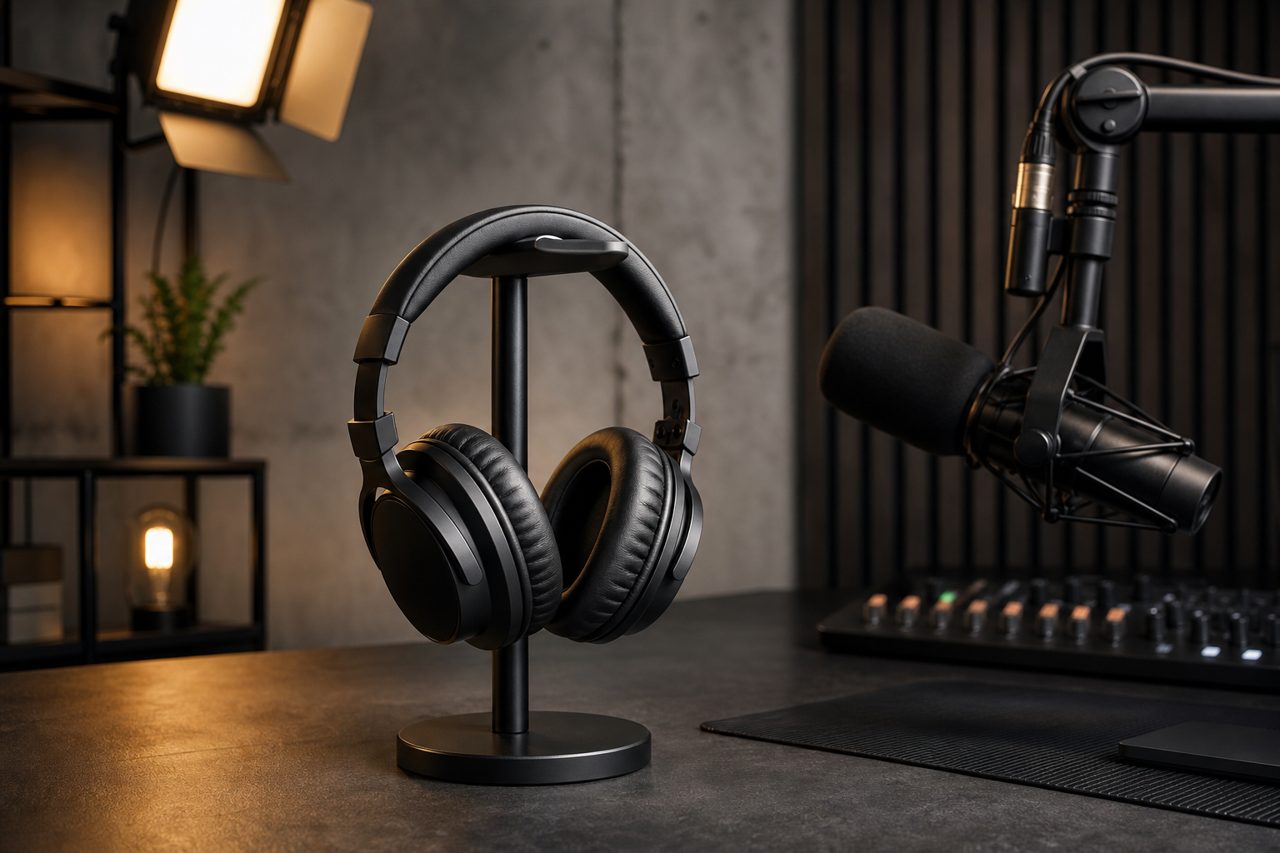
- The monitoring. Over-ear headphones for voice monitoring close the loop; wired monitoring avoids the latency inherent in Bluetooth paths, so kits aimed at recording accuracy should say so explicitly.
Three bundle recipes
The table below is the assortment we recommend for a category page. Each tier is a complete, honest answer to a specific buyer - resist the temptation to blur the boundaries. Every component across the three tiers is a current stock model in the audio category, so each kit is composed from what ships today rather than from promises.
| Tier | Contents | Target buyer | Listing angle |
|---|---|---|---|
| Starter | Dynamic USB microphone, desk tripod, pop filter, quick-start card | First-time podcasters, students, gift buyers | Record tonight; nothing else to buy |
| Creator | USB microphone, clamp boom arm with cable routing, shock mount, desk key light | Committed hobbyists, streamers, remote workers on camera | The desk that sounds and looks professional |
| Studio | Microphone plus heavy-load boom, shock mount, key light, over-ear monitoring headphones | Small businesses, agencies, corporate content teams | A conference-room voice setup in one box |
Three rules keep the recipes profitable. Keep every component useful on its own after an upgrade, because buyers outgrow kits gradually and component quality drives the brand's reputation. Publish the compatibility table - thread sizes, connection types, load ratings - inside the listing so the kit's coherence is visible, not implied. And price the kit below the sum of separately listed components by a visible margin; the bundle's honesty should be checkable in one glance.
Kitting and fulfillment mechanics
A kit is a logistics object before it is a marketing one, and the mechanics decide whether it scales. Kitting at the supplier - picking, packing and sealing a single retail box - turns five inbound SKUs into one outbound SKU, which simplifies everything from inventory counting to FBA prep. Under light customization, kitting with a unified box and insert card starts at 500 pieces per kit SKU through OEM/ODM; full bundle design with custom component branding starts at 1,000, with sampling in 5-7 and 7-12 days respectively. Stock components remain available for single-piece validation through the dropshipping program, so each tier can be market-tested with real orders before committing to kit inventory. One shipping note matters: kits containing a light include lithium cells or USB power banks, so they move on the battery-certified air channel under UN38.3 and IATA PI967 rules, arriving in major markets in 8-18 days, while battery-free configurations ride the general line in 7-15 days.
Pricing and margin structure
Kits change the margin conversation in three ways. First, the bundle price shields the seller from component-level price comparison: a kit is priced against outcomes - a working voice desk - rather than against the cheapest individual microphone on the marketplace, which keeps margin away from race-to-the-bottom competition. Second, attach components carry higher relative margins than the anchor microphone, so the blended margin of a well-composed kit is typically healthier than selling the microphone alone. Third, kits create a natural upgrade ladder: the starter buyer's next purchase is the boom arm, then the light, then the monitoring headphones - each an existing SKU in the same catalog. Price the tiers so that every step up feels smaller than the gap in contents; a ladder only gets climbed when every rung looks fair.
Listing and content advice
Kit listings succeed on completeness signals. Photograph the full setup assembled on a desk, not just the components; buyers are purchasing the picture they see. Include a sample audio clip recorded with the kit - the single most persuasive asset a voice-product listing can carry. State the box contents as a checklist with counts, because "everything included" claims without a list breed disputes; pack a quick-start card so first-session success does not depend on a manual downloaded from a support page. Name the kits by what they enable rather than by internal codes. And keep the component-level warranty story visible: one faulty part should mean a replacement part, not a boxed return, and the supplier's damage-reshipment policy - photo-verified within 30 days of sign-off - should be part of the seller's own support page.
FAQ
What must a first podcast bundle include at minimum?
A microphone with a solid mount and a way to start recording cleanly: for the entry tier that means a dynamic USB microphone, a desk tripod or small boom, a pop filter and a quick-start card. Everything beyond that serves specific audiences rather than the category itself.
Are bundles better or worse for returns?
Better on compatibility, because the seller has already resolved the mismatch questions that drive component returns. The trade-off is concentration: one faulty component affects the whole kit, so the warranty process must work at component level with spare-parts support.
Can bundles be kitted and private-labeled by the supplier?
Yes. Components can be picked, packed and sealed into a single retail box with unified branding: light customization including kitting and custom packaging starts at 500 pieces per SKU, and full OEM bundle design starts at 1,000, with sampling in 5-7 and 7-12 days.