Selling Gym Earbuds: Hooks, Sweat Ratings and Battery
Fitness is the most calendar-proof demand segment in audio: it peaks every January, holds through summer, and never really closes. Gym earbuds reward sellers who treat them as a distinct product story - fit that survives movement, sweat ratings that survive scrutiny, and battery math that survives a real training week. This guide covers the segments, the specifications, the bundles and the listing discipline the category demands.
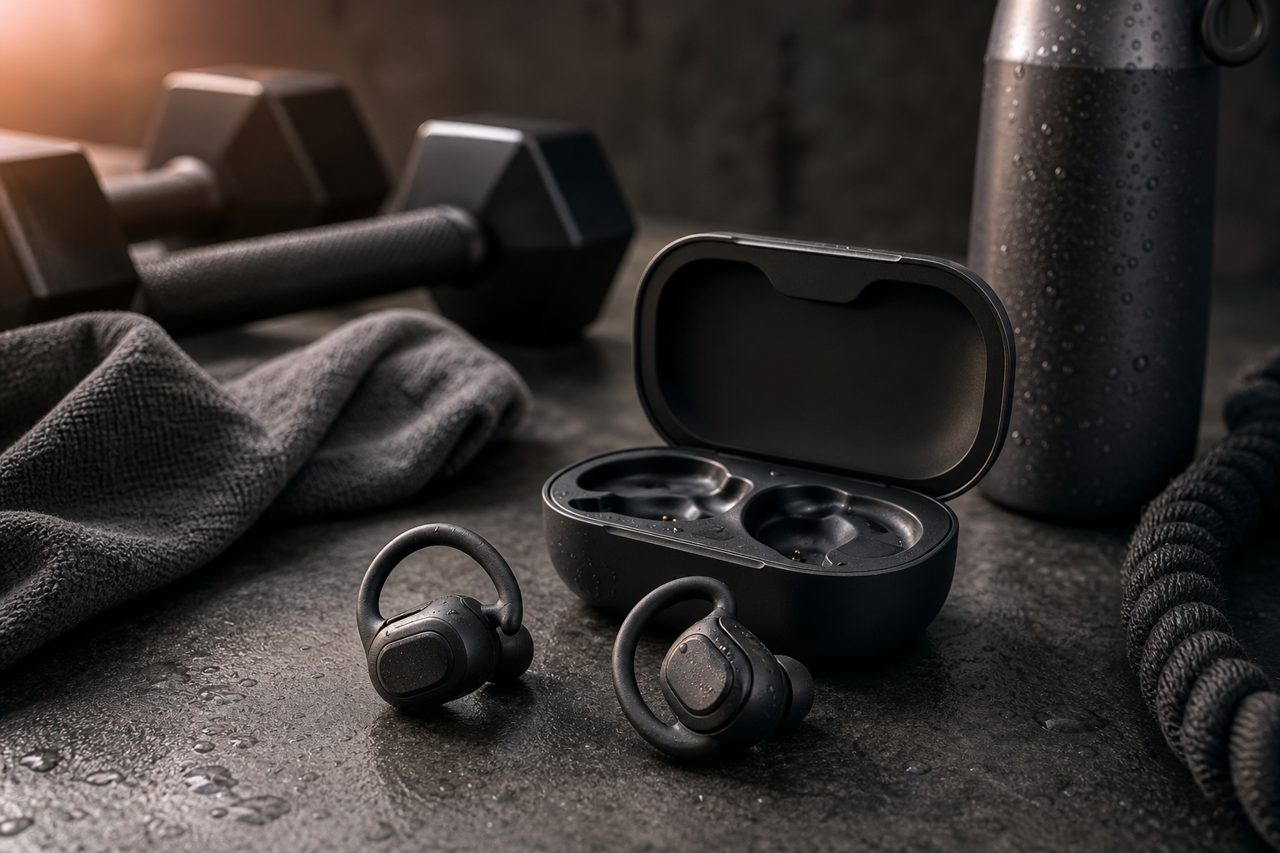
True wireless sales grew 7 percent in volume in 2024 as the category matured into a replacement market (Counterpoint Research, 2024), and sports use is one of the scenes that drives replacement decisions: regular training wears out tips, batteries and patience faster than commuting does. The buyer profile is also more loyal than average. Someone who finds a gym earbud that stays put through a workout repurchases the same model, gifts it and defends it in reviews - provided the three specifications below were honest in the first place.
Who actually buys gym earbuds
Four buyer groups fill the category, and they want different things from the same shell:
- Gym and strength trainees. Long sessions, supine and overhead positions, hands on bars - they need absolute retention, which pushes toward ear hooks, and physical buttons they can press without a phone.
- Runners. Cadence impact on every step, outdoor awareness requirements, and weather. Open-ear or loosely sealed styles that keep traffic audible are a feature here, not a compromise.
- Home fitness users. On-demand classes, jump-heavy cardio, and no one to notice a dropped bud - convenience and battery matter more than maximum clamping.
- Class and studio participants. Short, intense sessions plus a commute on each side; they want one pair that covers both, which is where ANC plus transparency earns its cost.
The spec trio that decides the sale
Fit: hooks, wings or open-ear
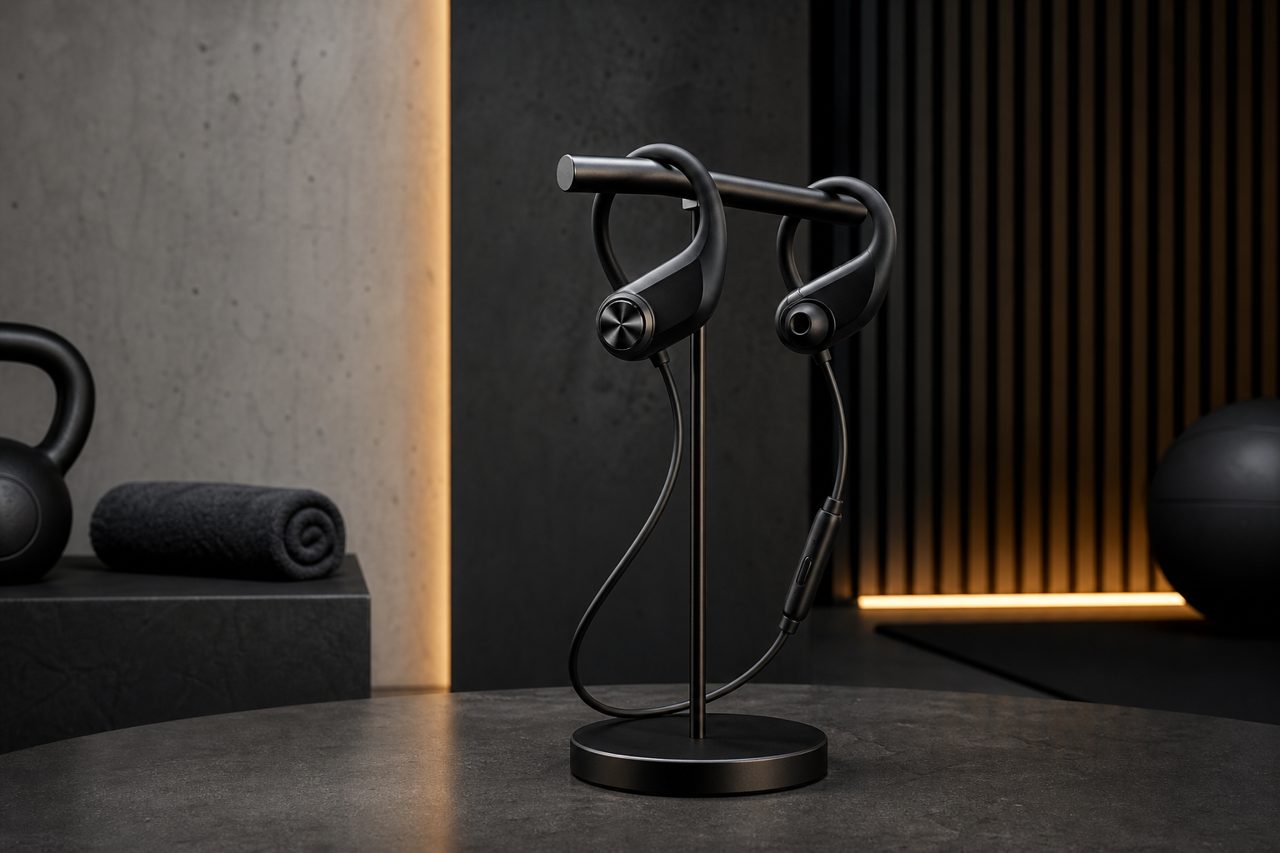
Retention is the category's defining promise, and the mechanical options rank clearly. Ear hooks - a loop over the outer ear - are the most secure under jumping and pulling movements and the safest default for a sports listing. Soft wings stabilize against the ear's inner ridge and suit moderate sessions at a lower cost. Open-ear designs hold loosely by design and trade retention for situational awareness, which road runners value more than anyone else in the market. Two practical notes belong in every sports evaluation: sweat softens silicone, so grip that passes a dry test can fail a sweaty one - test with warm hands and a damp tip - and touch controls, elegant in a demo, misfire under sweat and gloves, which is why physical buttons retain a loyal following in this segment.
Sweat ratings: the number behind the adjective
"Sweat-resistant" is not a specification; an IP rating is. IPX4 - protection against splashing from any direction - is the workable minimum for training use. IPX5 adds low-pressure jets, which is the honest tier for heavy sweaters and outdoor rain. Higher immersion ratings exist but rarely matter in this segment: nobody drops a bud in a pool on purpose. Two discipline points for listings. First, sweat is salty and corrosive in a way fresh water is not, so the rating is a design baseline, not a maintenance waiver - copy should tell buyers to wipe buds down after sessions. Second, the warranty boundary must be written: state explicitly what sweat damage is and is not covered, because ambiguity here converts a five-star product into a support dispute.
Battery: the math buyers actually do
Training battery expectations are concrete. A bud must survive the longest realistic session - a two-hour gym block or a long run - without a mid-workout recharge, and the case must stretch the pair through a training week of commute-length listens. This is why ANC matters less than the spec sheet suggests in this segment: cancellation is rarely used at full strength mid-workout, while transparency - hearing the gym, the road, the barista - gets used constantly. Publish the ANC-on and standard figures separately, make the case's total recharge count explicit, and treat the numbers as commitments: in this category, battery under-delivery is the complaint that outlives every other feature.
Bundle recipes for the fitness aisle
Bundles work in sports audio because the buyer's scenario is easy to name. Three recipes cover the aisle, each assembled from stock audio SKUs:
| Kit | Contents | Target buyer | Listing angle |
|---|---|---|---|
| Solo Trainer | Hook-style sports TWS, IPX5 or higher, plus a spare-tip set | Gym and strength trainees | Stays put from warm-up to final set |
| Studio Coach | Portable speaker plus a compact tripod for small-class instruction | Yoga and spin instructors, small studios | Fill the room without the PA system |
| Desk-to-Gym | ANC TWS for the commute plus a hook-style sports pair for training | Office commuters who train after work | Two pairs, zero excuses |
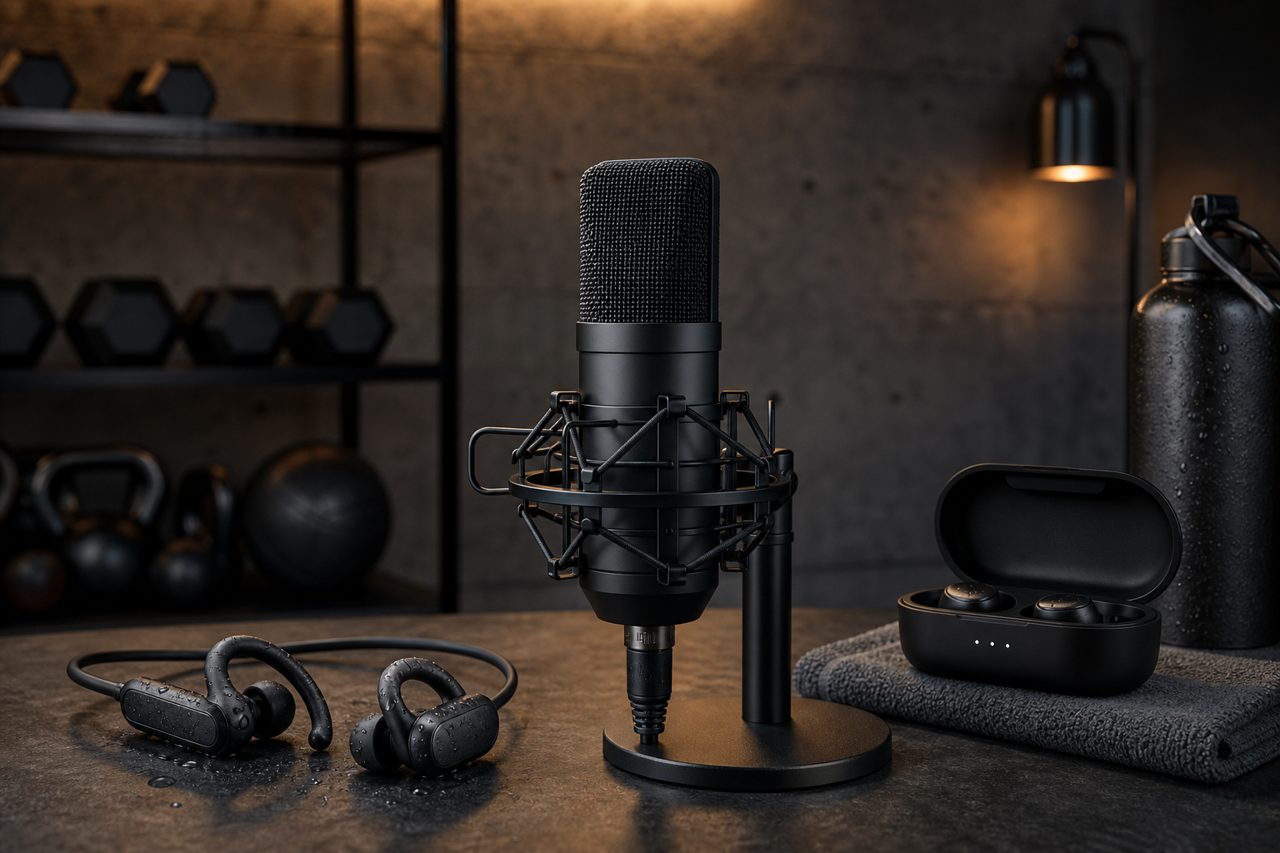
The kits share one property that makes them safe to stock: every component remains useful independently, so the bundle adds value without stranding inventory. Validate each recipe through single-piece dropshipping before committing to bundle stock - stock models ship within 48 hours of order, so all three can be market-tested in real orders within a fortnight.
Listing discipline for sports claims
Sports buyers read listings skeptically because they have been burned before. The copy that converts is the copy that survives scrutiny: state the exact IP rating and what it covers rather than the adjective; publish battery figures with ANC on and off separately; name the control type honestly and note how it behaves with sweat; and include a one-line safety note for outdoor runners about keeping situational awareness - it signals that the brand understands the scenario, not just the SKU. Fit photographs deserve the same honesty: show the hook seated on a real ear from two angles, because the fit is the product.
Fulfillment notes
Every TWS unit contains lithium cells, so replenishment runs on the battery-certified air channel under UN38.3 and IATA PI967 rules, reaching major markets in 8-18 days; sign-off damage is covered by photo-verified reshipment within 30 days, which matters here because sports gear travels hard in gym bags. For a branded line, hook geometry, tip sizes and colorways are configurable through OEM customization from 1,000 pieces per SKU, with logo and packaging from 500 - sampling in 5-7 and 7-12 days respectively. The full sports audio range, with IP ratings and battery figures listed per model, is in the audio category.
FAQ
Are ear hooks necessary for gym earbuds?
For high-movement training - lifts, HIIT, running - hooks are the most secure option and the safest default for the category. Soft wings suffice for moderate sessions, and open-ear styles trade some stability for situational awareness on roads. Match the style to the training the listing claims to serve.
What water rating do gym earbuds need?
IPX4 is the workable minimum because it covers splashing and light sweat from any direction; IPX5 or higher is the honest pick for heavy sweaters. Sweat is salty and corrosive, so listings should also tell buyers to wipe the buds down after sessions.
How much battery life is enough for training earbuds?
Enough to cover the longest session without a mid-workout recharge, plus several commute-length listens before the case is needed. Verify the ANC-on figure in testing, state it separately in the listing, and make the case's recharge count explicit.