The Gimbal Accessory Ecosystem: Plates, Handles, Batteries
A gimbal is a one-time purchase; its accessories are a subscription without the billing. Owners accumulate plates, grips, stands, counterweights and power across the life of the device, and most of those parts are small, light and margin-friendly. For an accessories seller, the ecosystem around the gimbal is often worth more than the gimbal. This article maps the ecosystem and shows how to build a catalog that captures it.
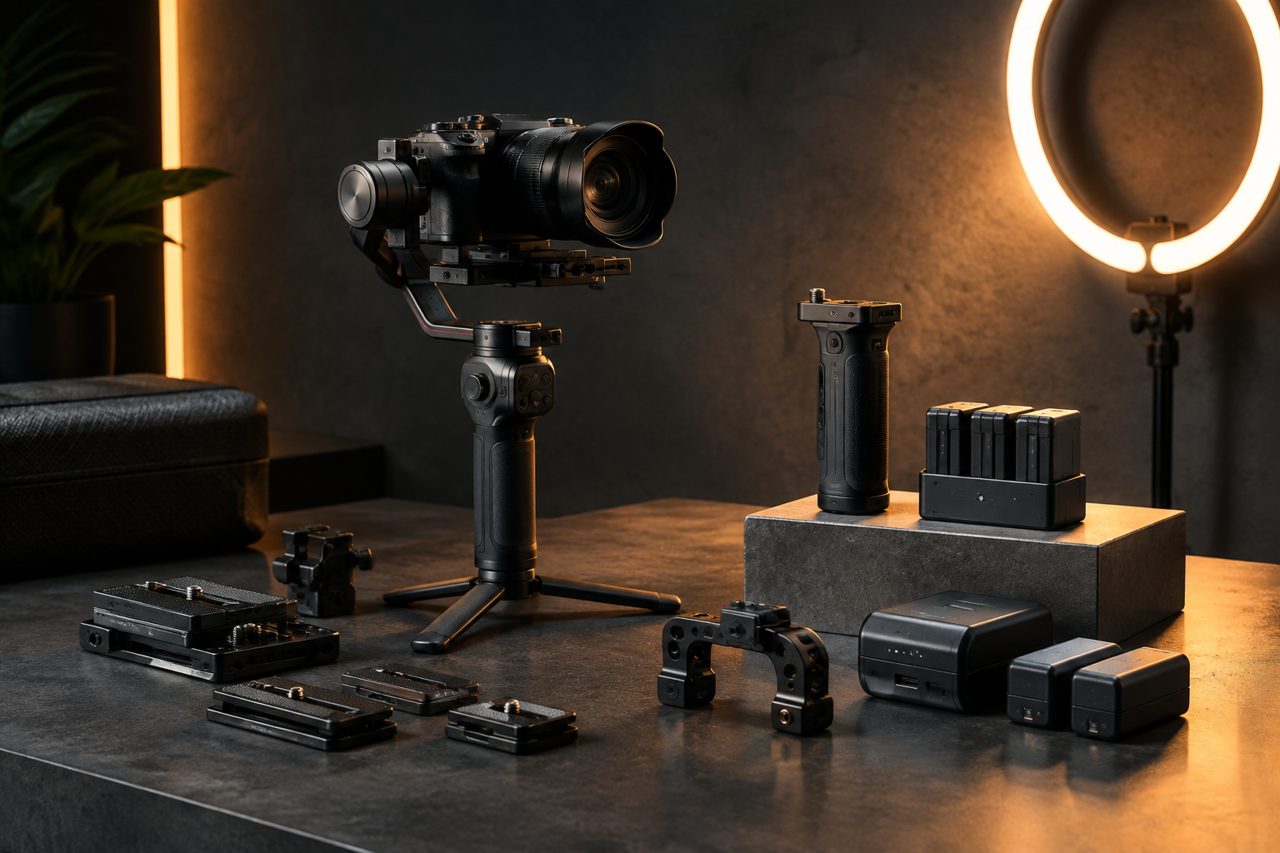
Stabilizers have moved from specialist film tools to mainstream creator gear, for phones and cameras alike, and the installed base keeps growing as new creators join. Every one of those devices drags a small tail of needs behind it: a second plate for a second camera, a stand that holds the rig on the desk, a handle that saves an aching wrist, power that lasts through a full shoot day. None of these needs is urgent on purchase day, which is exactly why they convert later, at full price, without comparison shopping.
The economics reward attention. A stabilizer competes on price against every other stabilizer on the marketplace from the day it is listed, and margin erodes accordingly. Its accessories compete against a much thinner field, because buyers search for a specific fit rather than the cheapest black rectangle, and they judge listings on whether the fit is stated confidently. In practice, the accessory line frequently carries the blended margin of the category, and the main unit functions as the acquisition cost of a customer relationship.
The parts that make up the ecosystem
The accessory tail falls into five families, each with a distinct buying trigger:
- Mounting parts. Quick-release plates, clamps and extension rods. These are the compatibility-sensitive family and the one that generates the most returns when handled carelessly.
- Carry and comfort. Sling grips, briefcase-style handles, wrist straps and carrying cases. Bought when shooting sessions get longer or travel enters the picture.
- Stability hardware. Tripod feet, desktop stands and counterweights for balance. Small parts that unlock real shooting positions, such as low-angle tracking or unattended framing.
- Power. Charging cases, spare cells where the design allows, and the power banks that keep a USB-C gimbal alive on long shoot days.
- Control. Wrist remotes and follow-focus style add-ons where supported, mostly for camera-class gimbals and serious phone shooters.
Three of these families deserve a closer look, because they carry the most attach potential and the most claim risk: plates, handles and power.
Quick-release plates: the compatibility question
Plates are where ecosystems either lock in customers or leak them. Several formats coexist in the market: the long dovetail profile common on tripod heads and camera gimbals, the compact plates bundled with phone gimbals, and the magnetic quick-release systems that have spread through recent designs. They are not interchangeable, and the customer who owns two devices from different families ends up buying plates twice — once from you, if you make the answer easy.
For a catalog, the discipline is straightforward. Pick one or two plate families and build the accessory line inside them, then state compatibility explicitly on every listing: which gimbals the plate fits, what the clamp accepts, and what the combination cannot do. A plate that seats loosely or prevents balancing produces returns that customers file as defects, and no amount of listing enthusiasm survives a bad seat. Where possible, include a spare plate in the box of compatible SKUs; it costs little, prevents the mismatch, and quietly demonstrates that your brand understands the ecosystem.
Grips and handles: comfort becomes runtime
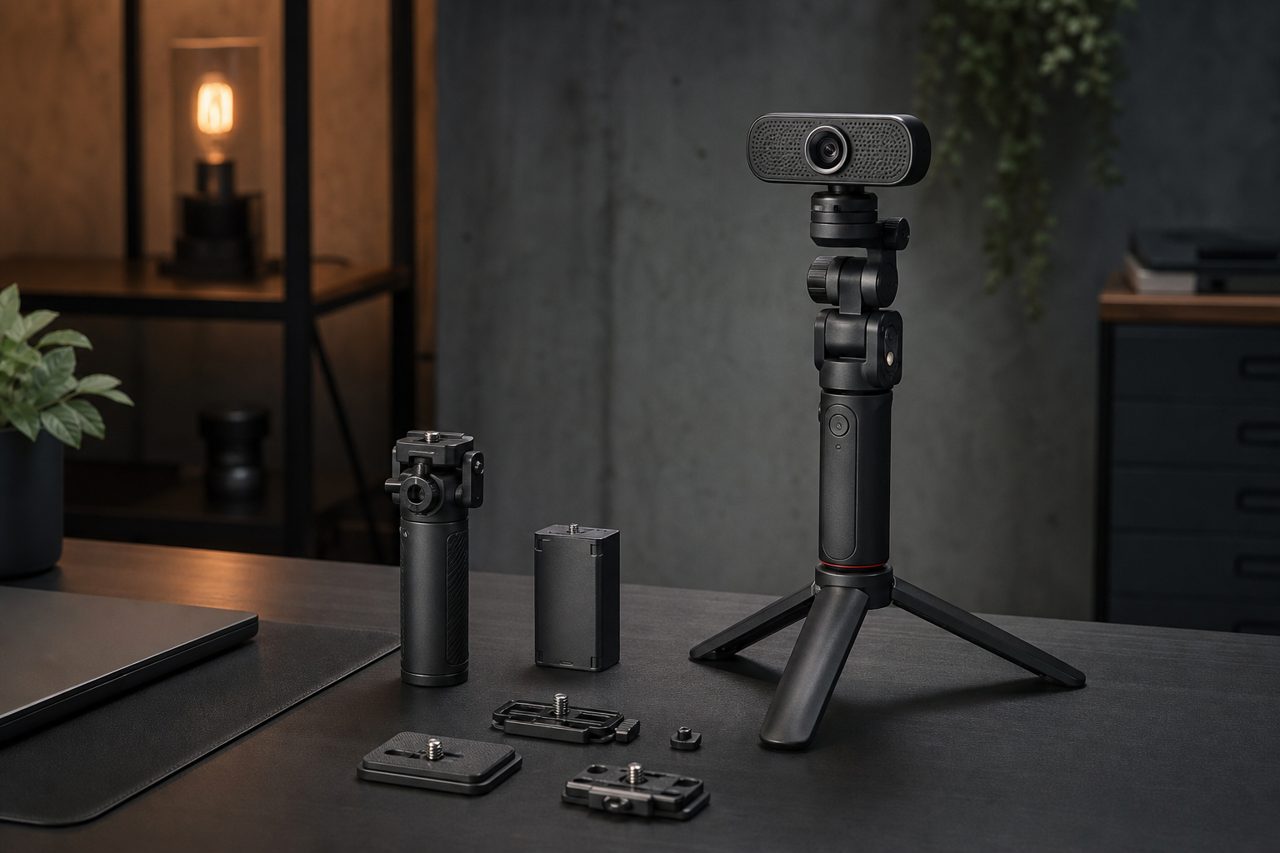
Handles look like comfort accessories, but they change what a rig can do. A sling grip lets the gimbal hang at hip height for walking shots; a briefcase handle repositions the motor load for low, gliding frames; a simple extension rod widens framing options for self-shooting creators. Because the camera hangs further from the motors in these configurations, balance changes too — which is why counterweights belong in the same shelf conversation rather than in a separate section.
The commercial logic of the family is that it monetizes commitment. Nobody buys a sling grip for a gimbal they have not used, so every handle sale certifies an engaged customer. Listings should describe the shooting positions each grip enables rather than listing dimensions alone, because the buyer is purchasing a shot, not a bent tube of aluminum.
Power: batteries, cases and the shipping reality
Power is the most repeated purchase in the ecosystem. Current gimbals mostly charge over USB-C, some support charging while operating, and heavy users simply run out of hours mid-shoot. The companion products are obvious: compact power banks, charging cases that top up the gimbal and spare devices in one place, and cables that live in the camera bag.
Power is also where logistics discipline separates suppliers. Any gimbal with a built-in battery, and every power bank beside it, ships as a battery-containing product: UN38.3-tested cells, IATA PI967-compliant packing and labeling, and battery-capable channels with realistic timelines rather than improvised promises. A supplier that cannot move battery goods compliantly caps your ecosystem at the border. The battery channel typically runs 8-18 days door to door on our lanes, with standard goods at 7-15 days, so power SKUs need their own inventory calendar instead of sharing the non-battery one.
For listings, power claims deserve the same discipline as resolution claims on webcams: state what the case charges, at what rate class, and what it cannot charge. Unsupported claims here migrate into reviews slowly but permanently, because a buyer who arrives at a shoot with a dead kit remembers the listing that promised otherwise.
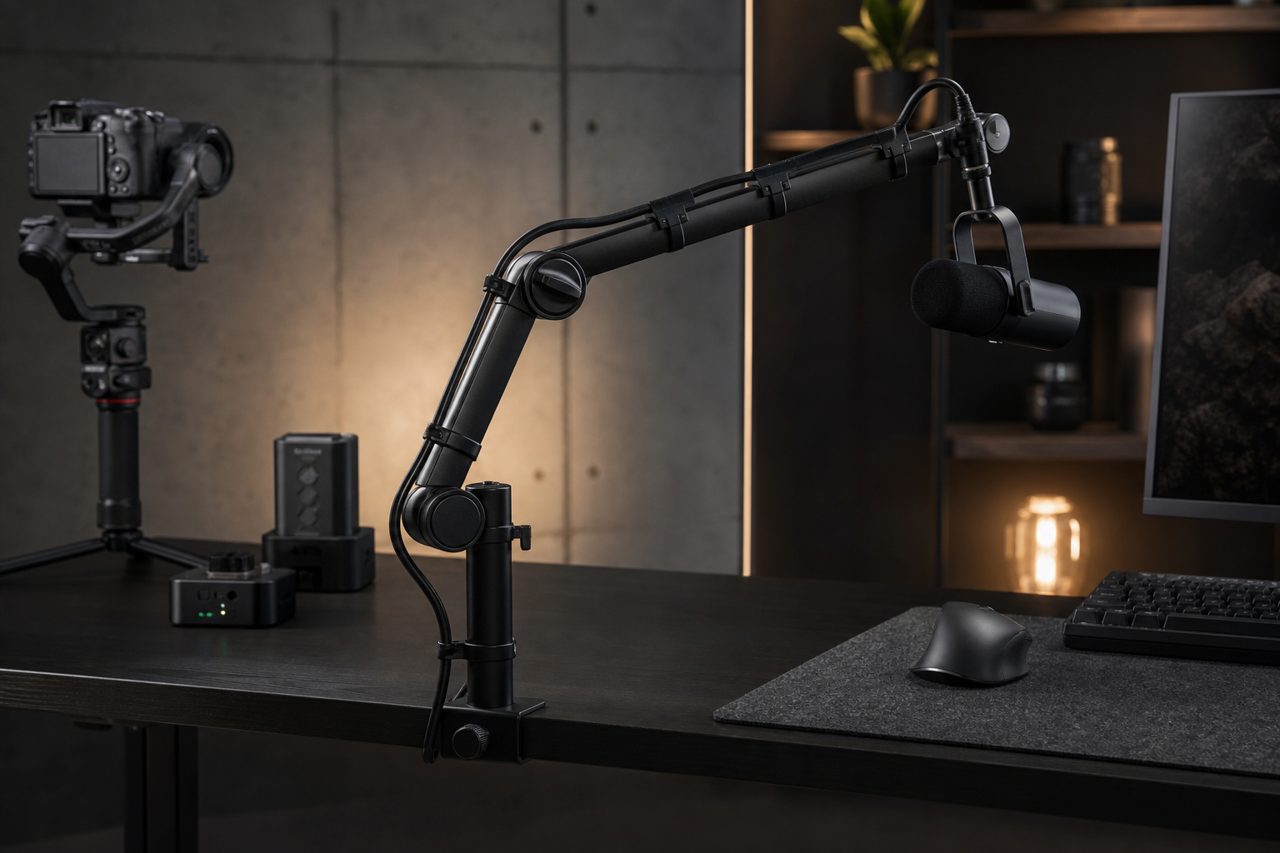
The ecosystem at a glance
| Accessory family | What it does | Buying trigger | Attach behavior |
|---|---|---|---|
| Quick-release plates and clamps | Mount and swap devices; enable balance | Second device, lost plate, mismatch discovered | Recurring; compatibility-sensitive; low price, high necessity |
| Extension rods and stands | Widen framing; park the rig safely | Self-shooting, desk streaming, low-angle work | Early attach; pairs with first gimbal setup |
| Grips and handles | Change shooting posture; carry comfort | Longer sessions, travel, walking shots | Mid-lifecycle; marks engaged customers |
| Counterweights | Rebalance rigs with lenses or accessories | Balance problems after adding gear | Problem-driven; sold best beside plates |
| Power banks and charging cases | Extend runtime; consolidate charging | Running out of hours mid-shoot | Most repeatable; battery logistics apply |
| Carrying cases and straps | Protect and transport the kit | Travel plans, growing kits | Later attach; higher perceived value |
Building the attach-rate catalog
- Lead with necessity, not novelty. Spare plates, stands and power convert across the whole installed base; niche control accessories convert narrowly.
- Stay inside compatibility families. One or two plate systems, stated plainly, beats a wall of maybes. Compatibility clarity is a returns-prevention tool.
- Bundle at setup time. A gimbal plus plate plus stand bundle captures the early attach window; the power companion sells better as a later, separate offer.
- Write listings as answers. Each listing should answer: fits what, holds what, powers what, ships how. The ecosystem lives or dies on those four sentences.
- Plan battery SKUs on their own calendar. Battery-compliant channels take longer, so power items need reordered lead times, not last-minute drops.
The sourcing bottom line
The gimbal ecosystem rewards catalogs that think in repeat purchases: plates that fit, stands that hold, power that arrives compliantly. Current gimbal accessory models ship from a single piece for validation through dropshipping, with stock dispatched within 48 hours. Logo and packaging customization starts at 500 pieces per SKU and full OEM at 1,000 pieces per SKU, with sampling in 5-7 days for light customization; see the OEM/ODM page and the creator gear category page for the lineup.
FAQ
Are gimbal quick-release plates universal?
No, and assuming so is the most common compatibility return in the category. Dovetail profiles, compact bundled plates and magnetic systems coexist and are not interchangeable. Standardize your catalog on one or two families and state compatibility explicitly on every listing; a loose seat or blocked balance generates returns that customers file as defects.
Can a gimbal be powered from a power bank during a shoot?
For models that charge over USB-C, most can run or recharge from a standard power bank while operating, which is why power banks are a natural companion SKU. Verify per model in samples. Shipped units with built-in batteries must move on compliant channels — UN38.3-tested cells, IATA PI967 packing — which is a supplier capability to confirm, not improvise.
Which gimbal accessories should a new store stock first?
Spare quick-release plates, a compact stand that doubles as a desktop base, and a power companion matched to the gimbals you sell. Add cases and wrist remotes once the core three prove attach behavior. Keep the lineup inside one or two compatibility families so listings can make plain statements, keeping returns and support load low.