Fitness Band Sourcing: Screens, Sensors and Straps
Fitness bands look like the simplest product in wearables, which is exactly why they get sourced carelessly. Two bands with the same feature list can behave entirely differently because of a display choice, an algorithm generation or a strap interface. This guide breaks the band into the parts a buyer actually decides on, gives the parameter table to hand a supplier, and ends with a sample checklist that fits in two days.
The band as a bill of materials
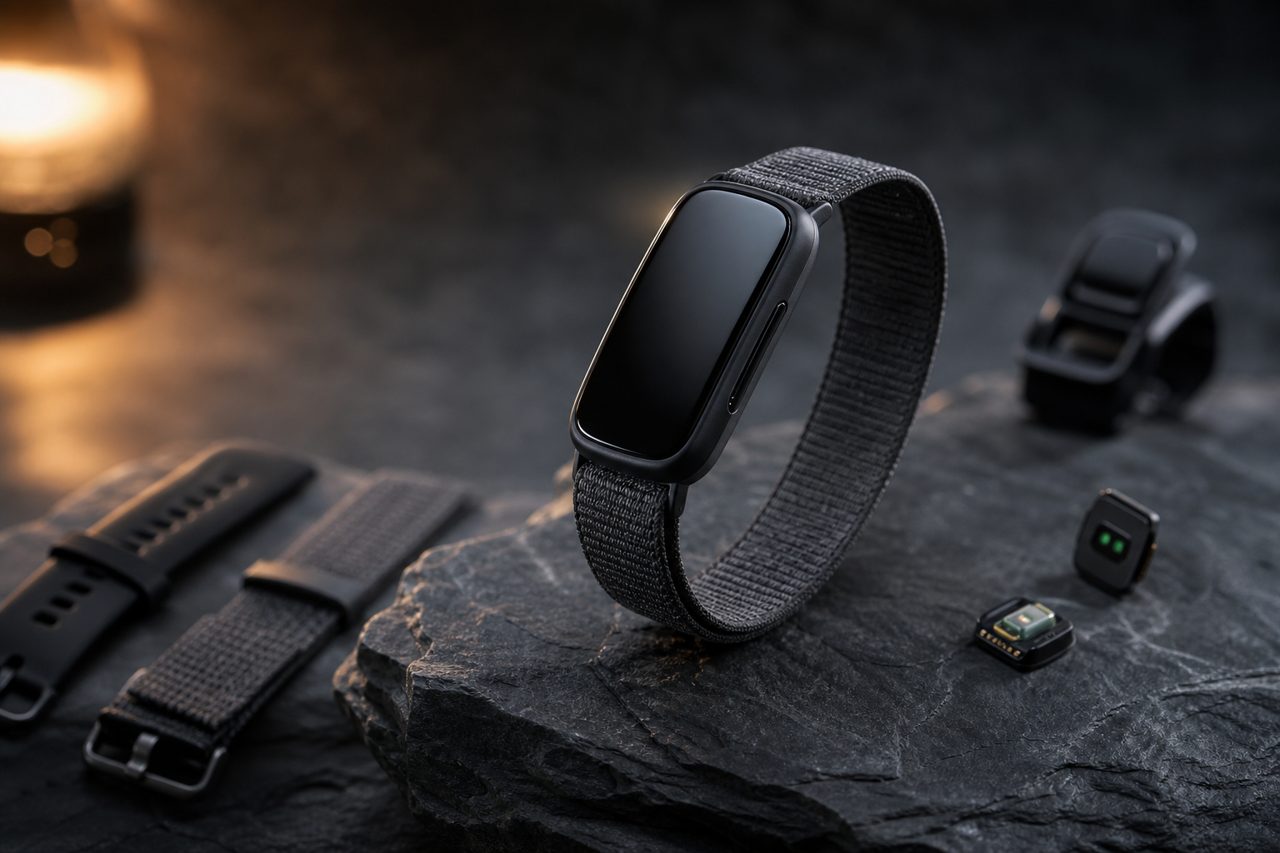
Strip a band down and you get six decisions: the display, the sensor stack, the Bluetooth system-on-chip, the battery, the strap, and the app behind all of it. Each one moves cost, perceived quality and returns in a different direction, and none of them can be judged from a listing screenshot. The buyer's job is to know which of the six decides which outcome:
- Display decides whether the product feels cheap the moment the screen lights up.
- Sensors plus algorithm decide whether the health data is credible enough to keep users wearing it.
- SoC and Bluetooth version decide connection stability, which decides complaint volume.
- Battery decides whether the declared multi-day life survives contact with real users.
- Strap decides comfort, skin reactions and, quietly, repeat purchases.
- App decides whether any of the above ever gets seen, because an unpairable device is a return regardless of hardware.
The parameter table to hand a supplier
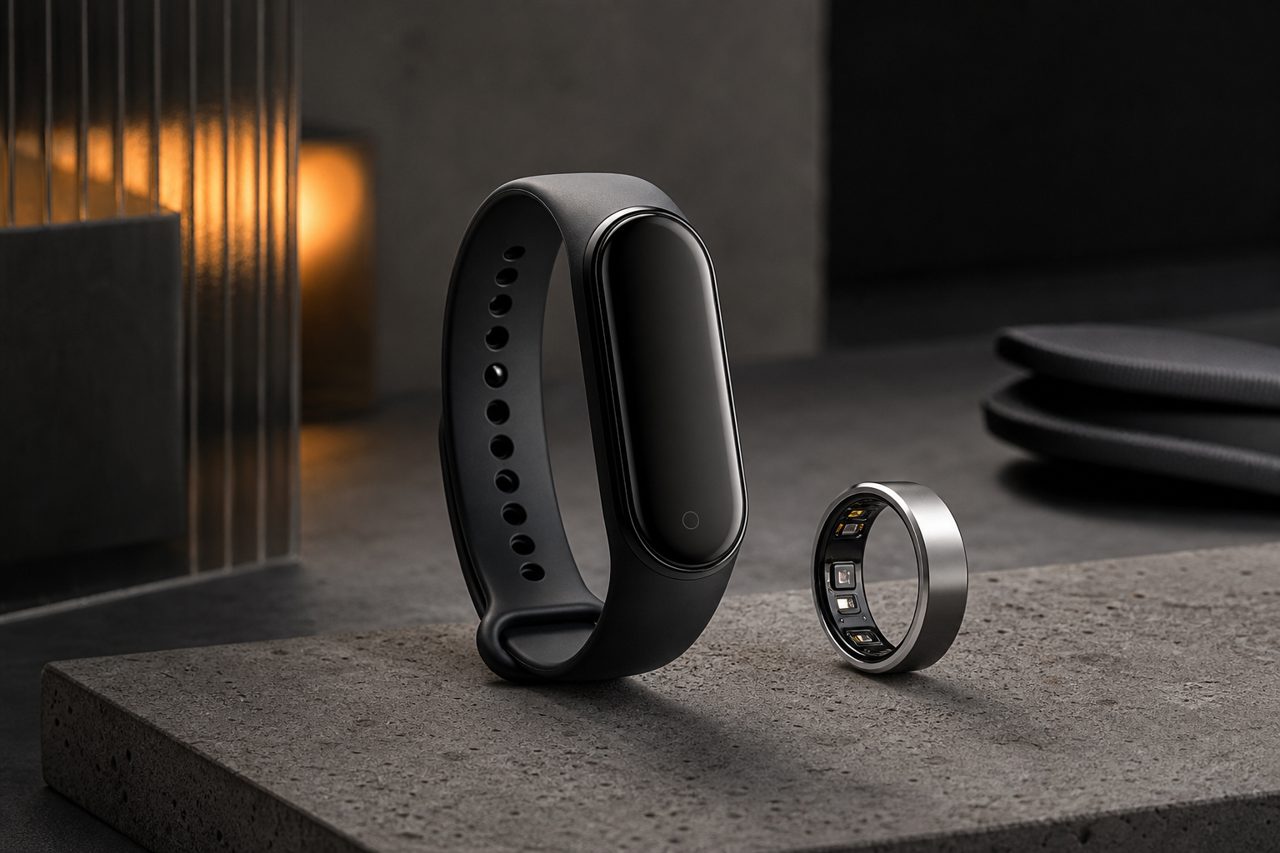
Use this table as the request-for-quotation skeleton. The entry column is what a bottom-of-market SKU usually ships with; the recommended column is where a defensible retail product sits:
| Item | Entry grade | Recommended grade | Why it matters |
|---|---|---|---|
| Display | TFT LCD panel | AMOLED panel, always-on capable | Brightness and contrast decide outdoor legibility and first-touch quality |
| Bluetooth | Older LE generation | Current BLE generation | Newer stacks pair faster and drop connections less |
| Heart rate | Basic PPG module | PPG module with a documented algorithm version | The algorithm, not the LED count, decides accuracy |
| Battery | Sized to the cheapest case | Sized to a declared multi-day life you have verified | Battery life is the most-listed and least-verified claim in the category |
| Charging | Loose magnetic snap | Keyed magnetic dock | Misaligned charging is a quiet source of dead-on-arrival units |
| Water rating | IP68, depth undeclared | 5ATM or IP68 with declared depth and time | Undeclared ratings cannot support swim listings |
| Strap | Proprietary width | Standard quick-release width | Standard widths open the replacement-strap revenue line |
| App | Stock vendor app | White-label app with OTA and multi-language | The app is where pairing problems and one-star reviews live |
Two rules make the table work in negotiation. First, have the supplier fill it in themselves and return it with model numbers in each cell; the reply tells you whether you are talking to the factory that builds the band or to a middleman reading a website. Second, pin the battery line to a verification method rather than a number: agree that the declared life will be tested at a stated brightness and notification load, and that a discrepancy found on samples reopens the price. Suppliers respect a buyer whose table ends in tests, not in discounts.
The screen decision
TFT panels keep the bill of materials low and remain acceptable for indoor use, which is why they dominate entry SKUs. AMOLED panels cost more and change how the product reads in the hand: deeper blacks, higher brightness in daylight, and the option of an always-on face that makes the band feel like a watch rather than a clip-on. For retail, the workable split is to carry AMOLED on the hero SKU where reviews are written, and TFT where price is the entire pitch. Whatever the panel, verify legibility under direct sunlight on a sample, because no spec sheet admits that a display washes out outdoors.
Sensors, and the algorithm behind them
Heart-rate and SpO2 modules are commodities at this point; what separates products is the firmware that interprets them. Two bands with the same sensor package can produce different readings, which is why the supplier question is not how many LEDs but which algorithm generation and whether it is documented. Buyers who need depth on verifying readings can borrow the bench protocol from the smartwatch sensor accuracy guide, and the same logic applies: judge trend reliability across real testers, not the number of sensor channels on a sheet.
Straps: the wear part that drives repeat purchases
Straps are the only component customers replace on purpose. A band with a standard quick-release width connects to an entire replacement-strap economy; a proprietary interface locks customers into your SKU for color and material changes, which cuts both ways. Silicone remains the default for sweat and washing, woven nylon reads more premium, and any material change needs a skin-comfort check on real wrists because irritation reviews cluster around cheap compounds. The strap decision also sets up the attach-rate play covered separately for the watch business.
One more strap note for importers: strap material and color are the cheapest customization on the product, usually available inside light-customization minimums, which makes them the right first experiment before committing to any housing change.
A sample-bench checklist before volume
Two days, two phones, three samples. Run every line; each one maps to a known failure mode in the returns queue:
- Pair with one Android and one iOS phone. Time the process; note every retry. Pairing friction predicts support tickets.
- Wear it for 48 hours of real life and sync daily. Log every disconnect and missed notification.
- Drain the battery from full with a timer running and compare the result with the declared life at your realistic settings.
- Submerge at the declared rating in a basin, then check for display fogging after 24 hours.
- Pull the strap through a full swap cycle and inspect the pins and the interface for wear.
- Push one OTA update end to end on both phones; a failed update bricks devices in the field.
- Read the screen under direct sun. This is the test that no spec sheet passes for you.
- Sweep the app store reviews for the stock app: crash clusters, permission demands and missing data export are all returns you would inherit.
Sourcing note
Every line in the table maps to a conversation: screen, strap interface and app white-labeling sit on the OEM/ODM page, where light customization starts at 500 units per SKU with 5-7 day sampling and structural OEM work at 1,000 units with 7-12 day sampling. Three samples run through dropshipping with 48-hour dispatch are enough to execute the checklist above, and the current band lineup lives on the wearables category page.
FAQ
Which display should a fitness band line use?
TFT panels keep entry SKUs cheap and acceptable indoors, while AMOLED panels deliver the brightness and contrast that survive outdoor use and enable an always-on face. A practical line stocks AMOLED for the hero SKU and TFT only where price is the entire pitch, and always verifies sunlight legibility on samples.
What certifications does a fitness band need?
As a Bluetooth radio product it needs CE with the EU Radio Equipment Directive for Europe, FCC for the United States, and UKCA for the United Kingdom, with RoHS and REACH covering chemical compliance and UN38.3 covering the battery for air transport. Collect the declarations of conformity per SKU before volume.
What MOQ applies to a custom-logo band?
Logo printing and custom packaging count as light customization, which typically starts at 500 units per SKU with 5-7 days of sampling. Structural changes such as housing, sensor layout or a different strap interface move the project into OEM territory, which starts at 1,000 units per SKU with 7-12 days of sampling.