FCC Part 15 Basics for Wireless Accessories
Part 15 governs almost every 3C accessory sold in the US, wired or wireless, but the compliance path differs sharply between the two. This guide explains the distinction and what an FCC ID actually proves.
FCC Part 15 of Title 47 of the Code of Federal Regulations covers radio frequency devices in the US, and it splits into two very different regimes depending on whether a device intentionally transmits a radio signal or merely risks generating unwanted RF noise as a side effect of its electronics.
Intentional radiators vs unintentional radiators
| Category | Definition | 3C accessory examples | Typical compliance path |
|---|---|---|---|
| Intentional radiator | Deliberately transmits RF energy for communication (Bluetooth, Wi-Fi, cellular) | TWS earbuds, Bluetooth speakers, smartwatches, wireless microphones | FCC Certification, public FCC ID required |
| Unintentional radiator | Does not transmit intentionally, but electronics may generate incidental RF noise | Wired chargers, USB hubs, cables, wired card readers | Verification or Supplier's Declaration of Conformity (SDoC), typically no public FCC ID |
This is the single most useful distinction for a buyer to hold onto: if a device transmits wirelessly on its own initiative, expect a public, searchable FCC ID. If it only carries current through wires, expect emission-limit compliance without one. A supplier claiming an "FCC ID" for a plain wired cable is either confused about the requirement or describing something that does not exist for that product type.
What an FCC ID actually proves
An FCC ID is a unique identifier granted after Certification, the strictest of the three compliance paths, which requires testing at an FCC-recognized lab and a filing reviewed by the FCC or an accredited Telecommunication Certification Body (TCB). The ID typically appears as a grantee code plus a product code (for example, two to three letters followed by alphanumeric characters) and can be looked up in the FCC's public equipment authorization database to confirm the grant is real, current, and matches the claimed product.
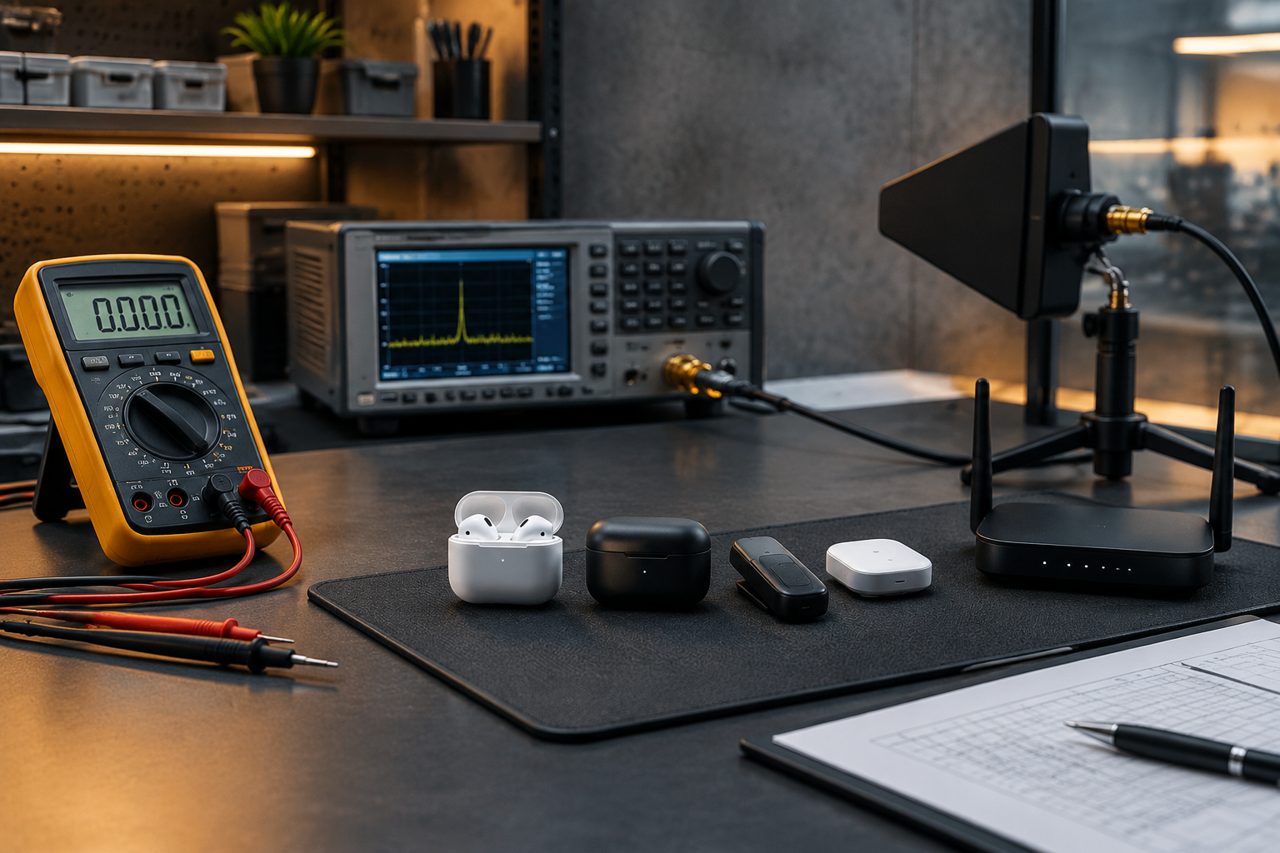
Checking this lookup is one of the fastest due-diligence steps available to a buyer - it takes minutes and either confirms or disproves a supplier's claim without relying on their word.
What happens when a product ships without valid authorization
Shipping an intentional radiator into the US market without a valid FCC ID is not a paperwork technicality - it exposes both the importer and the marketplace seller account to real consequences. US Customs and Border Protection can detain shipments lacking proper equipment authorization, and marketplaces including Amazon have increasingly enforced FCC compliance documentation requirements for wireless-category listings, sometimes removing listings or holding payouts until valid documentation is provided.
A second, less visible risk applies to modular transmitters - a Bluetooth or Wi-Fi module purchased pre-certified from its chip supplier and integrated into a finished product. The module's own FCC ID does not automatically transfer to the finished product; depending on how the module is integrated (antenna changes, host product RF exposure conditions, and several other factors defined in FCC modular approval guidance), the finished product may need its own authorization referencing the module grant, or may qualify to use the module's ID directly under specific integration conditions. This distinction is frequently glossed over in supplier claims and is worth confirming explicitly rather than assuming a module's certification alone covers the finished device.
The two lighter paths for unintentional radiators
Verification is a self-testing process where the manufacturer tests the device against Part 15 emission limits and keeps records on file without third-party review or FCC filing. Supplier's Declaration of Conformity (SDoC) requires testing at an accredited lab but still does not involve FCC filing or a public ID - the manufacturer self-declares compliance based on the lab results. Most passive and wired 3C accessories use one of these two paths, which is why the absence of a public FCC ID on a charger or cable is normal, not a red flag by itself.
Labeling requirements once authorization is granted
Holding a valid FCC ID also comes with a labeling obligation: the device must display the FCC ID physically or, for very small devices, make it accessible through an on-screen electronic label where the physical marking is impractical. A product listing photo showing no visible FCC marking anywhere on the device or its packaging, for a category that should carry one, is worth a direct question to the supplier before assuming the marking was simply omitted from the photo.
Where this intersects with Bluetooth SIG requirements
FCC Part 15 governs radio emissions specifically; it does not certify that a Bluetooth device correctly implements the Bluetooth protocol, which is a separate requirement under the Bluetooth SIG's own qualification program. A wireless earbud needs both: FCC authorization for RF emissions and Bluetooth SIG qualification for protocol compliance. Our separate Bluetooth SIG and audio certifications guide covers that second requirement in detail.
Grantee codes and manufacturer identity
The grantee code portion of an FCC ID is assigned to a specific applicant, which is often the chip module manufacturer rather than the brand selling the finished accessory. This is normal and not itself a red flag - many smaller accessory brands integrate a pre-certified radio module rather than seeking their own grant from scratch. What matters for a buyer is confirming the finished product's actual configuration matches what the grant covers, since the FCC's public database lists the specific equipment class and configuration each ID was granted for, not a blanket authorization for any product using that module.
What to ask for by product type
- For TWS earbuds, Bluetooth speakers and smartwatches: the FCC ID, verifiable in the public database.
- For wired chargers, hubs and cables: confirmation of the compliance path used (Verification or SDoC) and, ideally, the test report reference, even though no public ID exists to check.
- For any product marketed with a specific wireless range or throughput claim: whether that claim was validated as part of the same test cycle or is a separate marketing figure.
How TECHORIGIN documents this
Wireless SKUs such as TWS earbuds and Bluetooth-enabled wearables carry FCC Certification with a public FCC ID, verifiable before you commit to a bulk order. Wired chargers and cables carry Part 15 compliance documentation under Verification or SDoC as applicable. Both are provided per SKU alongside the CE documentation covered in our CE marking guide, so US and EU compliance can be checked together before an OEM order proceeds through the OEM/ODM process.
FAQ
Do all wireless accessories need an FCC ID?
Intentional radiators - Bluetooth earbuds, wireless chargers using active transmission, smartwatches - generally need FCC Certification and an FCC ID. Unintentional radiators such as most wired chargers and cables typically only need to meet Part 15 emission limits, often through Verification or a Declaration of Conformity, without a public FCC ID.
Can I look up a supplier's FCC ID to check if it is real?
Yes. The FCC maintains a public equipment authorization database searchable by FCC ID or grantee code, where you can confirm the ID exists, matches the claimed product category, and was granted to the entity your supplier represents.
What does TECHORIGIN provide for FCC compliance?
FCC Certification and a public FCC ID for intentional radiators such as TWS earbuds and Bluetooth-enabled wearables, and Part 15 compliance documentation for wired chargers and cables, provided per SKU before bulk order confirmation.