Military-Grade Drop Tests: What MIL-STD 810G Really Tests
"Military-grade" is one of the most powerful phrases in accessory marketing and one of the least examined. The standard behind it - MIL-STD-810 - is real, public and specific, which is exactly why buyers should read it: the standard tests narrow, defined conditions, while the phrase on the box implies invulnerability. This article explains what the drop-test method actually does, what it does not, and how to read a supplier's claim.
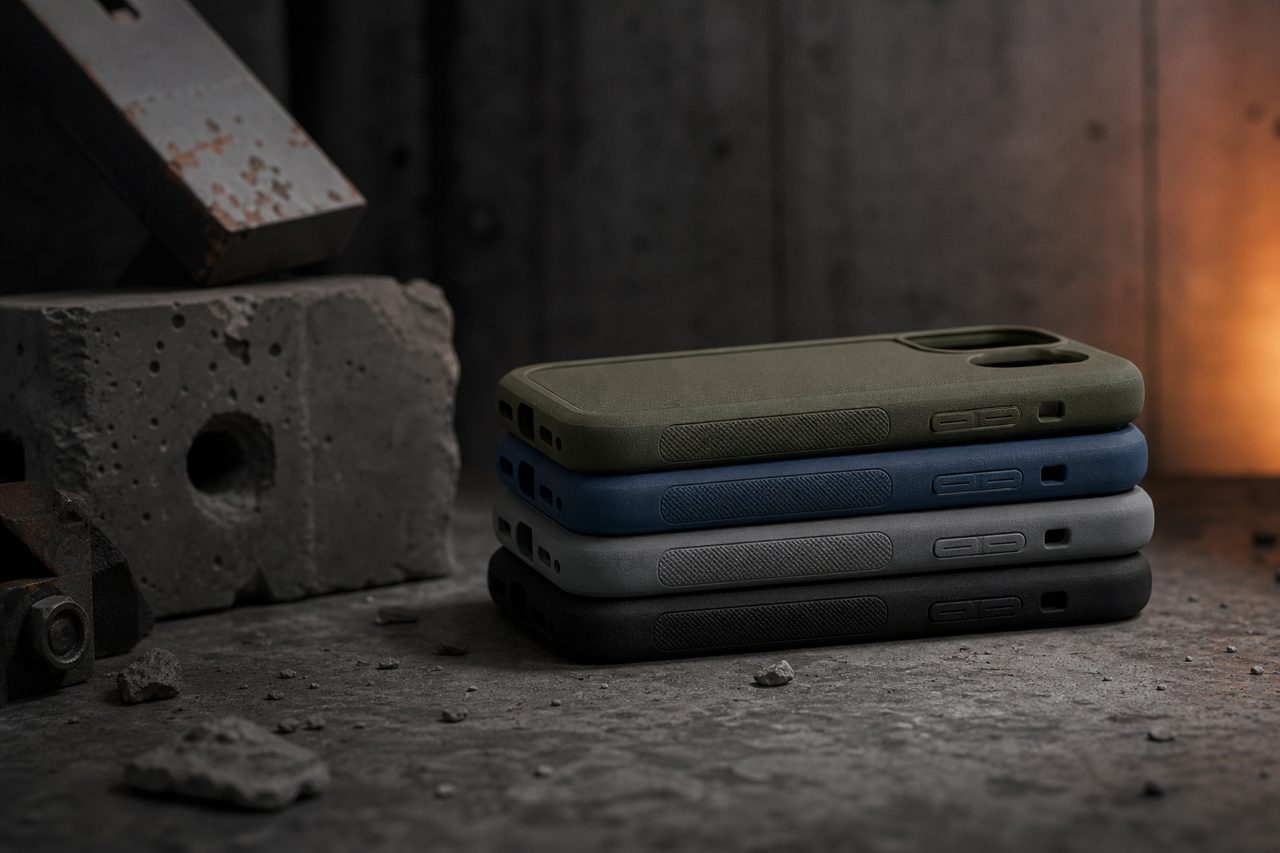
The gap between the standard and the marketing matters commercially because drop survival is the number-one promise a protective case makes, and the number-one driver of "case failed" reviews. A buyer who can interrogate a drop-test claim with three specific questions is harder to oversell - and better equipped to write product copy that survives contact with customers.
What MIL-STD-810 actually is
MIL-STD-810 is a United States military standard titled Environmental Engineering Considerations and Laboratory Tests. It is a catalog of test methods for how equipment copes with environmental stress - temperature, humidity, vibration, shock, sunlight, sand and more. Revisions carry letters; 810G is the revision most consumer marketing still cites, though the standard has since been revised further. The important structural point: the standard itself is a menu. Nothing "passes MIL-STD-810" in general - a product passes a specific method, with a specific procedure, at a specific severity, which somebody had to choose. When a listing says only "MIL-STD-810G tested," the honest response is "which method, and tested to what level?"
The transit drop procedure
Drop testing lives in Method 516, which covers mechanical shock, and the procedure consumer products borrow is the transit drop. In that procedure, the sample is dropped in a defined matrix - covering the faces, edges and corners of the unit, twenty-six drops in the full sequence - onto a specified hard surface, commonly described as plywood over concrete. Drop height scales with the weight of the item; for the weight class of phones and accessories it lands in the neighborhood of 1.2 meters, which is why that number appears so often in accessory marketing. Pass criteria - what "survived" means - are set before the test: the unit powers on, the screen works, no structural failure that prevents use. The procedure is a legitimate, repeatable engineering test. It was also designed to qualify equipment for transport, not to promise that any random drop by any user onto any surface will be survived.
What the claim does not mean
- It does not mean every drop survives. A passed procedure is one pass per orientation on defined samples; real drops vary in height, angle and landing surface far beyond the matrix.
- It does not say what was tested. Some claims reference testing of the phone alone, not the phone inside the case being sold - the combination is what buyers actually carry.
- It does not cover repeated abuse. The transit procedure drops each sample once per orientation; durability against the tenth drop on concrete is a different question.
- It does not certify a production batch. Tests run on samples; the claim transfers to your order only if the factory controls the process that produced those samples.
None of this makes the standard a gimmick - it makes it specific. The failure mode is marketing inflation, not test weakness.
Reading a supplier's drop-test claim
Ask for the report and check it against this table:
| Report element | What credible looks like | Red flag |
|---|---|---|
| Method named | "MIL-STD-810G, Method 516.6, Procedure IV" or equivalent specificity | "Military-grade tested" with no method or procedure |
| Tested assembly | Phone inside the case, model stated | Case alone, or a phone model that does not fit the case |
| Sample count | Several units per condition, stated in the report | One hero unit, or an unstated count |
| Pass criteria | Defined before the test: functional after drop, damage limits | "Passed" with no criteria written down |
| Post-test evidence | Photos of samples after the sequence | No post-test documentation at all |
A report that clears all five rows is evidence. A claim that clears none of them is decoration - and the distinction is worth having in writing before a bulk order, not after a review wave.
A buyer's bench version
Between "no test" and "full lab report" sits a bench protocol any buying team can run on samples, and it is worth running because your floor and your hands are the honest test conditions. Take several sample units. Drop each from about chest height - roughly the transit height - onto a hard floor: first flat, then on an edge, then on a corner, the corner being where cases die. Insert a phone dummy or a retired device, photograph each unit after each drop, and log the damage ladder: scuff, crack, case separation, device damage. A case that loses a corner cover on the first edge drop has told you its assembly tolerance story; a case that survives the ladder with cosmetic wear has earned the protective line in your listing. The point is not to replicate the lab - it is to generate batch-level evidence the lab claim cannot give you, on the exact units you would sell.
Turning tests into honest copy
The outcome of real testing is copy that survives reviews. Say what was tested and how: "cased phone passed a 26-drop transit sequence onto plywood over concrete from 1.2 meters, samples photographed after each orientation." State the design features that do the work - reinforced corners, raised screen lip, thickened bumper walls - instead of leaning on the adjective alone. Avoid promising outcomes ("survives any drop") that no test in the standard supports. Buyers reward specificity precisely because the category is full of the opposite; the copy is free, and it converts the engineering you already paid for into differentiation.
From test to order
Settle drop performance at sampling, before tooling. Protective cases in current constructions are listed in the phone accessories category; validate them at single-piece quantities through the dropshipping program and run the bench ladder on the exact units you would sell. When a design needs its own reinforcement - corner geometry, wall thickness, bumper compound - that is engineering work under OEM customization: changes start at 1,000 pieces per SKU with sampling in 7-12 days, and full mold changes run from 3,000 pieces, which is exactly why the drop-test conversation belongs in the sampling phase, not after the mold is cut. Testing arranged through partner laboratories can be quoted with the project so the report exists before the bulk order does.
FAQ
Does MIL-STD 810G testing guarantee a phone survives a drop?
No. It certifies that specific samples survived a defined shock procedure on a defined surface from a defined height - typically a single pass per orientation, not a promise about every drop, every floor or every unit in the shipment. Treat it as evidence of process, not insurance for the phone.
How many test samples should a credible drop test use?
Several units per test condition, stated in the report, with the sample count and pass criteria fixed before testing. A single-unit demonstration - however photogenic - proves nothing about a production batch, because sample-to-sample variation is exactly what a drop test exists to measure.
Can a case be strengthened if drop testing fails?
Yes, usually through geometry: corner ribs, thicker bumper sections and raised screen lips are engineering changes to the mold. Structural and tooling changes start at 1,000 pieces per SKU, with full mold changes from 3,000, which is why drop results should be settled at sampling, before tooling is cut.