Case Model Coverage: Choosing Which Phone Models to Stock
Model coverage is the phone case business's core capital question, disguised as a catalog chore. Every model a store adds multiplies across constructions, colorways and variants - and every model it drops out of fashion leaves a tail of dead stock that costs storage, attention and margin. This article gives a working framework: tier the catalog, score models with your own data, time new-model entries, and use single-piece fulfillment to carry the long tail without buying it.
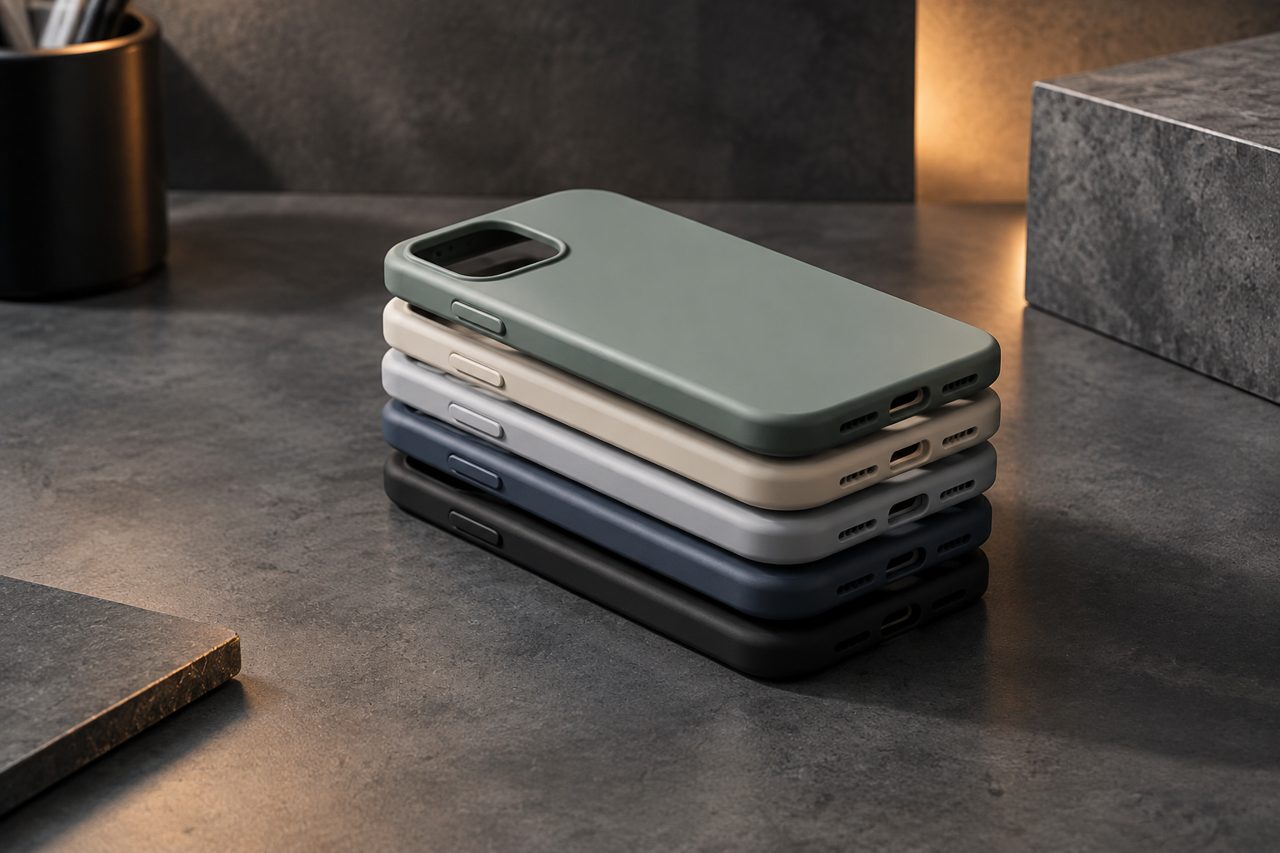
The multiplication is unforgiving. Forty phone models times four constructions times three colorways puts a store at nearly five hundred SKUs before a single accessory is counted - and each of those SKUs has its own demand curve that decays as the underlying phone ages out of the market. Coverage mistakes are therefore not merchandising details; they are where the working capital goes to die. The framework below assumes the category basics are already settled - see the materials comparison for the construction decision - and focuses on the model axis.
Tier the catalog
The first move is to stop treating all models equally. Four tiers cover most situations:
| Tier | Which models | Depth and breadth | Risk profile |
|---|---|---|---|
| A - Current core | This year's flagships plus the strongest mid-range sellers in your data | Deepest stock; two to three constructions and full colorway range | Demand is proven; risk is over-depth after the launch wave |
| B - Recent holdovers | Last cycle's flagships still widely in use | Moderate depth; best-selling construction only | Slow decay; manageable with reorder discipline |
| C - Regional and niche | Models overrepresented in your orders but not globally | Shallow; test before stocking | Lumpy demand; ideal for single-piece fulfillment |
| D - Long tail | Everything else that generates occasional orders | No inventory; fulfill per order | Margin per unit is fine; dead stock is zero |
The tiers are not static. A model graduates from C to A only when its sell-through earns it, and drops from B to C when reorder discipline says the depth is no longer turning. The point of the table is to force that conversation quarterly, with numbers, instead of by default.
Build the scorecard from your own data
Model coverage decisions fail when they are made from instinct or from global bestseller lists - neither knows what your customers own. The executable version:
- Pull twelve months of order data from your own channel and rank models by units sold.
- Add the trend: units in the last ninety days divided by the prior ninety. A model can be big and dying at once.
- Add returns and complaints per model - a high-return model is negative coverage, whatever it sells.
- Score each model: recent units weighted heaviest, trend next, returns subtracted. Weights are a house decision; write them down once.
- Set the review cadence - quarterly fits most catalogs - and re-run the score on the same weights every time.
The output is a ranked list that makes the tier table mechanical: tier A writes itself at the top, tier C shows up as the regional surprises, and tier D is the long list that should not be inventoried at all.
Time the launch window
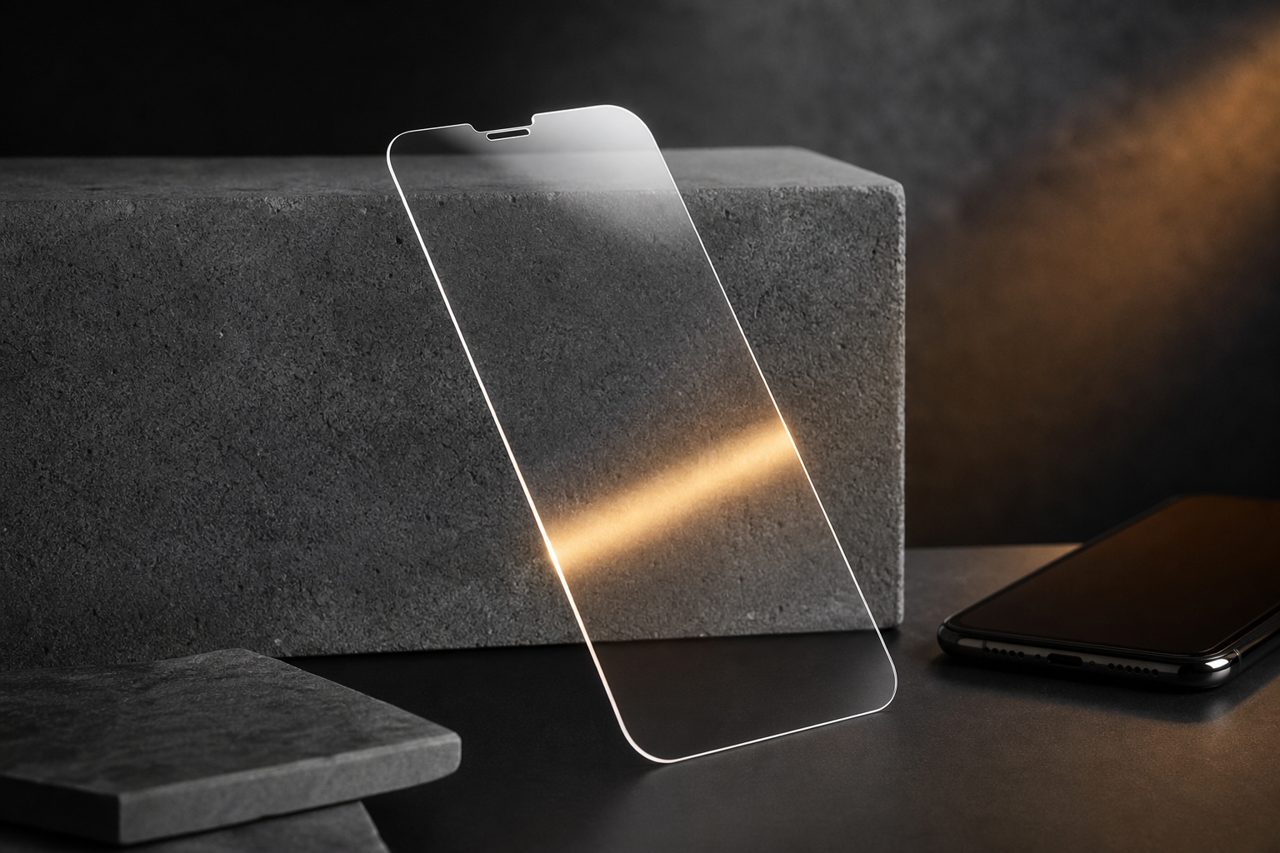
New phone releases create the category's sharpest demand spike, and the window rewards preparation but punishes guessing. The working sequence: confirm interest in your channel as the release approaches; order cases only once the tooling dimensions are confirmed rather than reconstructed from rumors, because a tenth of a millimeter at the camera island is the difference between a listing and a returns program; stock shallow at launch and let the first sales weeks set the reorder depth. Accessories attached to a new model - glass, mounts, cables - ride the same wave, so the launch window is also the cheapest moment to attach cross-sell lines. The store that is right about the model but wrong about the week loses to the store that is merely right about the model - depth after proof beats depth before it.
Kill rules and clearance
Every catalog needs a written kill rule: when a model's sell-through falls below your threshold for a full review cycle, it stops reordering - the threshold value is a house rule, but writing it down is not optional, because the alternative is negotiating with yourself every quarter. Clearance follows a ladder: mark down on schedule, bundle slow colorways with fast SKUs as sets, and treat the last units as marketing cost rather than inventory to defend. What you are protecting is not any single model's stock; it is the capital pool that buys the next tier-A entry.
Carry the long tail without buying it
Tiers C and D are exactly what single-piece fulfillment exists for. Through the dropshipping program, a niche or regional model stays listed with no inventory at all - orders fulfill per piece from Shenzhen with 48-hour dispatch, so the long tail earns margin instead of consuming rent. The same channel doubles as the test bench for tier C: list the model at zero stock, and if a region keeps ordering, the sales history justifies a bulk purchase at the 500-piece light-customization tier or beyond. Coverage stops being a bet made all at once and becomes a sequence of small, reversible decisions.

The action checklist
- Build the tier table for your current catalog; place every model in A, B, C or D.
- Run the scorecard with written weights; mark every tier-A model that is not actually turning.
- Set reorder depth by tier: deep for A, one-construction for B, none for D.
- Write the kill rule and the clearance ladder before the next review cycle.
- Move tier-C and tier-D models to single-piece fulfillment and promote the ones that prove themselves.
From framework to order
The framework runs on catalog breadth that a source supplier can actually back: in-stock constructions across the common model families are listed in the phone accessories category, single-piece testing runs through dropshipping, and when a model graduates to core status, logo and packaging customization starts at 500 pieces per SKU with sampling in 5-7 days - see OEM customization for the full range. Coverage discipline is what turns that supply depth into a store that carries hundreds of models without owning the dead ones.
FAQ
How many phone models should a new case store start with?
Start from tiers A and B only - current flagships plus the previous generation of strong sellers - and go deep rather than wide: a handful of models with two or three constructions each beats a wide shelf where every model is one deep. Let your own channel's order data, not the global model list, decide which models make the cut.
When should a new phone model be added to the catalog?
After two conditions hold: the tooling dimensions are confirmed rather than guessed, and your channel shows real search or order interest in that model family. Use the first sales weeks as the depth decision - stock shallow, then deepen the SKUs that sell through.
What should be done with stock of a dying model?
Follow the kill rule rather than hope: stop reordering at the threshold, ladder the price down on a schedule, and bundle leftovers with screen protectors as a set. The goal is to convert dead depth into cash before the model's user base shrinks further.