Camera Power on Long Shoots: Batteries, Grips and PD
Long shoots are rarely lost to talent; they are lost to the battery meter. Weddings, events, livestreams run from cameras, timelapses and workshop sessions all end when the cell does, and the gear that prevents that ending — spare batteries, grips, continuous USB-C power — is a quiet, repeatable accessories business. This article lays out the kit, how the three power routes compare, and what shipping and listing discipline the category demands.
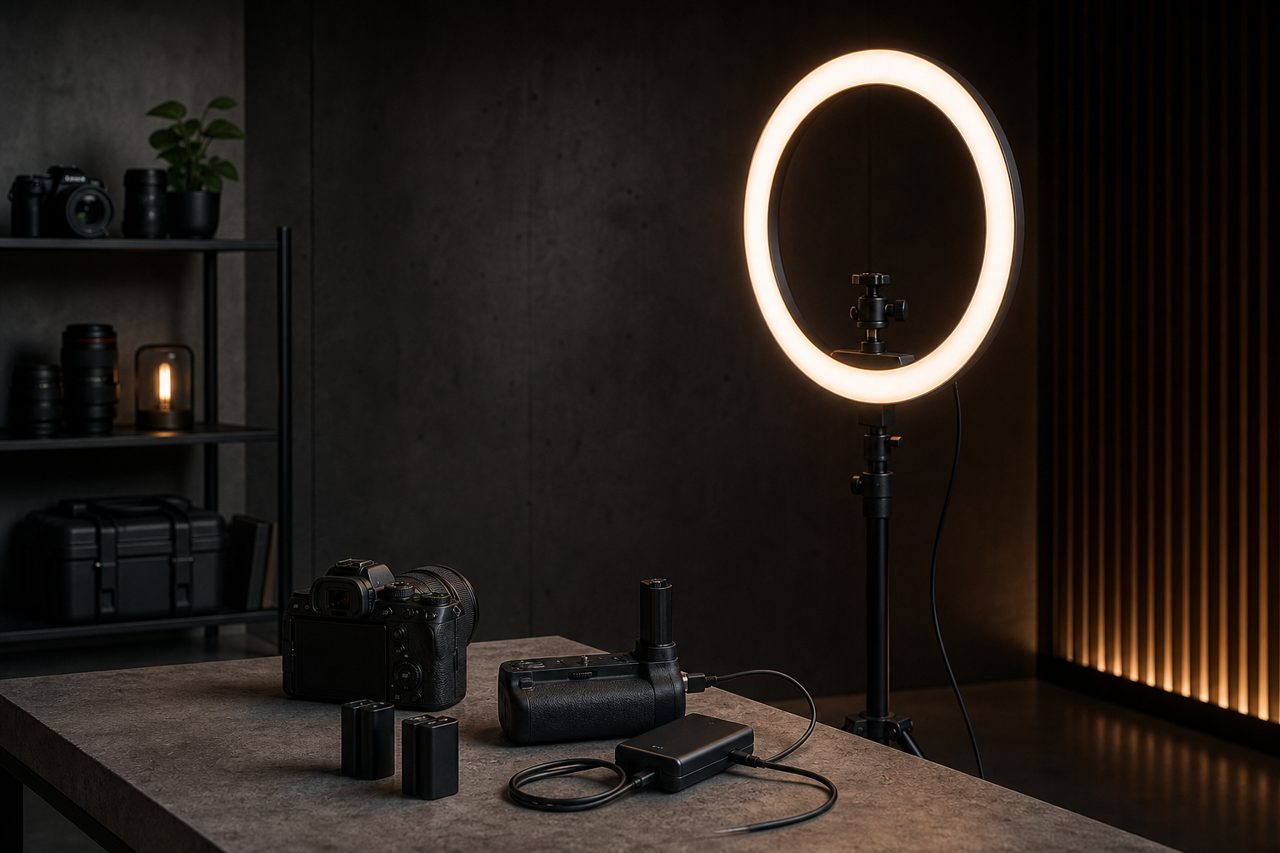
The buyer profile is easy to describe: anyone whose shooting day is longer than one battery. That covers a larger and more varied population than the phrase "professional photographer" suggests — hybrid creators who stream from a camera after shooting stills, videographers covering multi-hour events, educators recording courses back to back, and travelers who cannot recharge until night. What they share is purchase behavior: power anxiety converts early, converts repeatedly as workloads grow, and forgives nothing at the moment of failure, which makes reviews unusually loyal when the gear holds.
The category has a second virtue that resellers notice only after stocking it: low fashion risk. Power formats change with camera generations, but slowly and predictably, and a spare battery for a current body keeps selling for years after launch. Compared with trend-driven accessories, the demand line is flatter and longer, which suits sellers who prefer reordering to redesigning. The flip side is that compatibility research is the work: every SKU must be mapped to camera lines explicitly, because the buyer's first question is always "does it fit mine."
The long-shoot power kit
The kit is small, but every item has to be chosen against the camera it will serve, because power formats are where manufacturers deliberately fragment. The core list:
| Item | Role on a long shoot | Buyer note |
|---|---|---|
| Spare native-format batteries | The baseline swap; hot-swappable at any break in the action | State the camera formats a battery fits explicitly; this is the most compatibility-sensitive item in the kit |
| Battery grip | Holds extra cells, adds a vertical shutter and improves balance with long lenses | Sell capacity and ergonomics as separate benefits; note the added weight honestly |
| USB-C PD power bank | Shared power source for camera, phone and light from one brick | Charge-while-operating support varies by camera model; verify, then claim |
| Dummy-battery coupler (DC coupler) | Replaces the cell and feeds the camera continuously for sessions at a desk or tripod | Format-specific by design; the compatibility statement is the product |
| Dual-bay charger or charging case | Overnight discipline: everything full before the shoot day | USB-C input on the charger keeps the travel loadout to one cable family |
| Short cables and a pouch | Keeps the whole power kit together in one bag pocket | One pouch, like any travel kit; loose power gear is lost power gear |
The table doubles as a bundle recipe. A starter bundle pairs spare batteries with the charger; the advanced bundle adds the grip and the continuous-power route. Compatibility information is the spine of every listing in this kit — a power accessory that fits "most cameras" fits none in particular, and precision here is the difference between a catalog and a returns generator.
Three power routes, three different products
The kit's items resolve into three distinct strategies, and they are not interchangeable:
- Swapping batteries. The universal route: works with every camera, scales by buying more cells, and survives any location. Its cost is attention — someone must carry, track and rotate the cells.
- The grip. A capacity and handling upgrade in one body: more runtime, a vertical shutter, better balance on long lenses, and fewer swap interruptions. Its costs are weight and bulk, which some shooters refuse and others treat as the point.
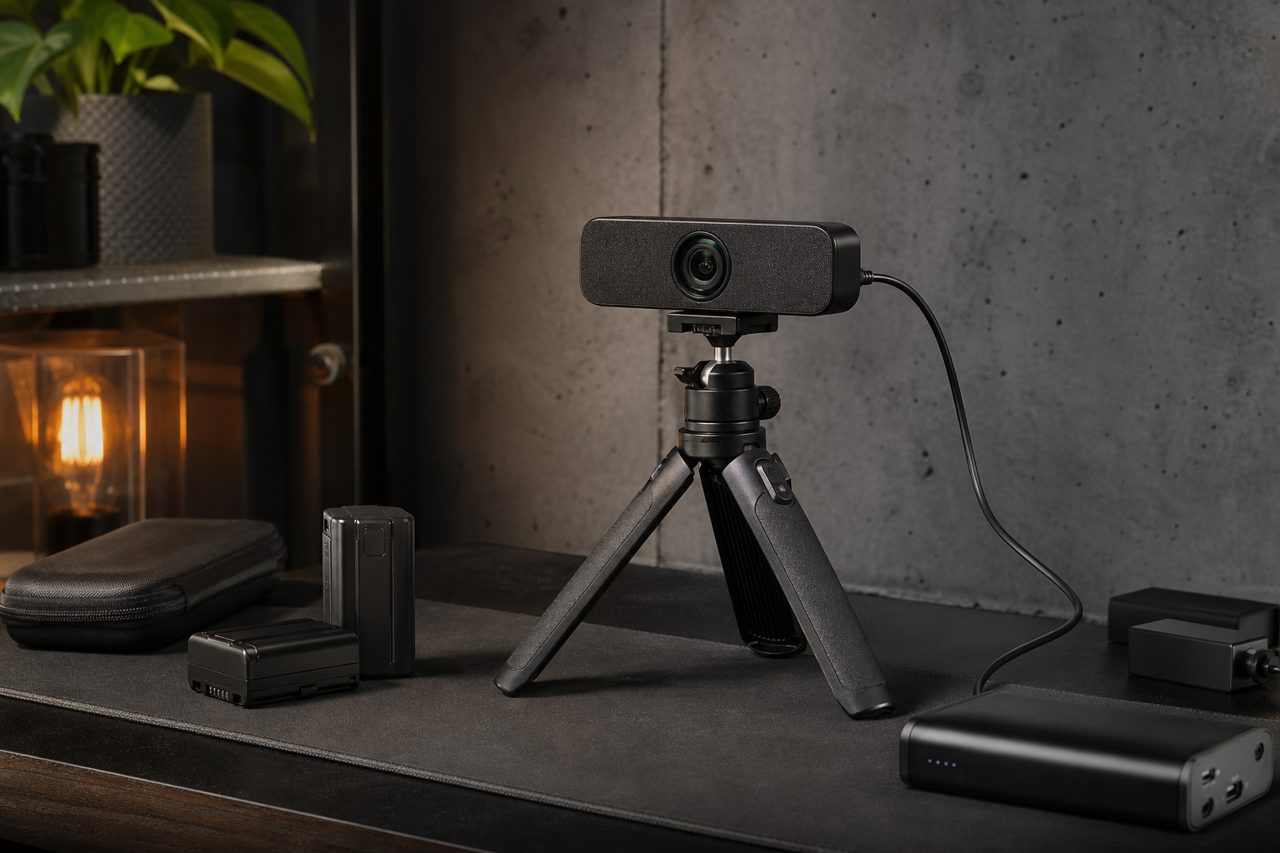
- Continuous power. Either the camera accepts USB-C power delivery while operating, or a dummy-battery coupler feeds it indefinitely from a PD bank. This is the desk and tripod route — livestreams, timelapses, tethered sessions — where "runtime" stops being a limit at all.
Sellers should treat these as three shelves rather than one. The same customer will eventually own items from all three, but each purchase answers a different day, and listings that blur the routes create the mismatches that come back as reviews.
Price the routes against each other only within a route. A grip is not competing with a power bank; it is competing with a second and third battery plus the handling benefits a bag of cells cannot provide. Listings that compare across routes — "cheaper than a grip" — invite confusion, because the buyer who wants continuous desk power finds no swap count relevant.
Safety and shipping: the compliance spine
Every lithium item in this kit — camera cells, grip-mounted cells, PD banks — is battery cargo the moment it ships. The rules are settled: UN38.3-tested cells, IATA packing instructions PI965, PI966 or PI967 depending on whether the battery ships alone, with equipment, or contained in it, and additional state-of-charge limits for batteries shipped standalone. In practice, battery-compliant lanes run 8-18 days door to door against 7-15 days for standard goods, so a power kit's delivery promise is set by its battery items, not its cables. For a seller, the supplier question is binary and worth asking before the first order: are these lanes a standing, documented capability, or an improvisation? The answer determines which markets the kit can reach at all.
Usage discipline the kit should teach
The kits that earn five-star reviews build habits into their design. Rotation is the first: cells marked or stored so charged and spent are never confused, because the wrong battery in the bag is worse than no battery. Overnight charging is the second — the dual charger exists precisely so the shoot day never begins at ninety percent. The third is load awareness: video, stabilization and bright screens drain far faster than spec-sheet stills figures suggest, so buyers should plan against workload, not against the brochure. A one-page insert stating these three habits costs nothing and positions the kit as a system.
Listing advice for power gear
- Lead with compatibility, in model terms. Which battery formats, which grips, which couplers — stated plainly, checked twice. In this kit, compatibility is the product.
- Express capacity honestly. Publish watt-hours alongside milliamp-hours; watt-hours are what airline limits and real comparisons run on, and stating them signals that the listing understands its own cargo.
- Describe the route, not just the part. "Extends sessions by swapping" and "powers the camera continuously from a bank" are different promises; do not let one listing make both.
- State the shipping reality. Battery lanes take longer; a delivery promise set by the battery item prevents the "where is my parcel" ticket before it exists.
- Bundle by workload. Event kit, desk kit, travel kit — the same components rebundled against three shooting days, each with its own box list.
- Photograph the kit working. A grip on the camera mid-event, the coupler cabled to a bank on a tripod rig — setup photos answer the "how does this fit together" question that text alone rarely closes.
The sourcing bottom line
Camera power is a compatibility business wrapped in a logistics discipline: name the formats, ship the batteries compliantly, teach the habits. Current power accessories ship from a single piece for validation through dropshipping — battery variants on compliant lanes — with stock dispatched within 48 hours. Branded versions start at 500 pieces per SKU for light customization with 5-7-day sampling, and full OEM at 1,000 pieces; see the OEM/ODM page and the creator gear category page.
FAQ
Does a battery grip double a camera's shooting time?
Capacity roughly doubles with a second cell, but real runtime depends on workload — video, stabilization and bright screens drain faster than stills — so doubled capacity does not always mean doubled hours. The grip also adds weight and a taller body in exchange for a vertical shutter and better balance. Describe capacity and ergonomics separately rather than promising a multiple.
Can any camera shoot continuously from USB-C power?
No — some models charge only while off, while others accept power delivery while operating. The reliable continuous route is a dummy-battery coupler fed by a PD bank. Verify charge-while-operating behavior per model in samples, and state plainly which route each product supports.
How should camera power accessories be shipped internationally?
As battery cargo under IATA rules: UN38.3-tested cells with PI965/PI966/PI967 packing depending on configuration, plus state-of-charge limits for standalone batteries. Battery lanes typically run 8-18 days versus 7-15 for standard goods, so set delivery promises by the battery items and source from a supplier where compliant battery lanes are a standing capability.