Does Cable Length Affect Charging Speed? The Physics, Simplified
Yes, length matters, but the honest answer depends on three variables most listings never mention: conductor gauge, current, and charging voltage. This guide reduces the physics to two worked examples, a table a buyer can act on, and the tests that settle the question for any cable SKU.
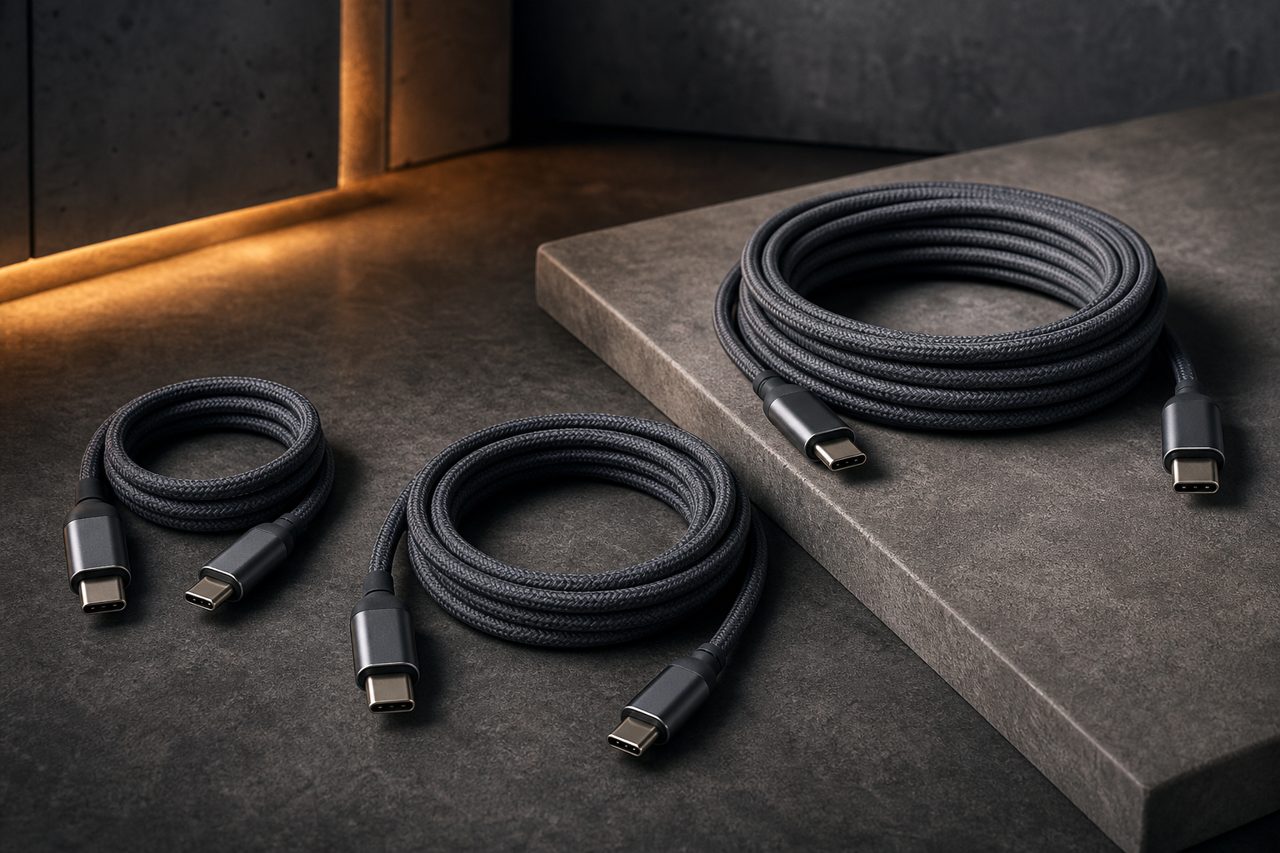
The question reaches every seller of charging accessories, usually as a review: "the long cable charges slowly." Customers attribute it to length, brands attribute it to the charger, and the truth sits in the copper. For a B2B buyer, the value of understanding this is direct: it determines which lengths and gauges can honestly carry a wattage claim, which combinations generate returns, and how to write a spec sheet that survives scrutiny.
Resistance in one paragraph
Every conductor resists current, and for a wire the relationship is simple. Resistance equals the material's resistivity times length, divided by cross-sectional area. Copper's resistivity is fixed, so for a given gauge, doubling the length doubles the resistance. And because current must travel down the power conductor and back through ground, the loss is counted over the full loop, effectively two wires in series. Two further laws complete the picture: voltage drop equals current times resistance, and power lost as heat equals current squared times resistance. Length, gauge, current and heat are therefore all one conversation.
What gauge contributes
Area divides the equation, which is why gauge matters as much as length. Standard copper values for the conductors used in USB cables make the contrast concrete: 28 AWG wire measures about 0.21 ohms per meter, while 20 AWG measures about 0.033 ohms per meter, roughly six times lower. A cable can be short and still lossy if its conductors are thin, and long and still efficient if they are thick. This is why the gauge of the power pair, printed in the spec sheet or absent from it, tells a buyer more than the length printed on the box.
A worked example makes it precise. Take a two-meter cable with a 28 AWG power pair. The loop resistance is about 0.21 ohms per meter, times two meters, times two conductors, or roughly 0.84 ohms. Push 3 amps through it, as a 60W USB Power Delivery session does, and the drop is about 2.5 volts with roughly 7.6 watts burning inside the cable as heat. The device receives around 52 watts instead of 60. Now the same two meters in 20 AWG: loop resistance about 0.13 ohms, drop about 0.4 volts, loss about 1.2 watts, and the device receives close to 59. Length is identical; the copper is the difference. These figures are engineering illustrations from standard conductor values, but the order of magnitude is what shows up on every bench.
Why high-voltage charging is kinder to long cables
The same loss hurts far more at low voltage. A 15-watt session at 5 volts and 3 amps already loses 2.5 volts across the thin two-meter cable above: the device would see 2.5 volts instead of 5, and charging would slow to a crawl or fail to negotiate at all. At 20 volts, the same 2.5-volt drop is an efficiency tax rather than a failure. This is exactly why USB Power Delivery raises voltage instead of pushing more current: power equals voltage times current, and every amp avoided saves loss quadratically. It also explains a familiar pattern in returns: thin long cables often "work" on laptop charging, where negotiation lands at 20 volts, and "fail" on phones or accessories negotiating low-voltage profiles.
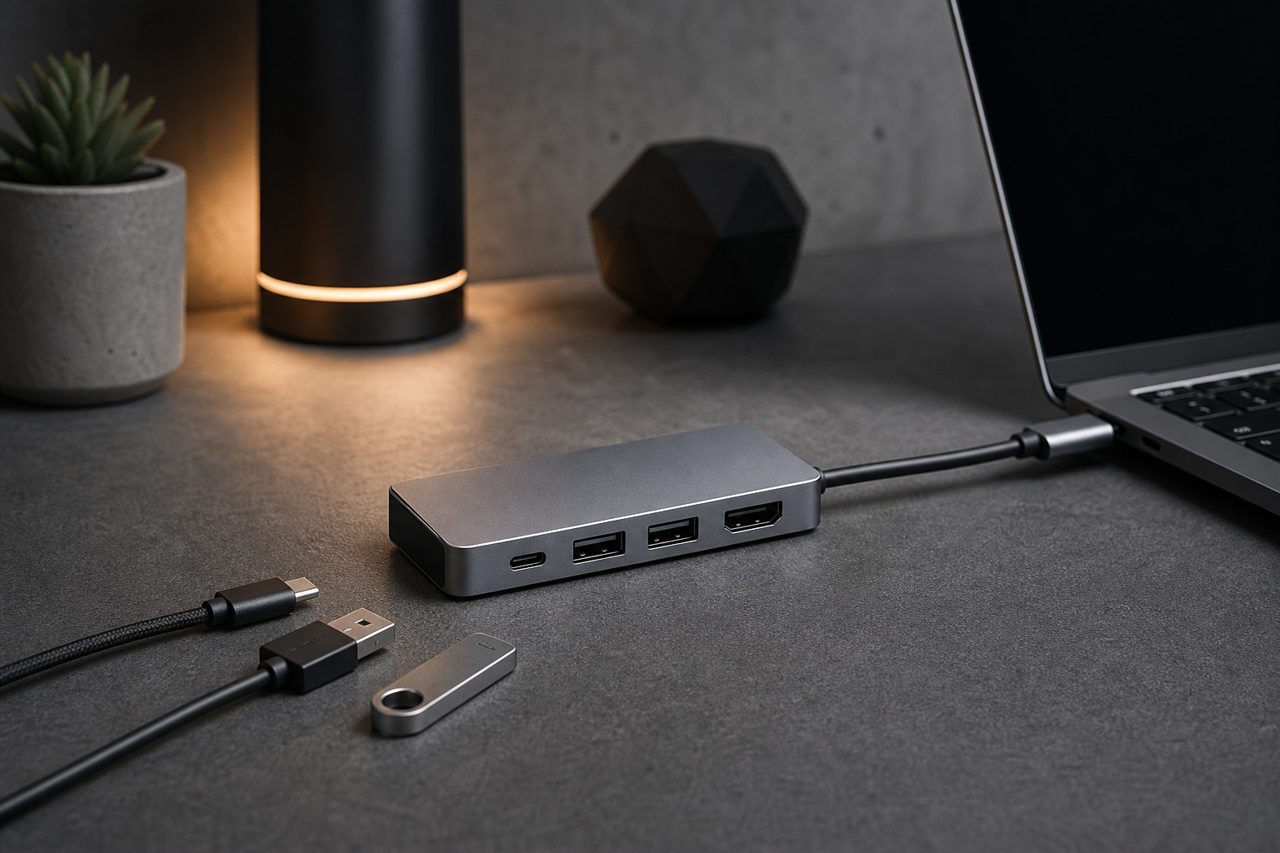
For cable construction, current capacity is the other gate. USB-C carries up to 3 amps without any special component; the 5-amp tier that enables 100W and, under the extended power range, up to 240W, requires an e-marker chip in the cable that advertises the higher rating to the source. A long cable sold as a 100W part must therefore combine thick conductors with a working e-marker, and both are verifiable in minutes with a protocol meter.
Data speed is a separate ceiling
Charging and data obey different constraints. High-speed data is limited by signal integrity, and the practical passive-cable ceiling shortens as data rates rise: around two meters at 10 Gbps, and roughly one meter for the 20 Gbps and 40 Gbps classes, with longer runs requiring active or optical construction. A "2-meter 40 Gbps" passive cable at a bargain price is claiming away the physics, and a buyer who stocks it inherits the returns. When a listing promises both high wattage and high data rates, the honest version states the length at which each claim holds.
The buyer's reference table
The table below condenses the physics into stocking guidance for USB-C cable SKUs.
| SKU type | Practical length | Spec to demand | Why |
|---|---|---|---|
| Charge-only, 60W | 1-2 m | 21 AWG or better power pair | Keeps voltage drop minor at 3 A |
| Fast charge, 100W | 1-2 m | 20 AWG or better plus e-marker (5 A) | Current headroom and source handshake |
| Long-run desk cable | 3 m and up | Thick conductors; state wattage at length | Loss scales with length |
| 10 Gbps data cable | About 2 m max, passive | Certified construction for Gen 2 | Signal integrity sets the ceiling |
| 20-40 Gbps class | About 1 m max, passive | Active/optical for longer runs | Passive copper cannot hold the link |
Three tests that settle any cable
Before an order, put candidate cables through a short bench routine. Each test takes minutes and needs only a USB power meter, a load bank or a fast-charging phone, and a protocol meter that reads e-markers.
- Voltage drop. Run the rated current and compare the voltage at the device end against the charger's output. Around 0.4 volts of drop at 3 amps on a two-meter 20 AWG cable is normal; half a volt or more points to thin conductors.
- Heat after thirty minutes. A cable doing its job stays warm, not hot. A jacket too hot to hold at rated current is future refund chatter and, in the worst cases, a safety matter.
- Marker and negotiation readout. Confirm the e-marker advertises the printed rating and that the source negotiates the expected profile through the cable.
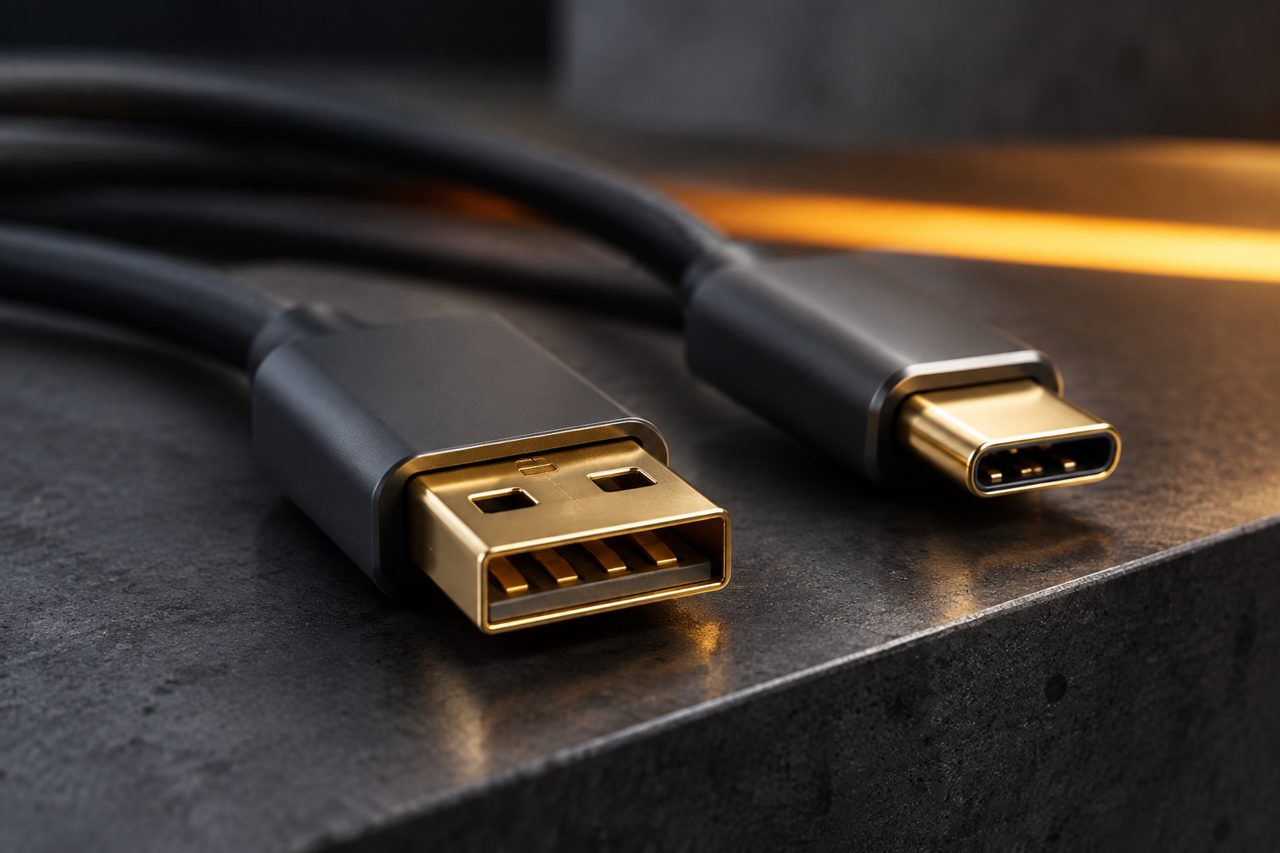
Sellers who publish gauge and drop data alongside length claims convert a physics lesson into a listing advantage. Because cable SKUs are inexpensive to validate, the sequence is easy: shortlist models from the cables and hubs lineup, test one piece ordered through dropshipping, and only then commit to bulk or to logo customization. The costs of finding out late are far higher than the cost of one test cable.
FAQ
Does a longer cable really charge more slowly?
Yes: resistance scales with length, so a longer cable drops more voltage at the same current. The magnitude depends on gauge and voltage. A thick 20 AWG two-meter cable loses a fraction of a volt at Power Delivery voltages, while a thin 28 AWG cable of the same length can lose over two volts at 3 amps, which visibly slows charging.
What conductor gauge should a 100W USB-C cable use?
A 20 AWG or thicker power pair, an e-marker chip advertising 5-amp capability, and a spec sheet that states the gauge in writing. A 100W claim without published gauge is the first candidate for a bench voltage-drop test before any bulk order.
How can a buyer test voltage drop without a laboratory?
Run the cable at its rated current into a USB power meter at the device end and compare against the charger's output. A drop of half a volt or more at 3 amps on a two-meter run signals undersized conductors. One meter, one load, minutes per sample.