Bluetooth Codecs: SBC, AAC, aptX and LDAC for Resellers
Every TWS spec sheet carries a codec line, yet the term is quoted more often than it is understood. This guide explains what a codec actually decides - quality ceiling, latency, compatibility and licensing cost - compares SBC, AAC, aptX and LDAC in one table, and turns the answers into stocking decisions by product tier.
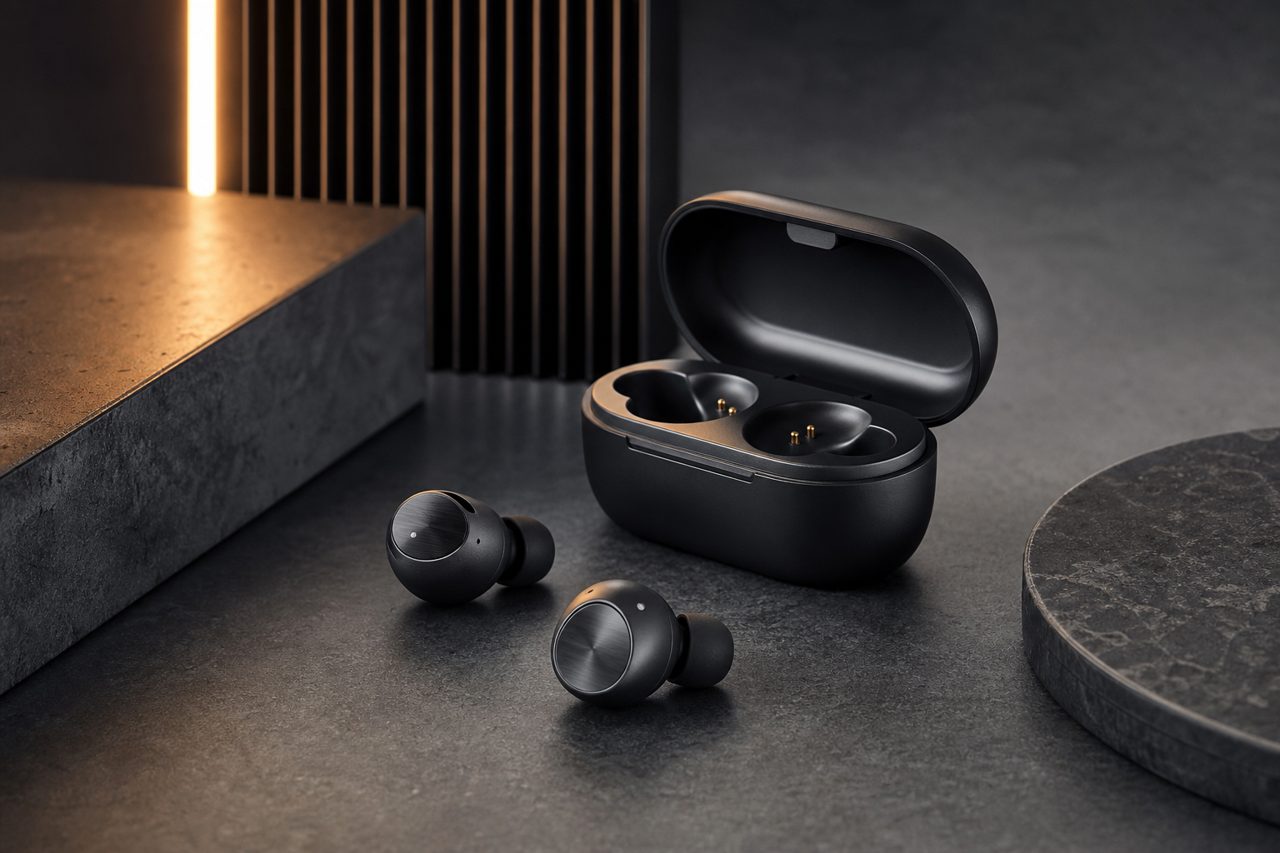
Audio accessories remain one of the steadiest growth lanes in the trade: the global mobile accessories market is projected to keep compounding at 7.8 percent annually through 2033 (Grand View Research, 2025), and earbuds sit at its center. As the TWS audience matures, codec names appear on more listings - and carry more weight in buyer decisions - than ever. Yet a codec is neither a sound quality guarantee nor a marketing free-for-all. It is a licensed technology with defined behavior, and for a reseller it touches four practical questions at once: what the customer hears, how fast the signal arrives, which phones it works with, and what it costs to legally advertise.
What a codec actually decides
A codec is the compression scheme that squeezes audio over the Bluetooth radio. Its choice sets four things at once. First, a quality ceiling: how many bits per second survive the trip, which caps fidelity no speaker tuning can recover. Second, latency: compression schemes differ in how much buffering they require, which is why the same earbud can feel instant in one codec and laggy in another. Third, compatibility: a connection runs a codec only if both the phone and the earbud support it, and the pair negotiates downward to the best common option. Fourth, licensing cost: some codecs ship inside the base Bluetooth license, others require a per-unit royalty agreement with the codec owner.
The negotiation rule is the one sellers most often get wrong in copy. An earbud supporting a premium codec does not deliver it to every phone; if the source device lacks the codec, the link falls back to SBC or AAC and the customer never hears what the badge promised. Listing copy that says "supports X where the source device supports it" is not hedging - it is the technically accurate sentence, and it prevents reviews that punish the product for the phone's limitation.
The four codecs in one table
The figures below are engineering approximations that vary by implementation, but they are the honest ranges a buyer should hold in mind when reading spec sheets.
| Codec | Typical bitrate | Typical latency | Licensing | Where it matters |
|---|---|---|---|---|
| SBC | Low-to-mid hundreds of kbps | Commonly in the 150-250 ms class | Included in the base Bluetooth license | The universal fallback every phone and earbud speaks |
| AAC | Around 256 kbps class | Implementation-dependent, comparable to SBC | Patent-pool licensing | The default high-quality path on one major phone ecosystem and widely used elsewhere |
| aptX family | Mid-hundreds of kbps class | Classic tier commonly around 80-100 ms; low-latency variants lower | Per-unit license from the codec owner | Mid-tier and premium models sold into Android-heavy markets |
| LDAC | Up to about 990 kbps | Varies by mode, roughly 60-200 ms | Per-unit license from the codec owner | Hi-res-oriented positioning where the source and streaming service also support it |
| LC3 (LE Audio) | Efficient at lower bitrates | Design goal: lower than classic paths | Part of the LE Audio specification | The forward path in new designs as LE Audio adoption spreads |
Two readings of the table matter commercially. Bitrate headlines (LDAC's near-megabit figure, for instance) describe a ceiling, not a guarantee - the streaming service, the source device and even the listening environment decide how much of it survives. And latency classes explain the gaming-tier split described in our latency guide: standard music paths sit far above what gameplay tolerates, which is why low-latency modes and dongle links exist as separate products.
Licensing reality for resellers
SBC and AAC ride along inside standard Bluetooth qualification, which is why the cheapest earbud can list both honestly. The premium names are different: aptX and LDAC are commercial technologies licensed per unit through their owners, and the license belongs to whoever builds or imports the product. Before writing either name into packaging or a listing, a reseller should ask the supplier for the license evidence covering that exact SKU. Shipping a licensed SKU and advertising it accurately is a durable advantage; advertising an unlicensed name is a takedown risk on regulated marketplaces and a credibility risk everywhere else. This is a paperwork check, not a technical one, and it takes one email.
Matching codecs to product tiers
Codec strategy is tier strategy. The mapping we recommend to catalog owners:
- Entry tier. SBC plus AAC, competently tuned, is sufficient for the price band. Paying per-unit royalties here raises cost without a claim most buyers in this tier will ever verify.
- Mid tier. Add an aptX-class codec for Android-heavy markets, and say so in the spec table with the fallback sentence. This is the tier where the codec badge actually moves comparison shoppers.
- Hi-res tier. LDAC fits products whose amplification, drivers and battery budget genuinely support the higher data rate - and whose target customers stream from services that offer it. Positioning, not spec-sheet padding, justifies the royalty.
- New designs. For OEM projects starting now, ask the platform vendor about LE Audio and LC3 readiness. Early support is a differentiator that ages well as phones update.
Verification before you write the spec line
Codec claims are testable in minutes with two phones and a settings menu. On a source phone that supports the premium codec, connect and confirm the active codec in developer or Bluetooth details; then connect a phone that lacks it and confirm graceful fallback with no dropouts. Play the same track in both states and note the difference honestly - this becomes your listing sentence. Confirm latency behavior in each codec path if the product advertises a game mode, because codec switching can change it. Our bench protocol for gaming models covers the full routine.
From spec sheet to shelf
Codec support is fixed at the platform level, which makes it an OEM conversation rather than a retail afterthought: the licensed platform, the antenna design and the tuning are chosen together in development. Validate behavior first through single-piece dropshipping with 48-hour dispatch; then, for a branded line, lock codec licensing and tuning through OEM/ODM - logo and packaging from 500 pieces per SKU, full platform and acoustic customization from 1,000, sampling in 5-7 and 7-12 days. Current codec support for every in-stock model is listed in the audio category.
FAQ
Do customers actually hear the difference between Bluetooth codecs?
In controlled listening the differences are subtle for most listeners once tuning is competent. Compatibility, latency behavior and tuning quality influence satisfaction far more than the codec badge, so treat codec support as an enabling spec rather than the headline.
Which codecs should a new TWS product support?
SBC and AAC as the baseline, since they cover virtually every phone. Add an aptX-class codec for mid-tier models sold into Android-heavy markets, and consider LDAC only for hi-res-oriented positioning where the audio chain and battery budget support it.
Does the supplier need a license to advertise aptX or LDAC support?
Yes. Both are licensed per unit through the codec owners. Ask for license evidence before writing either name into a listing, and ship only the codecs the contract actually covers.