New-Phone Launch Bundles: Case + Glass + Stand That Move
When a new phone launches, accessory buyers arrive with money and no patience. They are not comparing brands; they are solving protection, desk setup and charging in a single pass. Bundles meet that pass. This scenario guide lays out three bundle archetypes, what goes in each box, and how to list, price and scale them.
Why the launch window rewards bundles
The backdrop is a market that keeps growing on event-driven demand: the global mobile accessories market reached USD 105.5 billion in 2025 and is projected at USD 189.9 billion by 2033 (Grand View Research, 2025), and its sharpest spikes come with new phone launches and gifting seasons. In those windows, a single-item listing competes for a decision the buyer has not fully made, while a bundle answers several decisions at once. Cart value rises, shipping consolidates into one parcel, and the store reads as the place that already had everything.
The moment is increasingly online: online channels captured 35.5% of U.S. mobile accessories sales in 2023, and the share keeps rising (Grand View Research, 2023). A bundle built for marketplace logistics, flat, light and free of batteries, is built for exactly that channel.
The launch window carries a specific inventory risk worth naming. Model-specific items, cases and glass above all, are only sellable while that model is current; the day demand shifts to the next launch, the SKU becomes dead stock. Bundles soften the risk structurally: the anchor pair is model-specific, but the rest of the box, stands, lights, cables, is universal, so a stale case drags less value down with it.
Three bundle archetypes that sell
Three archetypes cover most launch demand. Each has a defined job, a defined box and a defined buyer.
Bundle one: the Everyday Shield
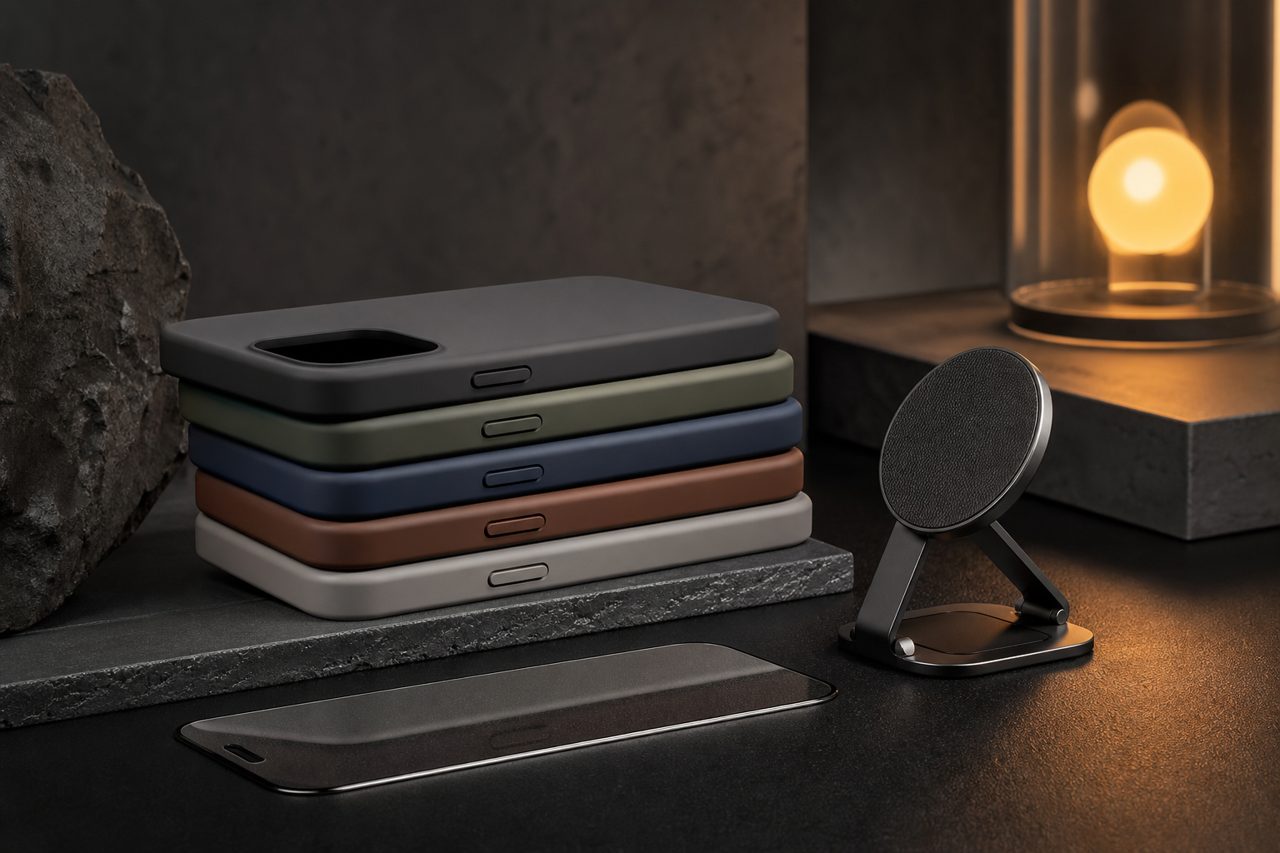
- Model-specific phone case in one proven colorway
- Tempered glass protector with alignment frame and dust stickers
- Wet and dry installation wipes
- Contents card linking to an install video
The Everyday Shield answers the first-week panic purchase: the phone arrived, the protection is not here, fix it today. It is the entry price tier and the volume engine of the launch window. Margin per bundle is modest, but the bundle turns fast, ships in a flat mailer and generates the reviews that lift every other listing in the store.
Bundle two: the Desk Commuter
- Everything in the Everyday Shield
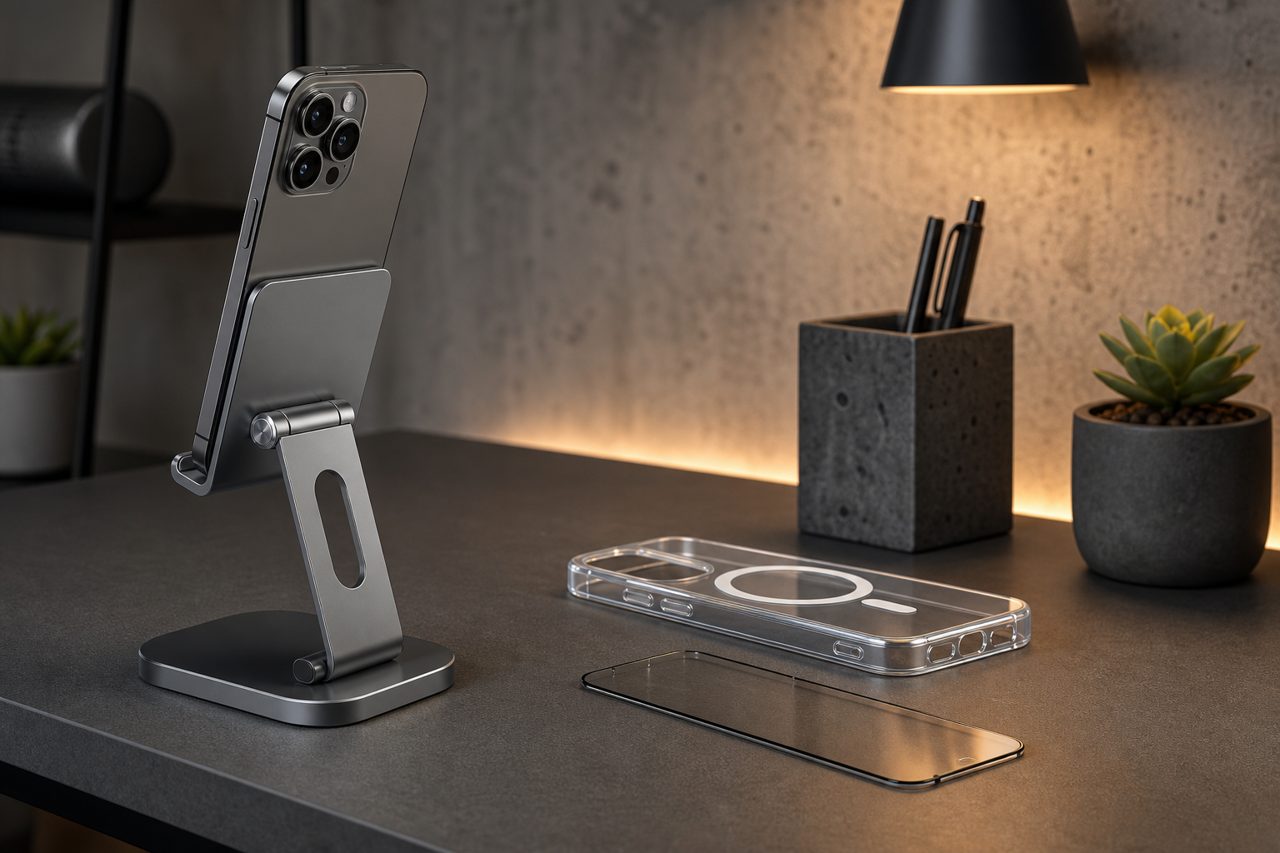
- A foldable desk-and-travel phone stand
- A braided USB-C charging cable, 100W rated
- A cable strap
The Desk Commuter adds the work-from-anywhere angle: the phone graduates from pocket device to desk instrument. The USB-C cable is not filler. Since December 28, 2024, the EU has mandated USB-C common charging for phones, earbuds, tablets and more (European Commission), so a rated USB-C cable inside the box is a compatibility promise in EU-facing listings, not an accessory. The stand quietly photographs the entire bundle in lifestyle shots, which makes this the easiest box to merchandize.
Bundle three: the Creator Kit
- Model-specific case
- Camera lens protectors
- A phone tripod mount and pocket tripod
- A rechargeable pocket fill light
The Creator Kit targets the buyer whose phone is a production tool. Volume is lower and average order value is higher, and the photography burden is heaviest here: the listing has to show the setup working, not the parts arranged. One caution on operations: the fill light contains a battery, so this bundle travels on battery-compliant channels while the other two ride standard service.
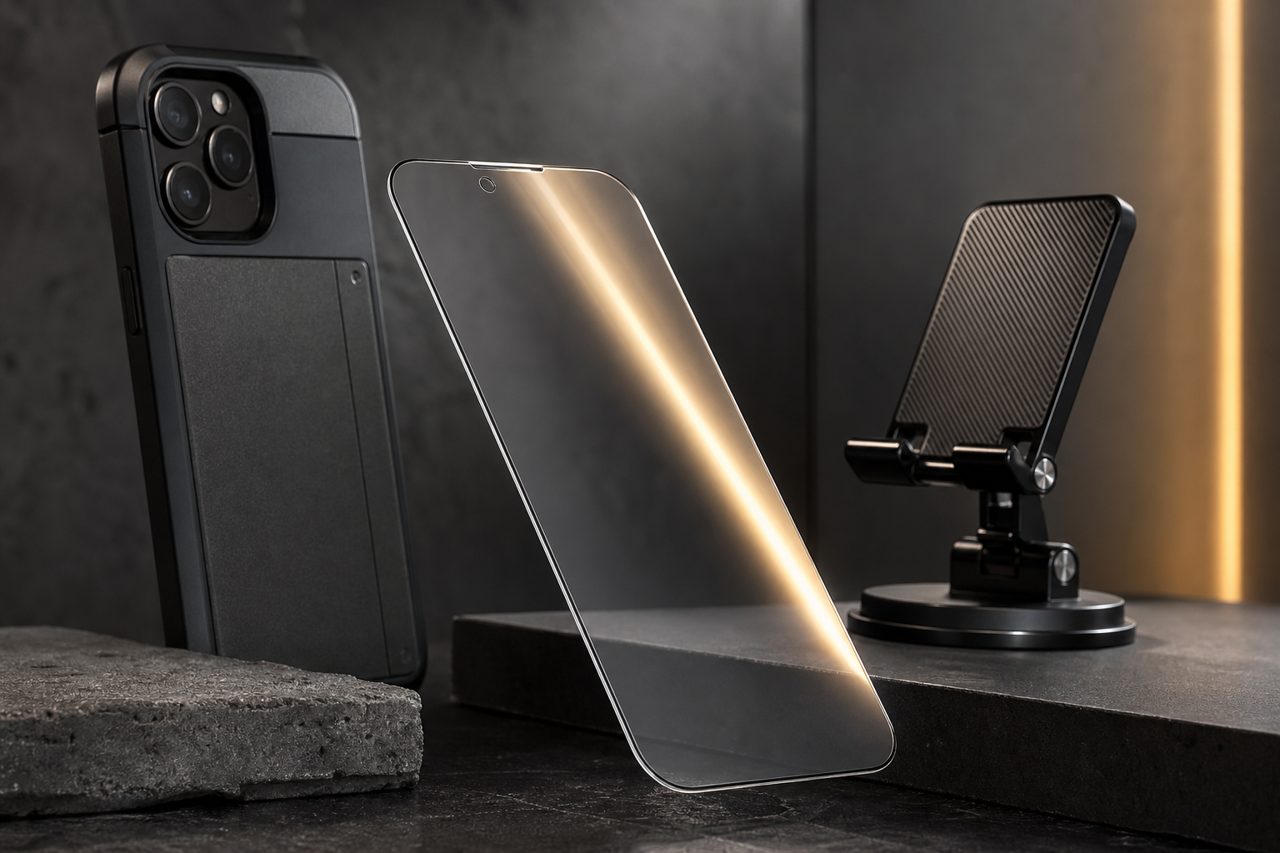
Archetypes also mix and reseason well. The Desk Commuter becomes a gifting box with a sleeve change and a colorway swap; the Creator Kit tightens into a vlogger travel pair, case plus tripod mount plus light, when the listing calendar moves outdoors. The discipline worth keeping is one box, one job: the moment a bundle tries to be the protection kit and the creator kit at once, its price climbs, its message blurs, and its buyer stops recognizing the problem it solves.
Pricing and attach-rate logic
Price a bundle as the sum of its items minus a visible discount, and let the discount fund itself out of consolidated shipping and single-box packaging rather than out of product margin. Keep every component purchasable separately at its list price, because the visible gap between single-item and bundle prices is what does the selling; a bundle with no reference price looks like a kit, not a deal. Two disciplines protect the margin: never let the bundle price fall below the sum of discounted components across a promotion, and treat the bundle as an average-order-value tool, not a clearance tool. The Everyday Shield earns its place on volume and reviews; the Desk Commuter and Creator Kit earn it on order value.
Listing and creative advice
- Name the bundle by job, not by contents. Desk Commuter sells the scenario; Case + Glass + Stand describes the inventory.
- Lead with a flat-lay photo of everything in the box. The buyer is verifying completeness in one glance.
- Follow with one in-use photo per component. Case on the phone, stand holding it, cable plugged, light mounted.
- State compatibility in a model table. Case fit is the one hard dependency; name supported models explicitly and keep the table current.
- List the box contents as bullets. Perceived value is the difference between what the buyer sees and what the price implies.
- Link the install video from the contents card and the listing. It intercepts the dust-under-glass return before it happens.
One operational note on returns: a bundle return is a component-sorting exercise unless the process says otherwise. Decide in advance which components restock and which do not, keep the contents card checklist matching the packing list, and photograph the packed box at dispatch. Bundles that ship with a packing photo resolve disputes in one message, which matters more as order value climbs from the Everyday Shield to the Creator Kit.
Operations: validate, then scale
Validate every component through dropshipping at one piece before committing to any depth; stock bundles assemble to order and dispatch within 48 hours, so a bundle can be tested for real attach behavior without inventory risk. When a bundle proves itself, packaging moves first: a co-branded sleeve or box is a light-customization program from 500 pieces per SKU with sampling in 5-7 days, while full OEM development of a bundle-specific kit starts at 1,000 pieces per SKU with sampling in 7-12 days. Bundles without batteries ride the standard channel at 7-15 days to major markets; the Creator Kit, with its battery-powered light, ships on battery-compliant routing. Transit damage on multi-item boxes is covered by photo-based replacement within 30 days of delivery, which keeps bundle after-sales a single conversation instead of a component hunt. Component sources and the full phone and tablet range sit on the phone and tablet accessories category page.
FAQ
How many items should a launch bundle contain?
Three or four, with one unambiguous job per item. Beyond four, perceived value stops growing while packaging, shipping weight and return complexity keep rising. The case and the screen protector are the anchor pair in every bundle; the third and fourth items pick the buyer segment.
Do bundles need custom packaging from day one?
No. Start with stock items in a flat mailer with a printed contents card, validated through one-piece dropshipping. Once the attach rate is proven, a co-branded sleeve or box is a light-customization program from 500 pieces per SKU with sampling in 5-7 days, well before full OEM tooling is justified.
How do I choose which phone models to cover with a bundle?
Cover the just-launched flagship plus the top sellers of the previous two generations, where replacement demand concentrates. Validate each model through dropshipping first: the case is the only component with hard model dependency, while stands, lights and cables are universal and hedge the model risk.